
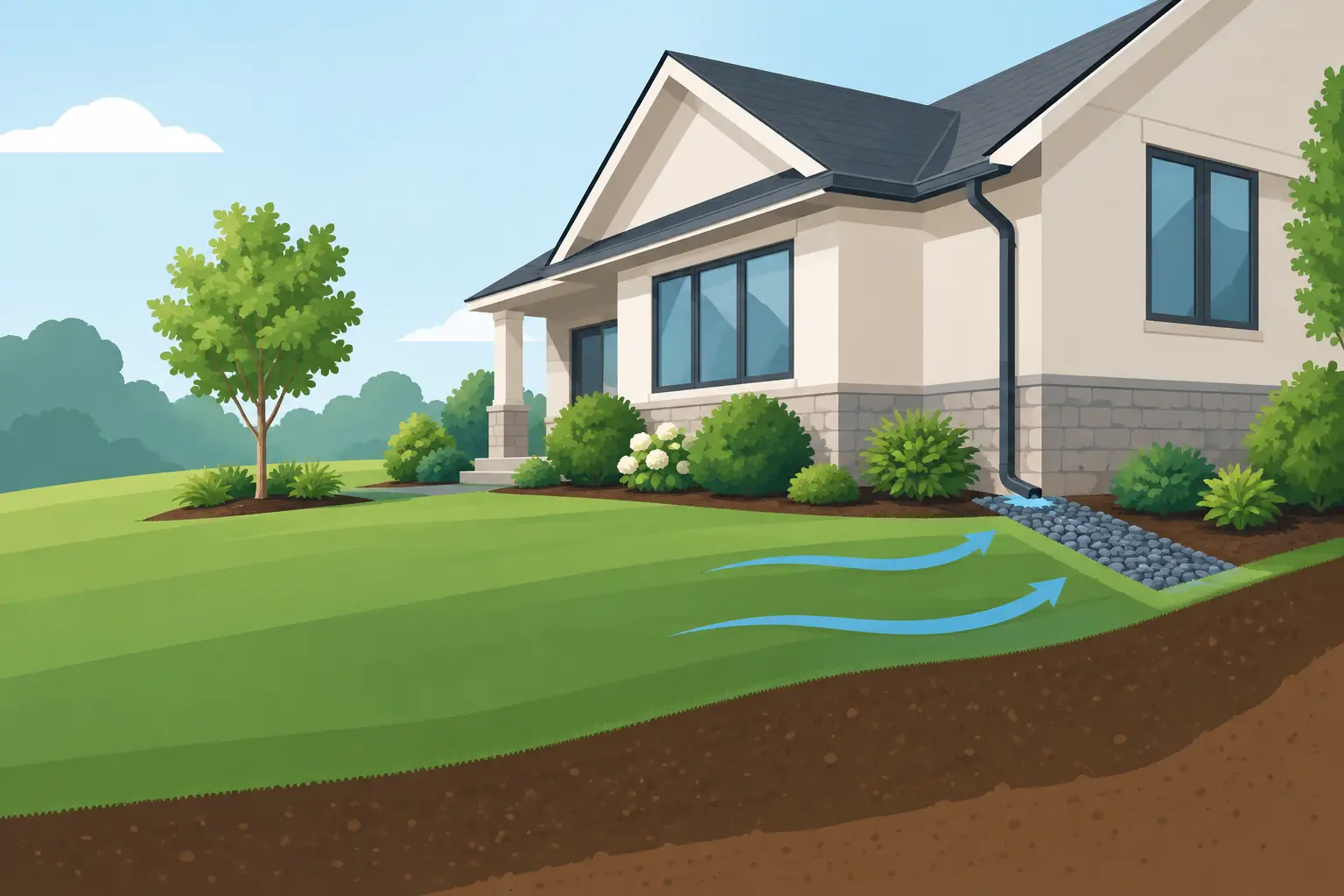
A wet spot beside the house, mulch that washes out after a storm, or a lawn that stays soft for days are not just frustrating yard problems. They are often signs that landscape grading needs attention. The shape of your property determines where rainwater travels, where it collects, and whether it supports your home and lawn or creates expensive trouble over time.
For homeowners in Newport News and across the Virginia Peninsula, grading is especially important because frequent rain, humid summers, compacted soils, and established neighborhoods can all make drainage more complicated. A properly graded yard is not always dramatic to look at, but it is one of the most valuable foundations for healthy turf, attractive planting beds, reliable irrigation, and outdoor living spaces.
Table of Contents
ToggleWhat Landscape Grading Does for Your Property
Landscape grading is the careful shaping of soil so water moves in a planned direction. In most residential settings, that means creating a gentle slope away from the home while directing runoff toward an appropriate drainage area. It may also involve reshaping low areas, building up planting beds, preparing a patio site, or correcting sections of lawn that hold water.
The goal is not to make every part of the yard perfectly level. A level yard can trap water just as easily as a low spot can. Instead, a professional looks at elevations across the property and creates transitions that look natural while keeping water from lingering where it should not.
Good grading protects more than the lawn. When water repeatedly pools near a foundation, it can contribute to moisture concerns around the home. Water collecting near walkways, patios, and driveways can shorten the life of those surfaces and make them less pleasant to use. In planting beds, excessive runoff can carry away mulch and topsoil before plants have a chance to establish strong roots.
Signs Your Yard May Need Landscape Grading
Some grading issues are obvious after a heavy rain. Others build slowly and are easy to dismiss as normal lawn conditions. If water stands in the same area for more than a day or two after rainfall, the yard may need more than a quick aeration or a new layer of seed.
Pay attention to soil and mulch movement as well. Bare channels through a bed, exposed roots, soil collecting along a fence line, or mulch repeatedly ending up on the lawn all suggest that water is moving too quickly through a particular area. On the other hand, moss, thinning turf, and muddy patches can indicate water is not moving enough.
A few other warning signs deserve a closer look:
- Downspouts that release water near the foundation or onto a walkway
- Pavers or stepping stones that settle unevenly over time
- A patio or lawn area that feels spongy after ordinary rainfall
- Yellowing, weak, or repeatedly damaged turf in a low section of the yard
- Water flowing toward the house from a neighboring slope or elevated bed
Not every wet area needs a major regrading project. Shade, clay-heavy soil, irrigation overspray, and an undersized downspout extension can produce similar symptoms. The right solution begins with identifying where the water starts, where it travels, and where it has a safe place to go.
Why Proper Slope Matters Around the Foundation
The area immediately surrounding the home requires special care. Soil should generally slope away from the foundation so rainfall does not settle against the structure. The exact grade depends on the lot, existing elevations, drainage routes, and features such as porches, utility lines, driveways, and mature trees.
This is where a quick do-it-yourself approach can create unintended problems. Adding soil next to the house may seem like a straightforward fix, but placing soil too high can interfere with siding clearances, vents, trim, or other building details. Sending water away from one side of the house can also move it toward a patio, a neighbor’s property, or another low area if the broader drainage plan is not considered.
An experienced crew evaluates the whole property rather than treating one puddle in isolation. That approach helps create a yard that works as a system, from roof runoff and irrigation coverage to lawn contours and hardscape elevations.
Grading Before Patios, Beds, and New Lawns
Landscape grading is often the quiet first step behind a finished outdoor space that looks clean and performs well. Before installing a paver patio, for example, the base must be excavated, compacted, and sloped correctly. A beautiful patio can develop settling, standing water, or edge movement if the site preparation is rushed.
The same applies to planting beds. Beds should have enough definition to hold mulch and make maintenance easier, but they should not become dams that trap water against the home or send runoff across a walkway. Thoughtful bed shaping helps plants receive the moisture they need without leaving roots saturated.
For lawn renovation or new turf installation, correcting grade before seed or sod goes down can save a homeowner from starting over later. Fresh turf may temporarily cover uneven ground, but it cannot solve a depression underneath. Once the lawn is established, repairing a low area often means disturbing grass that could have been protected with better preparation from the start.
Drainage Solutions Work Best as a System
Sometimes reshaping the soil is enough. In other cases, landscape grading needs support from drainage improvements. A downspout extension may carry roof runoff beyond a vulnerable area. A catch basin or drain can collect water at a low point. Swales, which are broad and shallow drainage channels, can guide surface water through a yard in a less noticeable way than a trench.
The best option depends on the source of the water. Roof runoff, surface runoff from a neighboring elevation, irrigation leaks, and naturally high groundwater require different responses. Installing a drain without correcting the surrounding grade may limit its effectiveness. Likewise, changing slopes without addressing a downspout that dumps hundreds of gallons near the house can leave the main problem in place.
Irrigation should also be part of the conversation. A properly designed sprinkler system supplies water evenly without adding unnecessary saturation to already damp areas. If a lawn has drainage trouble, watering schedules and zone coverage may need adjustment after grading work is complete. This is one reason integrated planning can make such a difference for residential properties.
What a Professional Grading Project Looks Like
A quality grading project starts with observation, not equipment. The team should look at the property after discussing where water appears, how long it remains, and what changes the homeowner wants to make. Existing patios, trees, beds, irrigation heads, utilities, fences, and access points all affect the plan.
From there, the work may include removing excess soil, bringing in clean fill, building up low areas in controlled layers, and compacting material where needed. Topsoil is then placed where turf or planting beds will be restored. The final finish should have smooth, intentional transitions rather than abrupt mounds that look out of place or make mowing difficult.
There are trade-offs. Bringing in soil can improve a low lawn area, but it must be done carefully around tree roots and drainage paths. A more noticeable swale may be the most practical choice for a severe runoff problem, even if it changes the look of a portion of the yard. On a small lot, available outlets for water may limit which drainage options are realistic.
At Year Round Lawn Maintenance Inc., grading can be coordinated with lawn care, irrigation, planting, lighting, and hardscape work so the finished space is designed to function together, not as a collection of separate fixes.
Protecting the Work After Grading
Once the yard has been reshaped, the new surface needs time and proper care to settle in. Avoid driving equipment across freshly graded soil, particularly after rain. Keep downspouts clear and watch how water moves during the first few storms. This is the best time to catch a small adjustment before it becomes a recurring issue.
New seed, sod, and plantings need enough moisture to establish, but watering should match the weather and soil conditions. Overwatering a freshly corrected low area can recreate the symptoms that grading was meant to solve. A tailored turf-care and irrigation plan helps the lawn develop strong roots while protecting the new contours of the site.
The most useful yard improvements are often the ones you do not have to think about every time it rains. When water has a clear path, turf can grow more evenly, beds stay cleaner, patios remain more enjoyable, and your property is better prepared for every season.