
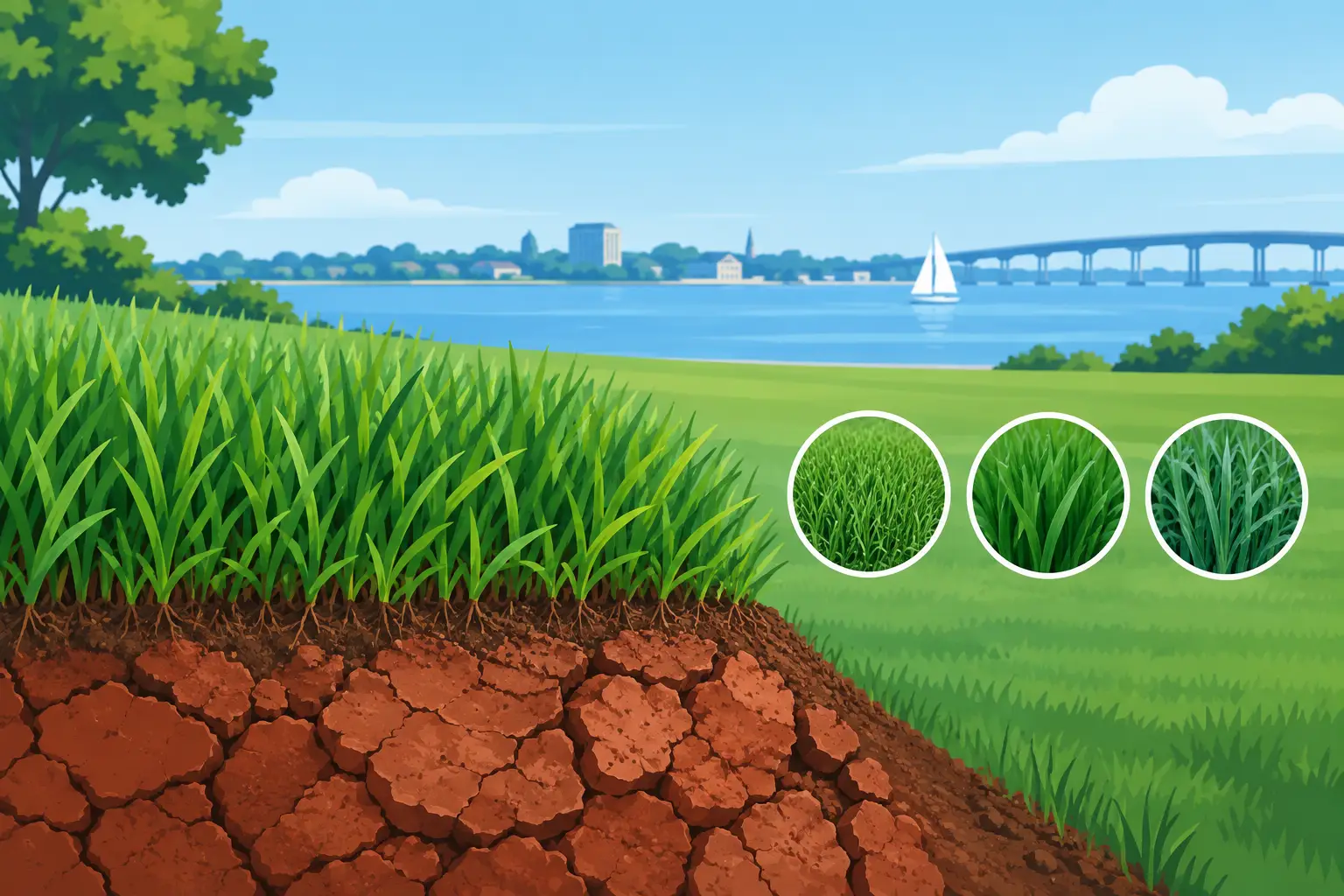
A lawn can look thin, muddy, or uneven even when it is regularly mowed and watered. On much of the Virginia Peninsula, the issue starts below the surface. Dense clay soil holds water after a storm, hardens in dry weather, and makes it harder for turf roots to spread. Choosing the best grass for clay is a good first step, but long-term results also depend on drainage, soil preparation, and planting at the right time.
For Newport News homeowners, tall fescue is usually the most dependable choice for a green, attractive residential lawn. It handles the region’s cooler winters, tolerates partial shade better than warm-season turf, and develops a deeper root system than many common alternatives. Still, there are yards where Bermuda grass or zoysia may be the better fit. The right answer depends on sun exposure, foot traffic, drainage, and how you want your lawn to look through the seasons.
Table of Contents
ToggleWhy Clay Soil Gives Lawns Trouble
Clay is made of very fine soil particles that pack tightly together. That structure can hold useful nutrients, but it also limits the air spaces roots need to grow. Water may pool on the surface after heavy rain, then the same soil can become hard and cracked during a dry stretch.
A struggling lawn in clay is not always a grass problem. Compaction, low spots, thatch, poor grading, and sprinkler coverage can all contribute to weak turf. If water routinely stands for more than a day after rainfall, planting a tougher grass alone will not correct the underlying condition. Improving the flow of water should come first.
Newport News properties also vary from one neighborhood to the next. A backyard shaded by mature trees has different needs than an open front yard that receives afternoon sun. A professional evaluation of the soil, grade, and existing turf can prevent a homeowner from investing in seed or sod that is poorly matched to the site.
The Best Grass for Clay Soil: Tall Fescue
Tall fescue is the leading cool-season grass for many Peninsula lawns. Modern turf-type tall fescues have a finer texture and richer color than older varieties, creating the full, polished appearance homeowners expect near patios, planting beds, and walkways.
Its greatest advantage in clay is its root system. Given properly prepared soil, tall fescue can root more deeply than shallow-rooted grasses, helping it tolerate summer heat and periods of limited rainfall. It also performs well with moderate shade, which matters in established residential landscapes where trees, homes, and fences limit direct sunlight.
Tall fescue stays green through fall, winter, and spring, then may slow down during the hottest part of summer. It needs consistent watering during dry weather, particularly in its first year, and it benefits from fall overseeding. Those maintenance needs are worthwhile for homeowners who prefer a predominantly green lawn for much of the year.
For the strongest result, use quality turf-type tall fescue seed or sod selected for the Hampton Roads climate. Fall is generally the best establishment window because soil remains warm enough for germination while cooler air reduces stress on new grass.
When Bermuda Grass Makes Sense
Bermuda grass is a warm-season option for sunny properties. It thrives in heat, recovers quickly from active family use, and spreads aggressively to fill bare spaces. For open lawns with six to eight hours of direct sun, Bermuda can form a dense, durable surface once established.
The trade-off is appearance and shade tolerance. Bermuda turns brown and dormant after colder weather arrives, often remaining dormant until late spring. It also struggles in shade and can spread into landscape beds if edging is not maintained. In compacted clay, its performance improves significantly when the soil is aerated and surface drainage is corrected.
Bermuda may be a smart choice for a sunny backyard that sees children, pets, and regular entertaining. It is usually less appealing for a shaded front lawn where homeowners want winter color and a finer, more traditional cool-season look.
Where Zoysia Fits In
Zoysia is another warm-season grass worth considering for some clay-soil yards. It creates a dense, soft turf that tolerates heat and can handle moderate traffic. Compared with Bermuda, zoysia has somewhat better shade tolerance, though it still needs substantial sunlight to stay thick.
Zoysia establishes slowly, especially from plugs, and its dense growth can make repairs more noticeable when damage occurs. It also goes dormant in winter. Installation often costs more than seeding fescue, but homeowners who value a low-mowing, carpet-like summer lawn may find it a worthwhile long-term investment.
Prepare Clay Before You Seed or Sod
The condition of the soil matters as much as the grass variety. A few inches of loose, healthy topsoil gives new roots a place to grow, while compacted clay can cause even premium sod to fail at the seams.
Start by addressing obvious drainage concerns. Downspouts should direct water away from the lawn and foundation, and low areas may need regrading or a drainage solution. If a lawn stays soggy, frequent irrigation will only make the problem worse. A properly designed in-ground sprinkler system should apply water evenly and adjust for rainfall, slope, sun, and the needs of each planting zone.
Core aeration is especially valuable for clay-heavy lawns. It removes small plugs of soil, allowing air, moisture, and nutrients to move deeper into the root zone. Aeration is not a one-time cure for compaction, but performed at the right season, it can make a clear difference in turf density and water absorption.
After aeration, a light topdressing of compost can improve the upper soil layer over time. Avoid trying to transform clay by mixing in a small amount of sand. Without the right proportions and thorough blending, sand and clay can create an even denser, concrete-like layer. Compost, proper grading, and repeated soil-building practices are safer approaches.
Planting and Watering for Strong Roots
For tall fescue, seed in early fall whenever possible. Prepare the surface, apply seed evenly, and keep the top layer consistently moist until germination. Once seedlings are established, gradually shift from light, frequent watering to deeper watering that encourages roots to move downward.
New sod needs close attention during its first several weeks. Water enough to keep the sod and the soil beneath it moist while roots knit into the ground, but do not leave the lawn saturated. After establishment, most turf performs better with less frequent, deeper irrigation than with a daily shallow sprinkle.
Mowing supports root health, too. Keep tall fescue around 3.5 to 4 inches tall through much of the growing season. Taller blades shade the soil, reduce moisture loss, and help the lawn compete with weeds. Never remove more than one-third of the grass blade in a single mowing.
Fertilizer should be based on the grass type and, ideally, a soil test. Tall fescue responds best to much of its nutrition in fall, while warm-season grasses are fed during their active summer growth. Applying fertilizer at the wrong time can encourage weak growth, disease pressure, or unnecessary runoff.
When Professional Turf Care Is Worth It
A clay-soil lawn can improve dramatically with consistent care, but persistent wet spots, repeated bare patches, or uneven irrigation often call for a more complete plan. Turf management is most effective when mowing, fertilization, aeration, drainage, and watering are considered together rather than treated as separate problems.
Year Round Lawn Maintenance helps Newport News homeowners evaluate the conditions that affect turf from season to season, including irrigation performance and lawn health. Whether your property needs fescue renovation, a new sod installation, or help correcting the conditions that keep grass from taking hold, the goal is the same: a lawn that makes your house feel more like home.
The best lawn for clay soil is not the one with the most appealing label at the garden center. It is the grass that fits your sunlight, soil, and expectations, then receives the preparation and care needed to put down strong roots.