
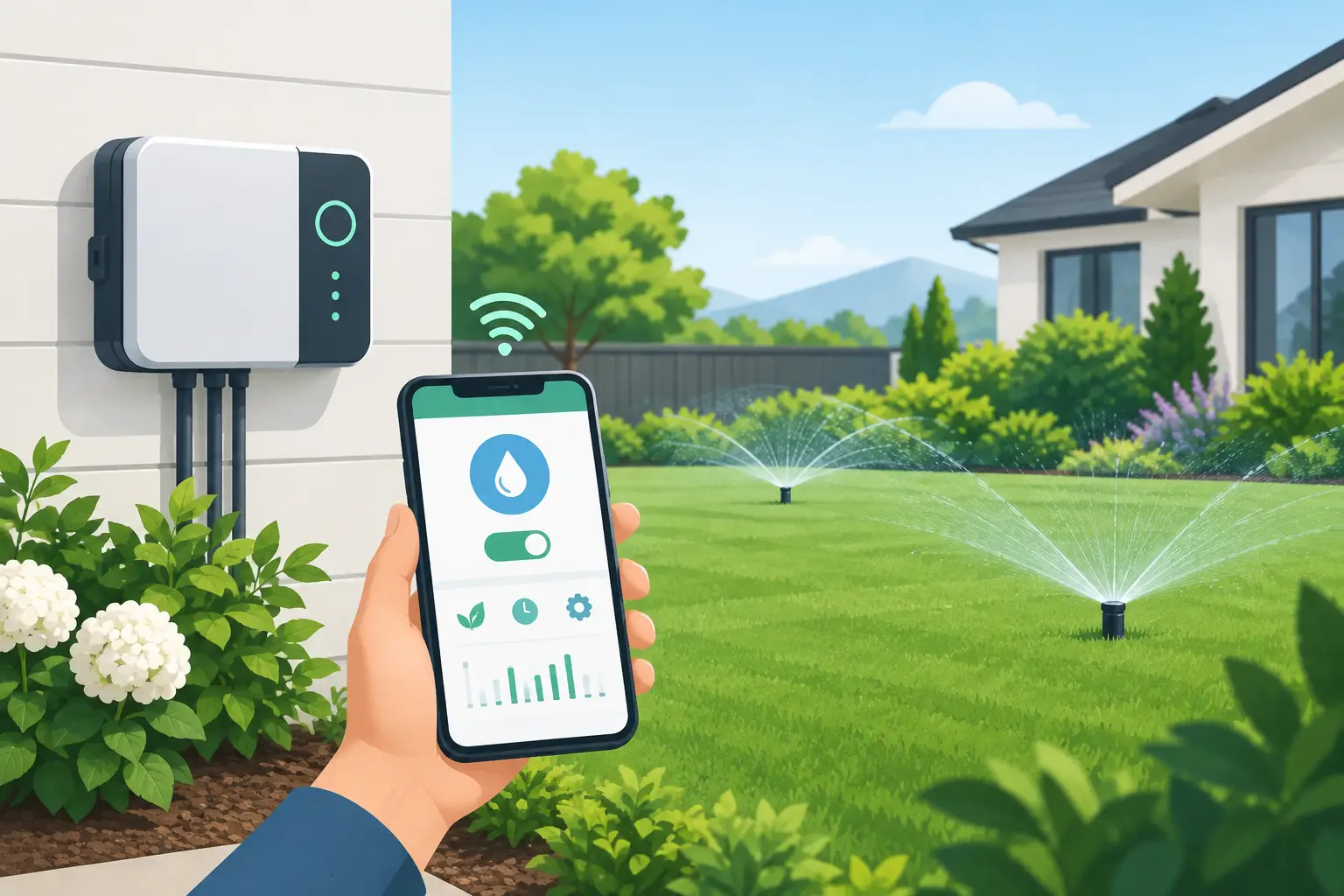
A sprinkler controller should not be watering a Newport News lawn the same way after a soaking July thunderstorm as it does during a dry stretch in August. That is the promise behind a smart irrigation controller. In this smart irrigation controller review, we look past the app-based convenience and focus on what actually matters for Virginia Peninsula homeowners: healthier turf, fewer wasted watering cycles, dependable operation, and a system that fits the property.
For many homes, upgrading the controller is one of the most practical improvements available for an existing in-ground sprinkler system. It can add weather awareness and scheduling flexibility without replacing every valve, sprinkler head, or pipe in the yard. Still, a smart controller is not a cure for poor coverage, broken heads, leaks, or a lawn that needs a different watering strategy. The best results come from pairing the right equipment with a well-maintained irrigation system.
Table of Contents
ToggleWhat Makes a Controller “Smart”?
Traditional controllers follow a fixed schedule. If the program says to run Zone 2 every Monday, Wednesday, and Friday at 5:00 a.m., it will run unless someone changes the program or turns it off. That can mean watering during rain, skipping adjustments during heat, or applying the same amount of water to every season.
A smart controller connects to Wi-Fi and uses local weather information, seasonal conditions, and settings you provide to adjust watering. Most models can delay watering for rain, reduce run times during cooler periods, and let homeowners review or change schedules from a phone. Higher-featured models may factor in temperature, wind, humidity, and historical weather patterns.
That does not mean the controller knows everything about the landscape on its own. It still needs accurate information. Soil type, sun exposure, plant material, slope, sprinkler type, and the condition of each zone all affect how much water a landscape needs. A sunny fescue lawn near a driveway may need a very different schedule than a shaded foundation bed or a drip-irrigated shrub border.
Smart Irrigation Controller Review: The Features That Matter
When homeowners compare controllers, it is easy to focus on a polished phone app or the number of automation options. Those features are useful, but several practical details deserve more attention.
Zone capacity should fit the system today and tomorrow
Controllers are sold with different station counts, commonly 4, 6, 8, 12, or more zones. Each zone controls a separate valve, such as front turf, back turf, side yard, planting beds, or drip irrigation. Choose a controller with enough capacity for every active zone, plus room for a future bed expansion or added irrigation area if that is part of your long-term plan.
Buying too few stations creates an unnecessary replacement later. Buying a much larger controller than the property will ever need is not always a problem, but it may add cost without adding value.
Weather-based adjustments should be easy to manage
The most useful smart controllers make weather adjustments without making the homeowner guess what happened. Look for clear reports showing whether the controller skipped a cycle because of rain, reduced seasonal watering, or followed a manual override. A controller that is technically advanced but difficult to understand often ends up being left on default settings.
Rain sensing remains valuable as a backup measure, particularly when it is properly installed and maintained. Depending on the controller and system design, a dedicated rain or freeze sensor can provide an added layer of protection when internet-based weather information is delayed or unavailable.
App access is helpful, but manual controls still matter
Phone control is convenient when you are away from home, notice a dry area, or want to pause the system before a service visit. It is also helpful for checking whether the controller ran after a storm or while traveling.
However, a controller should remain usable at the wall. Wi-Fi can go down, phones get replaced, and a family member or irrigation technician may need to operate the system directly. A clear display, accessible buttons, and straightforward manual zone testing make service and seasonal adjustments much easier.
Compatibility deserves a closer look
Most smart controllers can operate standard 24-volt residential irrigation valves, including systems with Rain Bird components. But compatibility should be confirmed before purchase, especially on older systems. Existing wiring, valve condition, controller location, electrical supply, and Wi-Fi signal strength all affect the installation.
A strong Wi-Fi signal inside the house does not guarantee a reliable connection in a garage, shed, exterior controller cabinet, or basement utility area. If the signal is weak, the controller may still run its most recent schedule, but remote access and weather updates may be inconsistent.
Where Smart Controllers Deliver the Most Value
A smart controller is particularly worthwhile for homeowners who travel, have several irrigation zones, or are tired of changing schedules as the weather shifts. It can also be a good choice after a landscape renovation. New plantings, expanded turf, and drip zones often need more deliberate programming than a single fixed schedule can provide.
For the Virginia Peninsula, the seasonal benefit is significant. Spring rainfall can make fixed watering schedules excessive. Summer heat and humidity can raise turf stress, although frequent shallow watering is not the answer. Fall may require adjustments as temperatures ease and growth patterns change. A controller that responds to conditions can reduce the tendency to water simply because a calendar says it is time.
Water savings are possible, but they vary. A properly configured smart controller may reduce unnecessary irrigation, especially on a system that previously ran on a rigid schedule. Savings will be smaller if the old schedule was already managed carefully, and they can disappear if there are leaks, damaged spray heads, or poor zone design. The controller is only one part of water management.
The Trade-Offs Homeowners Should Consider
Smart equipment adds convenience, but it also introduces a few considerations. The first is setup. To get meaningful results, someone must assign the correct zone type, sprinkler type, soil setting, sun exposure, and plant information. A rushed setup can lead to watering recommendations that do not match the yard.
The second is connectivity. Most smart features depend on a stable Wi-Fi connection and, in some cases, manufacturer-supported cloud services. Homeowners who prefer a completely independent system may be better served by a high-quality conventional controller paired with a rain or freeze sensor.
The third is maintenance. A smart controller can alert you to an unusual schedule, but it cannot physically repair a leaking valve or straighten a tilted sprinkler head. Seasonal inspections remain essential. Irrigation heads should be checked for proper coverage, nozzles cleared, rain sensors tested, and programming reviewed as landscape conditions change.
Choosing the Right Controller for Your Yard
Start with the irrigation system rather than the controller advertisement. Count the active zones and identify what each one waters. Note whether zones serve turf, shrubs, annual beds, containers, or drip irrigation. Consider sun exposure, drainage, slopes, mature tree roots, and areas that routinely stay wetter or drier than the rest of the lawn.
Then consider how you plan to use the system. A homeowner who wants basic weather-based adjustment and occasional remote access may not need every premium feature. A property with multiple beds, a larger lawn, or several specialty zones may benefit from more detailed programming and greater station capacity.
Professional installation can be especially helpful when an older controller is being replaced. It allows the irrigation system to be tested zone by zone, existing wiring to be checked, and run times to be matched to the landscape rather than copied from an outdated program. At Year Round Lawn Maintenance, that system-first approach helps ensure irrigation upgrades support the lawn, beds, and outdoor spaces homeowners have invested in.
A Better Controller Cannot Replace Better Watering Practices
Even the best smart controller needs sensible limits. Turf generally performs better with deeper, less frequent watering than with light daily applications, provided the soil and weather conditions support that approach. Watering early in the morning helps reduce evaporation and gives grass blades time to dry, which can be beneficial during humid weather.
Watch the yard, not just the app. Wilting in one section may indicate a coverage issue rather than a need to increase every zone. Runoff on a slope may call for shorter cycles with soak time between them. A consistently wet area might need less irrigation, drainage attention, or a closer look at a valve that is not closing properly.
The right smart controller should make those decisions easier, not make homeowners feel removed from their own landscape. When its settings reflect the way your yard actually drains, grows, and receives sunlight, it becomes a quiet tool for keeping your home’s exterior looking cared for through every season.