
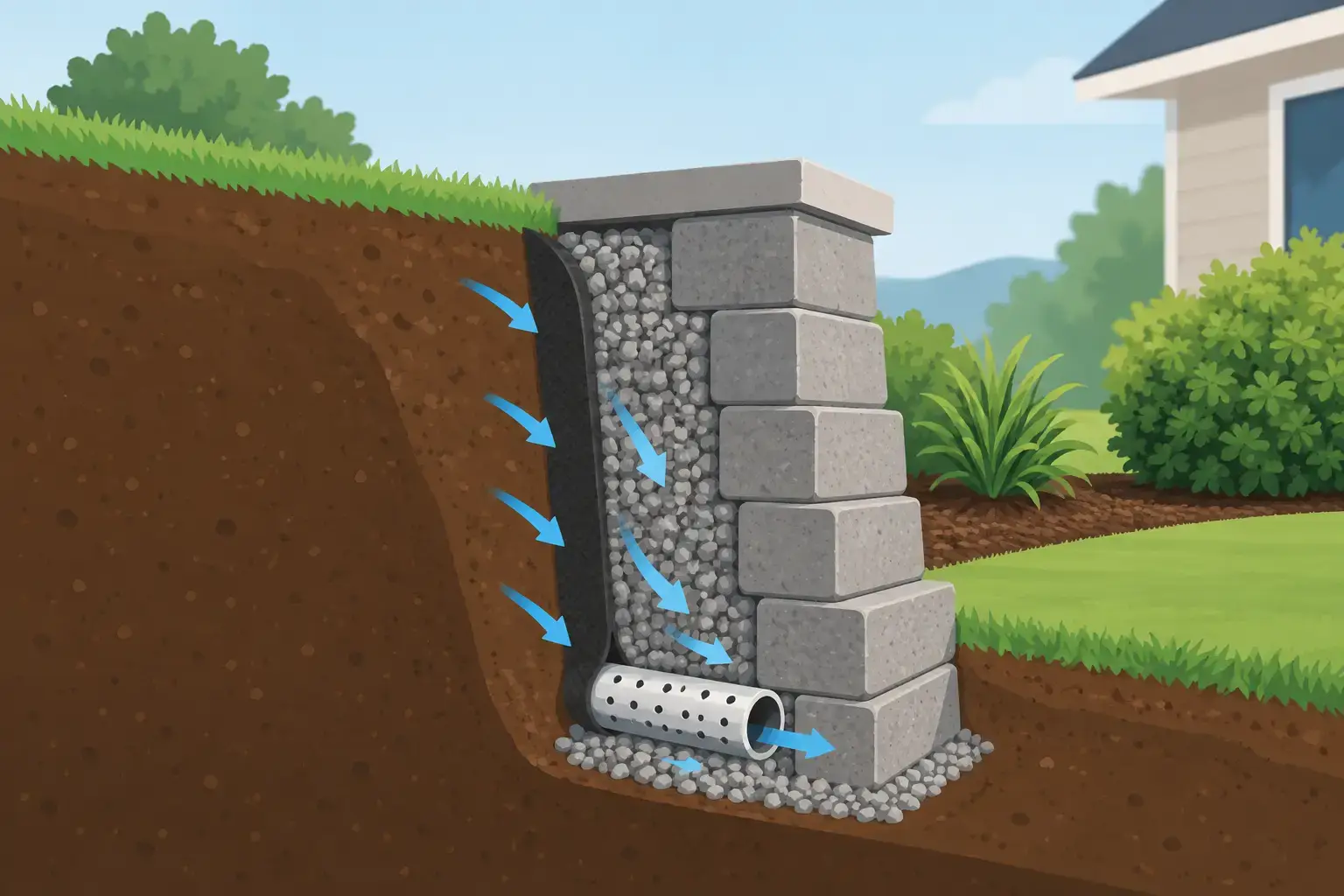
A retaining wall can turn a sloped, hard-to-use corner of your yard into a level planting bed, a patio edge, or a more welcoming outdoor space. But the wall itself is only part of the project. This guide to retaining wall drainage explains the system behind the finished appearance – and why water management is what keeps a wall looking straight, stable, and attractive over time.
For homeowners in Newport News and across the Virginia Peninsula, drainage deserves special attention. Heavy rain, humid summers, changing soil conditions, and runoff from roofs or neighboring grades can all send significant water toward a wall. When that water has nowhere to go, it creates pressure that even a well-built wall was not designed to hold back.
Table of Contents
ToggleWhy retaining wall drainage matters
Soil becomes much heavier when it is saturated. As water collects behind a retaining wall, it creates hydrostatic pressure – outward force that pushes against the structure. Over time, that pressure can cause blocks to shift, a wall to lean, mortar joints to crack, or sections of the wall to separate.
Drainage problems also affect the landscape around the wall. Water may wash soil through wall joints, leave mulch and planting beds muddy, erode the ground at the base, or create standing water near a patio. In colder weather, trapped water can contribute to movement as the ground freezes and thaws, even in our generally moderate coastal Virginia climate.
A properly planned drainage system protects more than the wall. It helps preserve the lawn, planting beds, hardscape surfaces, and usable outdoor areas surrounding it. That is why drainage should be designed at the same time as the wall, not added after a problem appears.
The main parts of a retaining wall drainage system
Every property has different grades, soils, and water sources, but most successful retaining wall installations rely on a few connected components. The goal is simple: keep water from collecting behind the wall and direct it to a safe place where it can drain away.
A stable base and compacted backfill
The work begins below grade. A wall needs a properly prepared, level base that supports the structure and resists settling. Behind the wall, the installer uses compacted material in controlled lifts rather than simply pushing excavated soil back into place.
Compaction matters because loose backfill settles. When it settles unevenly, it can change the slope above the wall, create low spots that hold water, and put uneven pressure on the structure. Good workmanship below the finished grade is rarely visible, but it has a direct effect on the wall’s lifespan.
Drainage gravel behind the wall
Clean, angular drainage gravel is typically installed behind the wall. Unlike dense native soil, gravel leaves open spaces for water to move through rather than trapping it against the back of the blocks or stone.
The required gravel zone depends on the wall design, height, site conditions, and material used. A short garden wall and a tall wall supporting a driveway do not have the same engineering needs. Still, the principle remains the same: create a reliable drainage path behind the structure instead of relying on soil alone to absorb heavy rainfall.
A filter fabric may also be used to keep surrounding soil from migrating into the gravel. Without separation, fine particles can gradually clog the drainage area and reduce its ability to move water.
Perforated drainpipe at the base
At the bottom of the gravel zone, a perforated drainpipe collects water and carries it away from the wall. Homeowners may hear this called a French drain, footing drain, or drain tile. The name is less important than the installation details.
The pipe should sit on a stable bed of gravel, follow the planned slope, and remain accessible to a proper outlet. If it is flat, crushed, disconnected, or buried with no place for water to exit, it cannot do its job. Pipe should never be treated as a substitute for correct grading and gravel backfill. It is one part of the overall system.
A safe discharge point
Water collected behind the wall needs a destination. Depending on the property, the drainpipe may daylight at a lower area of the yard, connect to an approved stormwater solution, or discharge in a location designed to handle the flow without erosion.
This is where site-specific planning becomes especially important. Directing water toward a foundation, driveway, neighboring property, or low spot that already stays wet only moves the problem. The outlet should be protected as needed with stone or another erosion-control method so flowing water does not wash away the surrounding soil.
Finished grading above and around the wall
Even the best drainpipe cannot overcome poor surface grading. The land above the wall should generally guide surface water away from the house and prevent concentrated runoff from pouring over the wall face.
Roof downspouts deserve a close look as well. A downspout that empties immediately behind a retaining wall can overload the drainage system during a storm. Extending or rerouting it may be a practical part of the overall solution.
Signs your retaining wall may have a drainage problem
Some drainage issues are visible long before the wall experiences a major failure. Pay attention if you notice water pooling above or below the wall after rain, soil washing out through joints, white mineral staining on masonry, or mulch repeatedly moving out of place.
A wall that bulges, leans, separates, or develops widening cracks needs prompt professional evaluation. These signs can point to water pressure, inadequate base preparation, poor compaction, or a combination of issues. Waiting may turn a manageable drainage correction into a larger rebuild.
Also look at the landscape as a whole. Thin turf below a wall, muddy planting beds, sinking pavers nearby, or persistent dampness can reveal runoff patterns that are affecting more than one feature in the yard.
Choosing the right drainage approach for your property
There is no one-size-fits-all detail for retaining wall drainage. The right approach depends on wall height, wall material, the slope of the lot, soil type, nearby structures, irrigation zones, and how water naturally moves across the property.
For example, a low decorative wall around a planting bed may need straightforward gravel backfill and thoughtful grading. A taller wall supporting a patio, parking area, or substantial elevation change may require more extensive excavation, reinforcement, engineered design, and carefully planned drainage outlets. Local permitting requirements can also apply, particularly when a wall reaches certain heights or supports a surcharge load.
Irrigation should be considered before construction is complete. Sprinkler lines, valve boxes, and heads that sit near a wall need to be protected and adjusted so they do not create constant wet spots or become difficult to service later. Integrating hardscaping, drainage, planting, and irrigation from the start creates a cleaner finished result and avoids unnecessary disruption down the road.
Installation details that should not be overlooked
A beautiful wall face can hide shortcuts, so homeowners should feel comfortable asking how water will be handled before work begins. A clear project plan should address the base, gravel backfill, drainpipe, outlet location, final grading, and protection of nearby utilities or irrigation.
Material choices matter, but installation quality matters just as much. Using attractive block or natural stone will not compensate for a missing drain outlet or poorly compacted fill. Conversely, a well-planned drainage system helps quality materials perform as intended for years.
It is also wise to think ahead about access and maintenance. Drain outlets should remain visible enough to inspect, and the area around them should not be buried under dense plant growth or hardscape that prevents future service. After major storms, a quick walk around the wall can help you spot blocked outlets, erosion, or pooling before small issues grow.
When professional help is the better investment
Homeowners can often manage simple surface drainage improvements, such as refreshing mulch, extending a downspout, or correcting a minor low spot. Retaining wall drainage, however, involves excavation, structural loads, grade changes, and water movement that can affect the rest of the property.
For a new wall or a wall showing movement, an experienced landscape and hardscape contractor can evaluate the entire site rather than focusing only on the visible problem. Year Round Lawn Maintenance helps homeowners plan outdoor improvements with the full property in mind, including grading, planting areas, irrigation, patios, and long-term curb appeal.
A retaining wall should make your yard more useful and more enjoyable, not create a hidden water concern. When drainage is built into the plan from the ground up, you can enjoy the finished landscape with greater confidence through every season.