
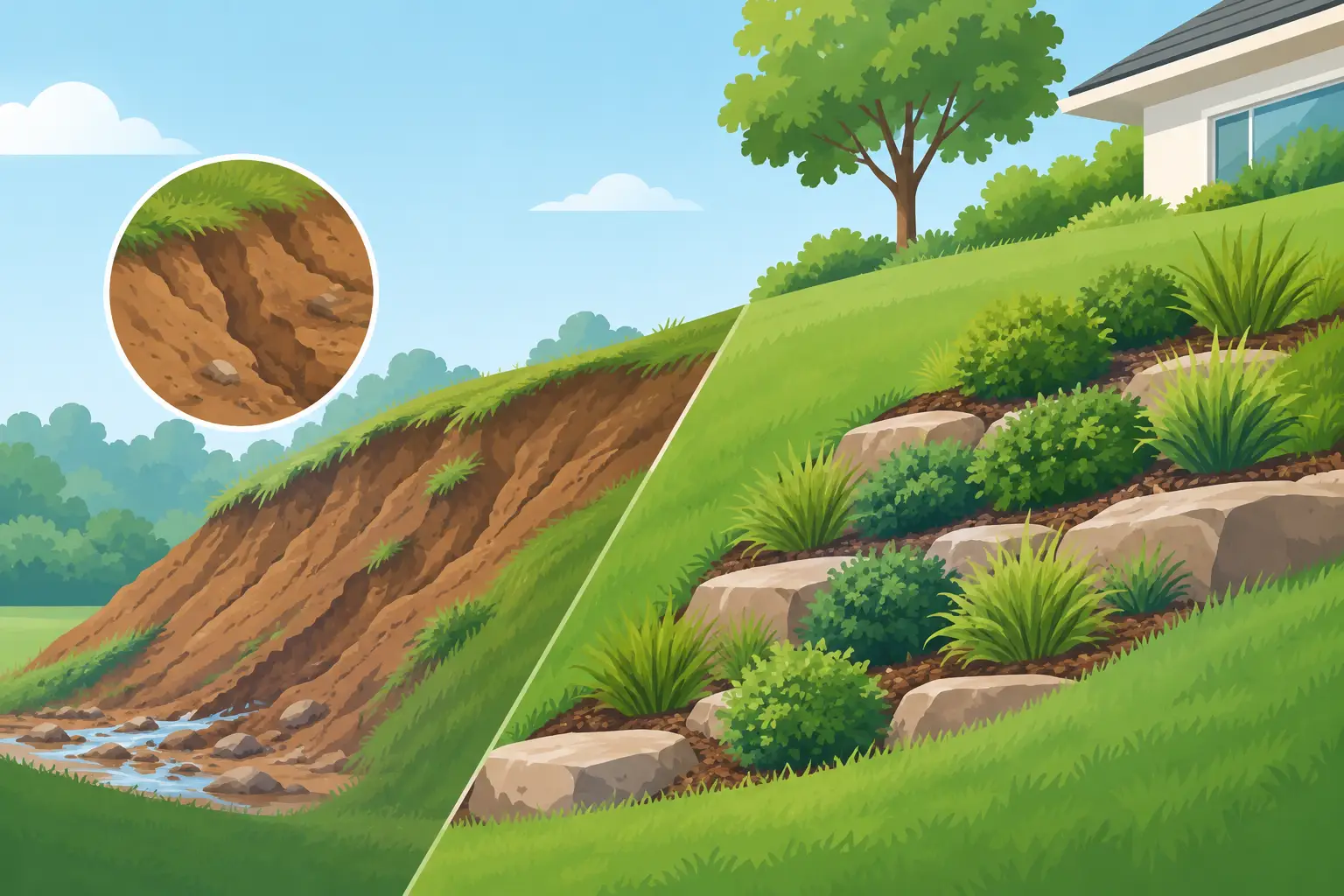
A healthy lawn should not disappear every time a coastal Virginia storm rolls through. Yet sloped lawn erosion can turn a tidy yard into a patchwork of exposed roots, muddy runoff, bare turf, and washed-out mulch in just one season. The good news is that erosion is usually a solvable site problem, not simply a lawn problem. The right solution starts by controlling where water goes, then protecting the soil and rebuilding the landscape around it.
For homeowners in Newport News and across the Virginia Peninsula, changing grades, compacted soil, summer downpours, and runoff from roofs can all add pressure to a sloped property. A thoughtful plan can keep your yard looking its best while protecting planting beds, hardscapes, and the investment you have made in your home.
Table of Contents
ToggleWhy sloped lawn erosion happens
Water always follows the easiest route downhill. On a gentle, well-established lawn, thick turf and loose, healthy soil can slow that movement enough for rainfall to soak in. On a steeper slope or a lawn with thin grass, compacted soil, or exposed ground, water gains speed and carries soil particles with it.
The first signs can be easy to overlook. You may see mulch collecting at the bottom of a bed, shallow channels through turf, soil piled along a driveway, or roots showing near the top of a slope. Left alone, those small channels get deeper with each storm. Eventually, the slope may become difficult to mow, plant, or safely enjoy.
Runoff is not always caused by the slope itself. A downspout that empties onto a hill, a sprinkler zone that runs too long, a patio that directs water toward a bed, or an uphill neighbor’s drainage pattern can concentrate water in one place. That is why adding seed or fresh mulch alone rarely provides a lasting answer.
Start with the water, not the grass
Before repairing a bare slope, watch what happens during a hard rain. Look for the point where water enters the area, the route it takes, and where it finally settles. This simple observation often reveals whether the main issue is roof runoff, a low spot, poor grading, irrigation, or several smaller problems working together.
Redirect concentrated runoff
Downspouts should discharge away from vulnerable slopes whenever practical. Depending on the property, that may mean extending the outlet, routing water through a buried drainage line, or directing flow toward a properly graded collection area. Water should never be moved thoughtlessly onto a neighbor’s property or toward the foundation. The goal is controlled drainage that works with the lot, not a quick diversion that creates the next problem elsewhere.
A shallow swale can also guide surface water across a yard at a slower pace. Unlike a deep ditch, a well-designed swale can blend into the landscape and be planted or turfed in a way that preserves curb appeal. On some properties, a dry creek bed with stone and erosion-tolerant planting can handle occasional heavy flow while adding visual interest.
Check irrigation coverage and timing
Irrigation is meant to support healthy turf, but overwatering on a slope can contribute to washouts. Heads that spray directly onto pavement, plant beds, or a steep bank waste water and create unnecessary runoff. Excessive run times may do the same, particularly when the soil is compacted or already saturated.
A properly designed Rain Bird irrigation system should apply water evenly and at a rate the soil can absorb. For sloped areas, shorter watering cycles with time between them can be more effective than one long cycle. This approach gives water a chance to soak in rather than race downhill. Seasonal inspections also help catch tilted heads, broken nozzles, and coverage gaps before they affect lawn health.
Choose the right protection for the slope
The best treatment depends on the steepness of the grade, the amount of water involved, the soil type, and how you want to use the space. A lightly sloped side yard needs a different approach than a steep backyard bank behind a patio.
Build stronger turf where grass makes sense
Turf can be an excellent erosion-control tool when it is dense and well rooted. Bare areas should be prepared before seeding or sodding. Loosening compacted soil, adding suitable topsoil where needed, correcting drainage, and protecting the new surface are all part of a successful repair.
For newly seeded slopes, erosion-control blankets or biodegradable mats can hold seed and soil in place while grass establishes. They are especially useful where a sudden rain could wash away a fresh installation. Sod offers immediate coverage, but it still needs proper soil contact, anchoring on steeper grades, and careful watering during establishment.
Keep in mind that turf is not ideal for every slope. Very steep sections can be difficult to mow and may remain vulnerable if water repeatedly concentrates there. In those spots, planting beds, stone features, or retaining solutions are often more practical and attractive.
Use plants with roots that hold soil
Shrubs, ornamental grasses, and spreading groundcovers help stabilize slopes because their root systems knit the soil together. They also break the force of rain before it hits bare ground. A layered planting plan can give a bank year-round structure while reducing the maintenance demands of a hard-to-mow area.
Plant choice should fit the amount of sun, moisture, and exposure the slope receives. A sunny, dry bank needs plants that can tolerate heat and periods without rain. A lower slope that stays damp after storms needs varieties that can handle more moisture. Spacing matters, too. Plants set too far apart leave exposed soil for too long, while overcrowding can make maintenance difficult later.
Mulch is helpful around new plantings, but it is not an erosion-control system by itself. On a slope, loose mulch can float or wash downhill during heavy rain. Edging, jute netting, heavier natural materials, and carefully placed plants can help keep it in place. In high-flow areas, stone may be a better fit than mulch.
When grading, terraces, or retaining walls are needed
Some erosion problems cannot be solved at the surface. If a slope is too steep, runoff is severe, or soil has already moved substantially, reshaping the grade may be necessary. Professional grading can soften abrupt transitions, eliminate low areas, and create a more stable path for water.
Terracing divides one long slope into shorter, flatter sections. This slows water and creates usable planting or lawn areas. A retaining wall can serve a similar purpose while defining a patio, garden, or outdoor living space. When designed correctly, these features do more than hold back soil. They can make an awkward portion of the yard functional and visually connected to the rest of the property.
Retaining work requires sound construction, suitable base preparation, drainage behind the wall, and materials selected for the height and conditions of the site. A wall without drainage can trap water pressure behind it, leading to shifting, cracking, or failure. This is a situation where experienced landscape and hardscape planning protects both the appearance and long-term performance of the project.
Avoid the common quick fixes
Throwing grass seed onto a muddy slope, spreading extra mulch, or filling a washed-out channel with loose topsoil may make the area look better for a few days. It will not stop the underlying water movement. Likewise, placing random landscape blocks at the bottom of a slope can redirect runoff in an unpredictable way.
It also helps to avoid mowing too short. Closely cut grass has shallower roots and less leaf surface to slow rain. Maintain turf at an appropriate height, keep blades sharp, and avoid mowing when the slope is saturated. If foot traffic or equipment is compacting the soil, consider adjusting the route used for routine maintenance.
A plan that protects the whole property
Erosion control works best when lawn care, drainage, planting, irrigation, and hardscape features are considered together. A new planting bed may need a drainage adjustment. A patio may need grading that protects nearby turf. A repaired slope may need a turf-care plan that encourages deeper roots through the growing season.
Year Round Lawn Maintenance can evaluate how these pieces work together and recommend a practical solution for your property’s grade, drainage pattern, and goals. Whether the answer is healthier turf, a planted slope, drainage improvements, or a more substantial landscape feature, the focus should be on a finished yard that feels stable, polished, and easy to enjoy.
If rain keeps moving soil across your lawn, treat it as an early warning rather than a routine cleanup task. Addressing the flow now can preserve your landscape, protect your outdoor spaces, and help your home look cared for through every season.