A dry strip beside a healthy lawn, a sprinkler zone that will not shut off, or water pooling around a valve box can turn a simple watering issue into wasted water and stressed turf. Knowing when to replace sprinkler valves helps homeowners address the real source of the problem before it affects the lawn, landscape beds, or water bill.
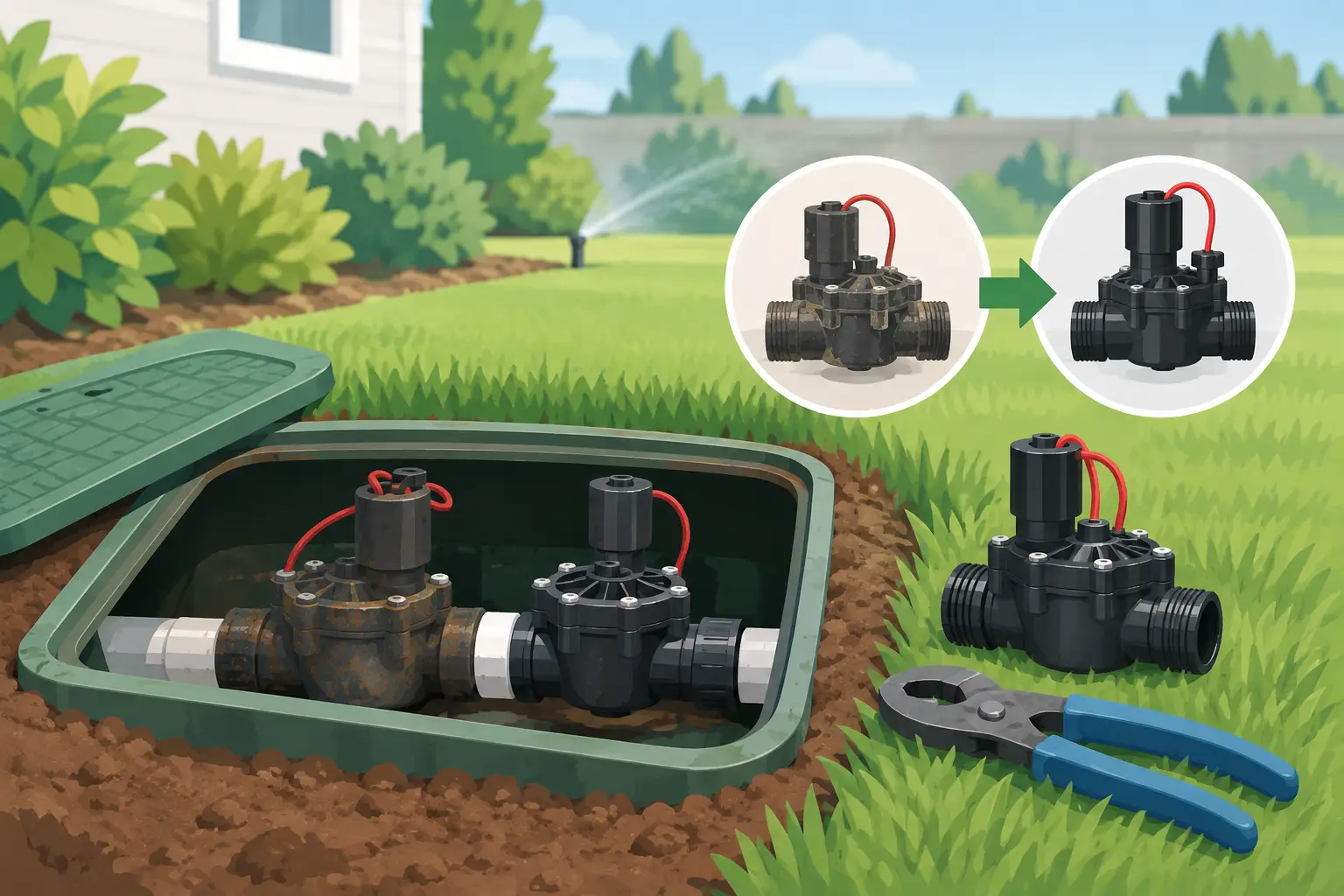
Sprinkler valves are the control points of an in-ground irrigation system. Each valve opens and closes to send water to a specific zone, whether that zone serves turf, foundation plantings, or a sunny garden bed. They work hard during the growing season, and like any mechanical component exposed to moisture, soil, electrical connections, and seasonal temperature changes, they eventually need attention.
Table of Contents
ToggleWhat a Sprinkler Valve Does for Your Yard
A typical irrigation valve uses an electric solenoid and an internal diaphragm to respond to the controller’s signal. When the controller calls for a zone to run, the valve opens. When the cycle ends, it should close tightly and keep water from moving through the line.
That simple job has a major effect on the appearance of your property. A valve that does not fully open can leave grass thin and thirsty. One that does not close can overwater a section of the yard, create muddy areas, and encourage turf disease or plant problems. In Newport News and across the Virginia Peninsula, summer heat and humid conditions can make uneven watering especially noticeable.
Not every valve issue means the entire valve needs replacement. A loose wire, failing solenoid, damaged diaphragm, clogged component, or controller setting may be the cause. A proper diagnosis keeps homeowners from replacing a part that still has useful life left.
Signs It Is Time to Replace Sprinkler Valves
The clearest sign of a failed valve is a zone that keeps running after the controller has shut it off. You may see sprinkler heads continue to drip or spray long after the scheduled cycle ends. A small amount of residual water can be normal immediately after a zone runs, but steady flow, recurring puddles, or damp soil around heads hours later points to a valve that is not sealing properly.
A zone that will not come on is another common warning. Before assuming the valve is bad, check that the irrigation controller is programmed correctly and that the system water supply is on. If other zones run normally but one does not, the problem may be a solenoid, wiring connection, or valve diaphragm. When those parts are damaged or the valve body is deteriorated, replacement is often the practical repair.
Pay attention to watering that is weaker than usual. Low pressure can result from several causes, including a break in the line, a clogged filter, a partially closed shutoff, or a valve that is not opening fully. The right repair depends on where the restriction is found. Replacing a valve without testing the system can leave the original problem unresolved.
Leaks in or around the valve box deserve prompt attention. Water may seep from a cracked valve body, damaged fittings, or worn seals. Underground leaks are easy to overlook because the water does not always reach the surface. You might instead notice an unusually wet area, sinking soil near the valve box, or a higher-than-expected water bill.
Other signs that a valve may be nearing the end of its service life include:
- Repeated failures in the same zone despite solenoid or diaphragm repairs
- Visible cracks, corrosion, or brittle plastic at the valve or connected fittings
- A valve that hums, chatters, or works only intermittently
- Water entering the valve box after each irrigation cycle
When a Repair Makes More Sense
A sprinkler valve does not need to be replaced simply because a zone has stopped working once. In many systems, the solenoid is a separate, replaceable part. If a technician finds that the valve body and diaphragm are in good condition but the solenoid is not receiving or responding to power correctly, a targeted solenoid replacement may restore operation at a lower cost.
A worn diaphragm can also cause a valve to leak or fail to close. On some valve models, rebuilding the valve with a new diaphragm and internal parts is a sensible option. This is most worthwhile when the valve body is intact, replacement parts are readily available, and the rest of the system is performing well.
The trade-off is labor and long-term reliability. If the valve is older, heavily worn, difficult to access, or has already needed multiple repairs, installing a new quality valve can be the better value. Repeated service calls for the same component can cost more than addressing the underlying wear once.
When to Replace Sprinkler Valves Instead of Repairing Them
Replacement is usually the better choice when the valve body is cracked, the threads are damaged, or the plastic has become brittle from age and exposure. A patched or compromised valve body may hold briefly, but it is unlikely to provide dependable performance through future watering seasons.
It is also wise to replace a valve when it has failed repeatedly. One isolated solenoid issue is different from a valve that sticks open every few weeks, leaks after a rebuild, or operates inconsistently despite sound wiring. Those symptoms often indicate that the internal components or body have reached the end of their useful service life.
Consider replacement during a larger irrigation repair or landscape renovation as well. If valve boxes are being uncovered for drainage work, new planting beds, or changes to the irrigation layout, replacing clearly aging valves while the area is accessible can prevent disruption later. The same applies when outdated components are no longer compatible with available repair parts.
For homeowners with Rain Bird irrigation systems, choosing compatible, properly sized components matters. A valve should match the zone’s flow requirements, piping, and control setup. The least expensive part is not always the best choice if it creates pressure loss, does not fit the existing manifold correctly, or makes future maintenance harder.
Why Valve Problems Should Not Wait
A stuck-open valve can waste a surprising amount of water in a short time. Beyond the water bill, overwatering can soften soil, wash mulch out of beds, and leave turf roots more vulnerable to disease. Water collecting near a home or hardscape can also create avoidable drainage concerns.
A valve that fails to open brings the opposite problem. During a hot, dry stretch, one missed irrigation zone can leave grass discolored and shrubs under stress. Established plants may recover, but repeated uneven watering can reduce the health and appearance of the landscape you have invested in.
There is also a seasonal consideration. Irrigation systems in coastal Virginia should be inspected and serviced before peak summer demand, then properly winterized before freezing temperatures arrive. Discovering a weak valve during startup gives you time to make a measured repair instead of dealing with a failed zone during the hottest part of the season.
What a Professional Valve Inspection Should Include
A thorough irrigation visit should look beyond the valve itself. A technician can run each zone, check controller programming, inspect wiring and solenoids, verify water pressure, and look for leaks at valves, fittings, heads, and pipe connections. That full-system view matters because one symptom can have several possible causes.
The valve box should also be accessible and reasonably clean. Soil, roots, mulch, and standing water can make service more difficult and may contribute to hidden damage. If the box is buried beneath a planting bed or crowded by roots, restoring access is part of making future maintenance easier.
At Year Round Lawn Maintenance, irrigation work is approached with the same attention given to turf health, planting beds, and the rest of the property. The goal is not merely to get a zone running again. It is to help the system water efficiently so your lawn and landscape can stay attractive through every season.
If a zone runs when it should not, will not turn on, or leaves a portion of the yard consistently too wet or too dry, schedule an inspection before the issue grows. A well-timed valve repair or replacement protects more than an irrigation system – it helps keep your home’s outdoor space healthy, orderly, and ready to enjoy.