
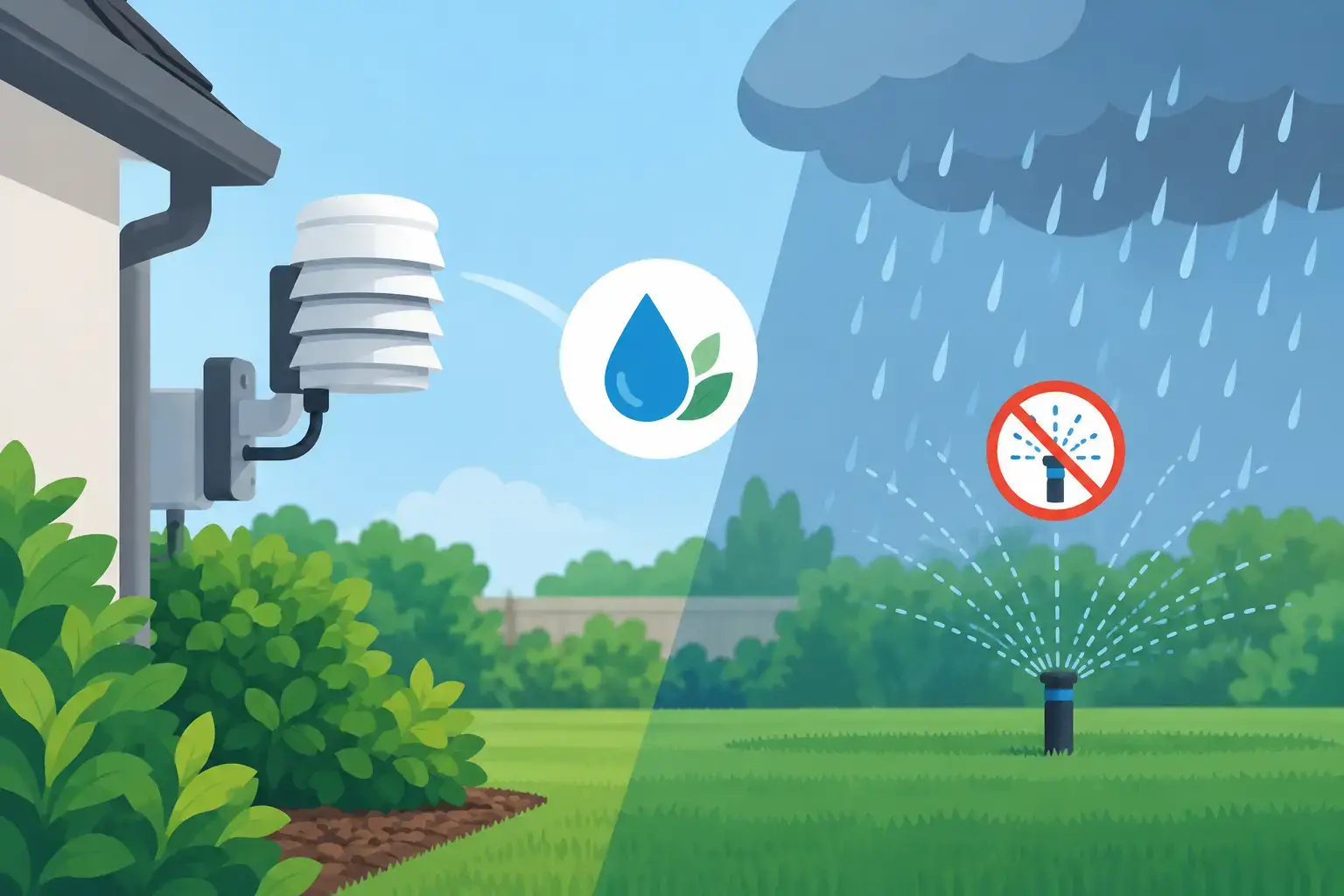
A sprinkler rain sensor is a small addition to an irrigation system that can make a noticeable difference after a Virginia Peninsula rainstorm. Instead of allowing sprinklers to run while rain is already soaking the lawn, it temporarily interrupts scheduled watering. For homeowners who want healthy turf, attractive planting beds, and more responsible water use, it is one of the most practical upgrades available for an in-ground system.
Table of Contents
ToggleWhat a Sprinkler Rain Sensor Does
A rain sensor works with your irrigation controller to stop a scheduled cycle when enough rain has fallen. The sensor is usually mounted in an open outdoor location, where it can receive rainfall without being shielded by a roofline, dense tree canopy, or other obstruction.
Inside the unit are absorbent discs or a similar moisture-sensitive component. As they become wet, the sensor sends a signal that prevents the controller from activating the irrigation zones. Once the discs dry, the system resumes its normal schedule.
This does not mean the sensor decides exactly how much water each part of the yard needs. It simply prevents irrigation when rainfall has already supplied water. That distinction matters. A rain sensor is an efficient safeguard, while the controller schedule, sprinkler coverage, soil conditions, plant material, and seasonal adjustments still determine whether the landscape is being watered correctly.
For a Newport News homeowner, that safeguard is valuable. Summer thunderstorms can move through quickly, delivering enough water to make a sprinkler cycle unnecessary. Running irrigation immediately afterward can lead to puddling, runoff across sidewalks, and overly wet turf or planting beds.
Why It Helps Your Lawn and Landscape
Watering during or shortly after rainfall wastes more than water. It can work against the appearance and health of the landscape you have invested in.
Lawns need moisture, but consistently saturated soil reduces the oxygen available around grass roots. In low areas or heavily compacted soil, excess water may linger long after a storm. That can create weak turf, encourage certain lawn diseases, and make a yard feel soft or muddy underfoot. Flower beds and ornamental shrubs also have different moisture needs than turf, so preventing unnecessary irrigation helps protect the whole property rather than treating every zone the same.
A properly working sensor also helps keep water where it belongs. If a sprinkler cycle runs on rain-soaked ground, water is more likely to flow toward curbs, driveways, and storm drains instead of soaking into the root zone. Besides being inefficient, that runoff can carry soil, mulch, and lawn-care materials out of the landscape.
There is a property-care benefit as well. Homeowners often notice irrigation problems only when they see sprinkler heads running in the rain. A sensor does not replace inspections or maintenance, but it shows that the system has been set up with care. That attention supports the clean, well-maintained exterior that makes a house feel more like home.
Rain Sensor vs. Smart Controller
A rain sensor and a smart irrigation controller can both reduce unnecessary watering, but they do it differently.
A traditional controller follows the schedule programmed into it. Adding a rain sensor gives that controller a simple, dependable weather-based interruption. This can be an excellent solution for a homeowner who has a functioning controller and wants a cost-conscious improvement without replacing the entire control system.
A smart controller typically uses local weather information, seasonal data, and programmed landscape details to adjust watering times or run lengths. Depending on the model and how it is configured, it may account for predicted rainfall, temperature, and seasonal evaporation. It can offer more flexibility, especially on properties with varied planting areas or homeowners who want app-based control.
Neither option is automatically right for every yard. A rain sensor is straightforward and effective when the irrigation schedule is already well managed. A smart controller may make more sense for a larger property, a complex zone layout, or a system that needs broader modernization. In some cases, a rain sensor can also be paired with a compatible controller for another layer of protection.
Choosing the Right Location for a Rain Sensor
Location is one of the most important parts of installation. The sensor needs to receive normal rainfall, yet it should not be blasted continuously by irrigation spray. A common mounting location is on a gutter edge, fence, or other elevated exterior surface with an open view of the sky.
Avoid placing it under eaves, beneath thick branches, or near areas where roof runoff pours directly onto it. A sensor tucked beneath an overhang may stay dry during a storm and allow the irrigation cycle to run. One placed directly in a heavy runoff path may remain wet much longer than the lawn, delaying the return to the regular watering schedule.
The sensor should also be accessible for occasional inspection. Over time, leaves, pollen, insects, or debris can affect the sensor or its mounting position. A professional installation considers the wiring path, controller compatibility, location, and future service access rather than simply attaching the device to the nearest surface.
Wired and Wireless Options
Wired rain sensors connect directly to the irrigation controller. They are reliable, commonly used, and well suited for systems where the controller and sensor location can be connected neatly. During installation, the wire should be protected and routed carefully so it does not become a future maintenance issue.
Wireless sensors use a transmitter outside and a receiver near the controller. They can be helpful when running a wire across a finished yard, driveway, patio, or other hardscape would be disruptive. Battery life and signal range should be considered, particularly on larger properties or homes with masonry walls that may affect communication.
The best choice depends on the existing irrigation setup. Homeowners often focus on the device itself, but compatibility with the controller and quality of installation are just as important. An experienced irrigation technician can identify whether a wired connection, wireless unit, or controller upgrade will provide the most dependable result.
Settings That Need Attention
Most rain sensors include an adjustment for the amount of rainfall required before irrigation is paused. A lower setting reacts after relatively light rain, while a higher setting waits for more substantial rainfall. There is no single setting that works perfectly for every property.
Soil texture, drainage, shade, slope, and the type of plants being watered all affect the right approach. A shaded lawn with slow-draining soil may need a more sensitive setting than a sunny, well-drained area. Newly planted shrubs may have different watering needs than established turf, and a rain sensor should be considered as part of the larger irrigation plan rather than a set-it-and-forget-it device.
Homeowners should also understand the manual bypass feature on their controller. Bypass is useful when testing zones, checking coverage, or watering a specific new planting after a light rain. It should not be left on by accident. If the system seems to be watering during rain, a bypass setting is one of the first things worth checking.
Seasonal Care Makes the Sensor More Reliable
A sensor needs very little routine attention, but it should be included in seasonal irrigation service. During spring start-up, verify that it is mounted securely, communicating with the controller, and able to stop a cycle when activated. During the growing season, check for debris and make sure nearby branches or new construction have not changed its exposure to rainfall.
In fall, the entire irrigation system should be prepared for winter conditions. The sensor itself is only one part of that process. Proper shutdown and winterization help protect valves, lines, backflow components, and other equipment from damage when temperatures drop.
At Year Round Lawn Maintenance, our irrigation work is approached as part of the full landscape, not as an isolated mechanical system. A rain sensor works best when sprinkler heads are delivering even coverage, zones are programmed for the season, and the lawn and beds are evaluated together.
A small sensor will not correct broken heads, poor drainage, or a watering schedule that never matched the yard in the first place. But when it is installed and adjusted correctly, it prevents an easy-to-miss source of waste and helps your irrigation system respond more sensibly to the weather outside your door. That is a practical step toward keeping your yard looking its best through every season.