
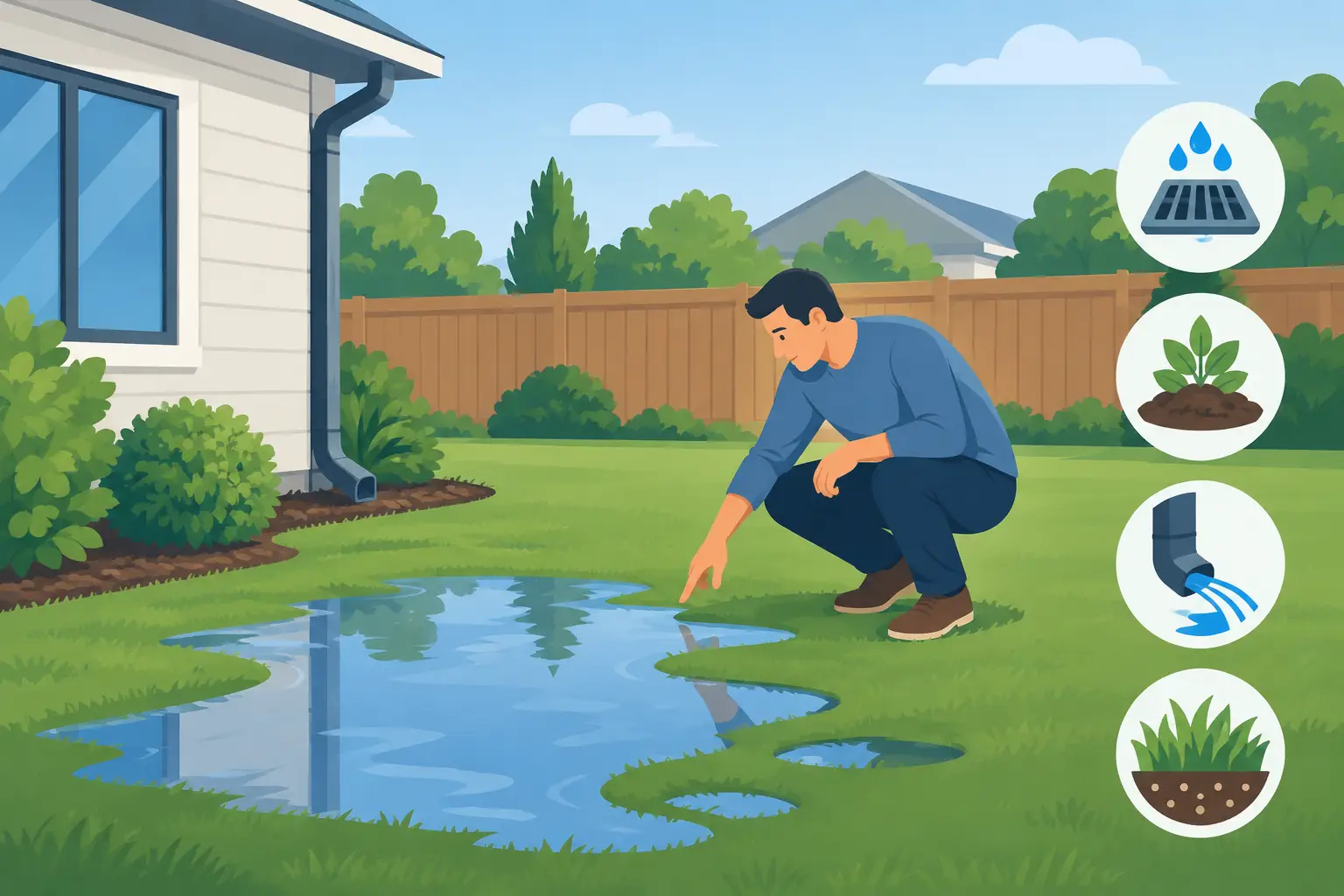
A puddle that remains after a summer thunderstorm is one thing. Water still standing near a walkway, planting bed, patio, or foundation a day or two later is a sign that deserves attention. Understanding why water pools in a yard helps homeowners protect more than curb appeal. It can prevent stressed turf, washed-out mulch, mosquito activity, damaged hardscaping, and moisture problems around the home.
On the Virginia Peninsula, heavy rain, humid summers, mature trees, and a wide range of soil conditions can all affect how a property handles water. The right solution depends on where the water starts, where it travels, and what is keeping it from soaking in or draining away.
Table of Contents
ToggleWhy Water Pools in Your Yard
Water always follows the easiest available path. If a low area has nowhere to drain, or if the soil cannot absorb rainfall fast enough, that water settles there. What looks like one wet spot may be caused by several connected issues, from a downspout discharge to an irrigation zone that runs too long.
The yard has low spots or incorrect grading
A lawn should generally guide water away from the house and toward a safe drainage area. Over time, soil can settle around foundations, along patios, and beneath old landscape beds. A lawn may also have been graded poorly during a previous project, leaving a shallow bowl that collects runoff.
Low spots are especially common where a tree was removed, a trench was backfilled, or construction equipment compacted the ground. Adding soil to the visible dip can sometimes help, but it is not always a complete repair. If water is being directed into that area from a roof, driveway, neighboring slope, or patio, the larger drainage pattern needs to be corrected.
Compacted soil is slowing absorption
Healthy soil has small air spaces that allow water, oxygen, and roots to move through it. Foot traffic, machinery, repeated mowing on wet ground, and naturally dense soil can compress those spaces. When rain falls on compacted turf, it may sit on the surface rather than soaking into the root zone.
Compaction can make a lawn feel firm underfoot and look thin or stressed during dry stretches, even though the same area becomes muddy in rain. Core aeration may improve infiltration when compaction is the main issue. However, aeration will not solve a true grading problem or a drainage source that is delivering too much water to one place.
Downspouts and hard surfaces concentrate runoff
A roof sheds a surprising amount of water during a strong storm. If downspouts empty directly beside the foundation or into a planting bed, that concentrated flow can saturate the ground quickly. Water from driveways, walkways, and patios has the same effect because it cannot soak through those hard surfaces.
The goal is not simply to move water farther away. It is to direct it to a suitable location where it can disperse without creating a new problem for the lawn, a neighbor, or the home. Depending on the property, that may involve extending downspouts, shaping a swale, adding a catch basin, or routing water through a properly installed drainage line.
Irrigation may be adding more water than the lawn needs
An in-ground sprinkler system should support rainfall, not compete with it. A controller that runs on a fixed schedule can keep watering after a wet week, particularly if rain-sensing equipment is not working properly. Broken sprinkler heads, leaking valves, poor nozzle coverage, or a zone that runs too long can also create persistently wet turf.
If pooling appears in the same place even during dry weather, run each irrigation zone and watch closely. Look for water bubbling from the ground, overspray against hardscapes, or a head that is not popping up or shutting off correctly. A Rain Bird irrigation system can be adjusted to match plant material, sun exposure, and seasonal conditions, but it needs periodic inspection to perform as intended.
Landscape beds, edging, and patios can change water flow
Landscape improvements add beauty and function, yet every new feature affects drainage. Raised edging may act like a small dam. Mulch and soil added around a foundation can alter the slope. A patio that settles or was installed without proper pitch can send water back toward the home instead of away from it.
This does not mean homeowners should avoid hardscaping or planting beds. It means drainage should be considered as part of the design. Proper base preparation, grading, and outlet planning make paver patios and stone features more comfortable to use and easier to maintain after storms.
What Standing Water Can Do to Your Property
A damp lawn after rain is normal. Standing water that lingers can weaken grass roots by limiting oxygen in the soil. Turf may turn yellow, thin out, or develop bare areas that invite weeds. In planting beds, repeated saturation can cause root decline, fungal issues, and loss of plants that prefer well-drained soil.
Pooling near a home deserves prompt attention. Water against a foundation can contribute to moisture concerns, while runoff under pavers can disturb the base and lead to settling. Mosquitoes also need only small amounts of still water to breed, making shallow puddles an everyday nuisance during warm weather.
The timing matters. A low spot that drains within several hours after a major storm may only need observation. Water that remains for 24 to 48 hours, returns after ordinary rain, or appears close to the foundation is worth a professional assessment.
How to Find the Source Before Choosing a Fix
The best time to inspect a drainage concern is during rain or shortly afterward. Walk the property and note where water first appears, not just where it ends up. Check downspout outlets, driveway edges, patio joints, sprinkler heads, and the slope of surrounding turf.
Pay attention to patterns. If the area only floods after intense rain, runoff volume or grading may be the issue. If it remains wet all season, compacted soil, a hidden irrigation leak, or a naturally high-water area may be involved. If the problem began after a patio, bed, fence, or tree removal project, changes to the grade are a useful clue.
Homeowners can make simple corrections such as clearing debris from a downspout outlet or resetting an irrigation schedule after a rainy period. Avoid repeatedly adding loose topsoil or mulch without identifying the water source. Material can wash away, bury grass, or eventually raise the grade too high against the house.
Drainage Solutions That Fit the Property
A lasting repair is usually tailored to the yard rather than chosen from a one-size-fits-all menu. Minor surface dips may respond well to careful regrading and turf restoration. Compacted lawns may benefit from core aeration, appropriate soil improvement, and a turf-care plan that strengthens roots.
For runoff from roofs and paved areas, extended downspouts, drainage piping, catch basins, or dry wells may be appropriate when site conditions allow. A shallow swale can move surface water through the landscape more naturally, while a French drain can help collect subsurface water in the right application. Each option needs a reliable outlet. Installing a drain without a place for water to go simply relocates the puddle.
Where patios, walkways, or planting beds are involved, the repair may include reworking the surrounding grade and adjusting the feature itself. This is often the difference between a temporary improvement and an outdoor space that stays attractive, usable, and stable through changing weather.
When to Call a Drainage Professional
Professional help is a wise choice when water collects near the foundation, crosses a patio or driveway, causes erosion, damages turf repeatedly, or does not drain within a reasonable time. It is also helpful when irrigation and drainage appear connected. A full review can identify whether the problem is the water source, the soil, the grade, or a combination of all three.
Year Round Lawn Maintenance approaches drainage as part of the whole outdoor property. The most effective work considers lawn health, irrigation performance, planting beds, and hardscaping together, so one improvement does not create trouble somewhere else.
A dry, well-graded yard is easier to enjoy after every storm. If a recurring puddle is taking over part of your lawn or outdoor living space, addressing it early can help your home look cared for, keep your landscape healthier, and make the space feel more like home in every season.