
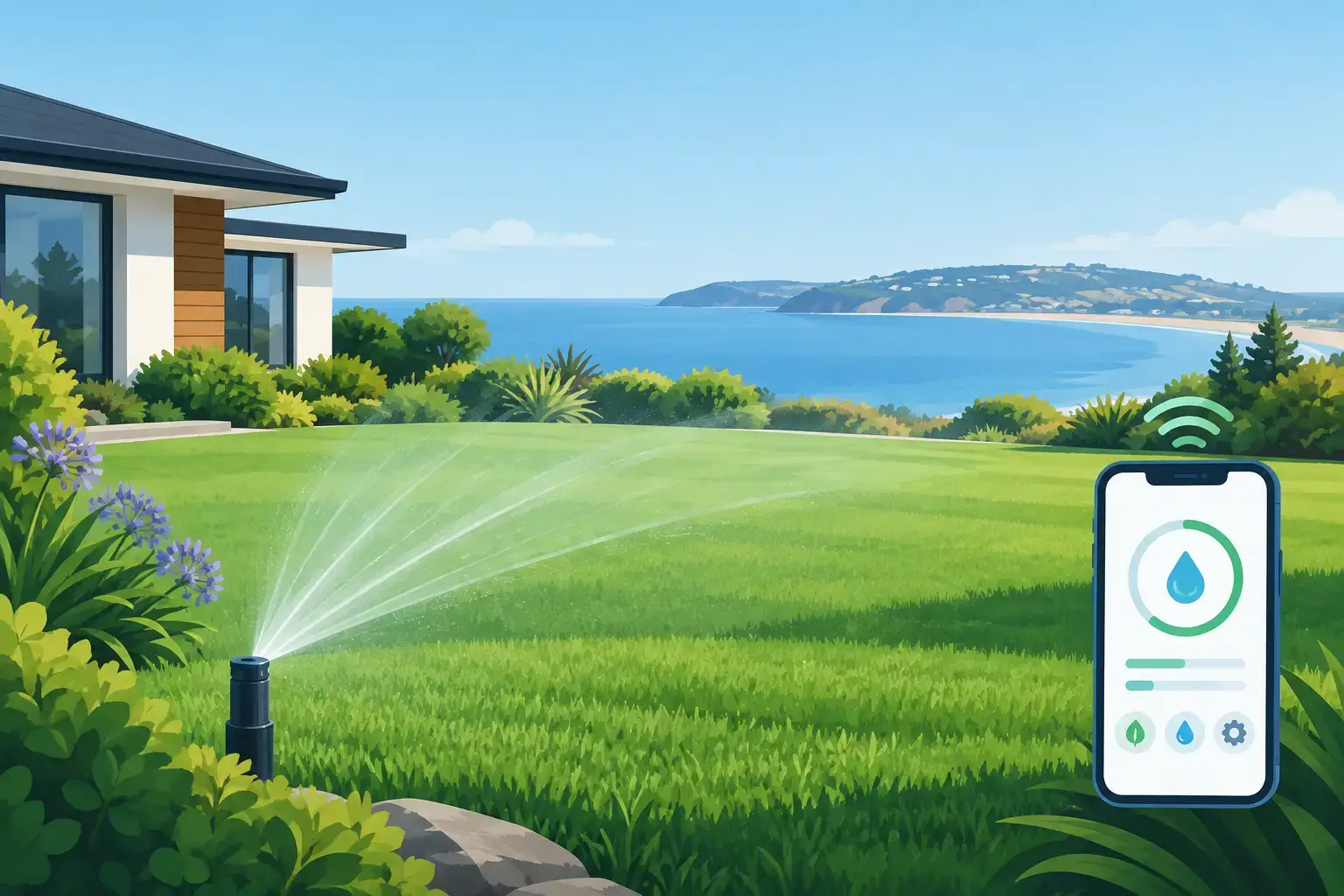
A Newport News lawn can look thirsty on Monday, receive a soaking rain on Wednesday, and face hot afternoon sun by the weekend. Smart sprinklers give homeowners a better way to respond to those changing conditions. Instead of relying on a fixed timer and hoping it matches the weather, a properly designed smart irrigation system adjusts watering decisions around what the lawn and landscape actually need.
For homeowners who value a healthy lawn, attractive planting beds, and dependable curb appeal, that control can make a visible difference. The goal is not to run sprinklers more often. It is to apply the right amount of water, in the right places, at the right time.
Table of Contents
ToggleWhat Makes Smart Sprinklers Different?
The sprinkler heads themselves may look much like a traditional in-ground system. In most cases, the real upgrade is the controller, which is the system’s command center. A smart controller replaces or enhances a basic timer with features such as Wi-Fi access, weather-based scheduling, seasonal adjustments, zone-by-zone programming, and alerts when something is not operating as expected.
Traditional timers follow the schedule entered by the homeowner. If a zone is programmed for 20 minutes every Tuesday and Friday, it will run for 20 minutes whether the ground is already saturated or temperatures have climbed into the 90s. A smart controller can use local weather data, rain-sensor input, and programmed landscape details to make more informed adjustments.
This does not mean every system can predict every watering need perfectly. Soil type, slope, shade, plant maturity, drainage, and sprinkler coverage still matter. Smart technology is most useful when it is paired with a sound irrigation design and a professional understanding of the property.
Why Smart Sprinklers Make Sense in Coastal Virginia
Virginia Peninsula weather asks a lot of residential landscapes. Spring rain can be frequent, summer heat can dry exposed turf quickly, and hurricane-season storms can drop more water in a day than a lawn needs in a week. A fixed watering schedule often struggles to keep up with those swings.
Smart irrigation helps reduce unnecessary watering after rain while allowing schedules to increase during a dry stretch. That can protect grass from the repeated stress of too little water without keeping the soil constantly wet. Overwatering can be just as troublesome as underwatering. It can encourage shallow roots, increase disease pressure, waste water, and leave paved areas slick or stained from runoff.
For planting beds, thoughtful zone control is especially valuable. A shaded bed of established shrubs does not need the same watering schedule as a sunny front lawn or newly installed landscaping. When these areas are grouped and programmed correctly, the landscape receives more appropriate care without forcing one setting across the entire yard.
A smart system can also make life easier for homeowners who travel, manage a busy household, or simply do not want to stand outside resetting a controller after every major weather shift. Many controllers allow convenient adjustments from a phone or tablet. That access is helpful, but it should not replace seasonal inspections and hands-on maintenance.
The Right Watering Schedule Starts With the Property
No controller, smart or otherwise, can correct poor coverage. If one section of turf receives too much water while another stays dry, the problem may be a damaged head, a clogged nozzle, improper spacing, low pressure, or a zone design that no longer fits the landscape.
Before upgrading a controller, it is wise to evaluate the system as a whole. A professional irrigation inspection can identify leaks, sunken heads, broken fittings, overspray onto driveways, and zones that need to be adjusted as plants grow. A mature shrub that now blocks a spray pattern can leave a dry patch behind it. A paver patio or expanded planting bed may require changes to nearby irrigation to avoid watering hardscape instead of turf.
Watering duration should also match the soil’s ability to absorb moisture. Heavy or compacted soil can produce runoff when water is applied too quickly. In those cases, a cycle-and-soak schedule may work better: the controller runs a shorter cycle, pauses to let water move into the soil, then resumes. This approach is often more effective than one long watering session that sends water down the curb.
Smart Controllers Are Not a Set-It-and-Forget-It Solution
Smart irrigation offers meaningful convenience, but it still needs professional setup and periodic attention. Weather-based recommendations are only as useful as the information entered into the controller. The system should be told what each zone serves, whether it is turf or landscaping, how much sun it receives, and what kind of sprinkler heads are installed.
It also needs a reliable connection if it depends on Wi-Fi weather data. If the connection drops, the controller may revert to a backup schedule. That is not necessarily a problem, but homeowners should know how their model handles outages and confirm the backup settings are sensible.
A rain sensor remains a valuable safeguard, even with a weather-aware controller. Depending on the system and settings, a sensor can stop irrigation promptly when rainfall is detected. Freeze protection is another consideration during colder months. Irrigation systems on the Peninsula should be winterized properly, and the controller should not be allowed to run during freezing conditions.
The biggest trade-off is that advanced technology has more settings to manage. A simple timer may feel easier at first, while a smart controller offers greater control once it is configured correctly. For many homeowners, the best answer is a controller that is easy to use day to day and supported by a team that can inspect, adjust, and service the full irrigation system over time.
When a Smart Upgrade Is Worth Considering
A smart controller can be a practical upgrade when an existing in-ground sprinkler system is structurally sound but the old timer is difficult to program or does not account for weather. It may also be a good fit after landscape renovations, new turf installation, or changes that add planting beds, patios, or outdoor living areas.
Homeowners should consider an upgrade if they regularly see sprinklers operating in the rain, notice persistent dry spots despite frequent watering, or have trouble remembering to change schedules between spring, summer, and fall. Those issues may point to programming problems, but they can also reveal coverage or repair needs. An evaluation should address both.
For a new irrigation installation, smart controls are worth discussing during the design stage. Starting with well-planned zones, efficient Rain Bird components, proper head placement, and a controller suited to the home’s needs creates a stronger foundation than adding technology later to a poorly matched system.
Keep the System Working Through Every Season
The most reliable irrigation systems receive regular attention. In spring, each zone should be checked as the system is brought back online. During summer, heads may need adjustment as mowing patterns, plant growth, and weather conditions change. In fall, watering schedules should be reduced as temperatures cool and rainfall patterns shift. Winterization protects the system from freeze damage before cold weather arrives.
Homeowners can help between service visits by watching for unusually green patches, soggy areas, water pooling near heads, or spray reaching sidewalks and siding. These are small signs that can prevent larger repairs and wasted water when addressed early.
A beautiful lawn is not created by watering more. It comes from watering with purpose, supporting healthy roots, and making sure every part of the irrigation system is working as intended. When your yard needs a seasonal adjustment or a closer look, a knowledgeable local irrigation team can help make each watering cycle count.