
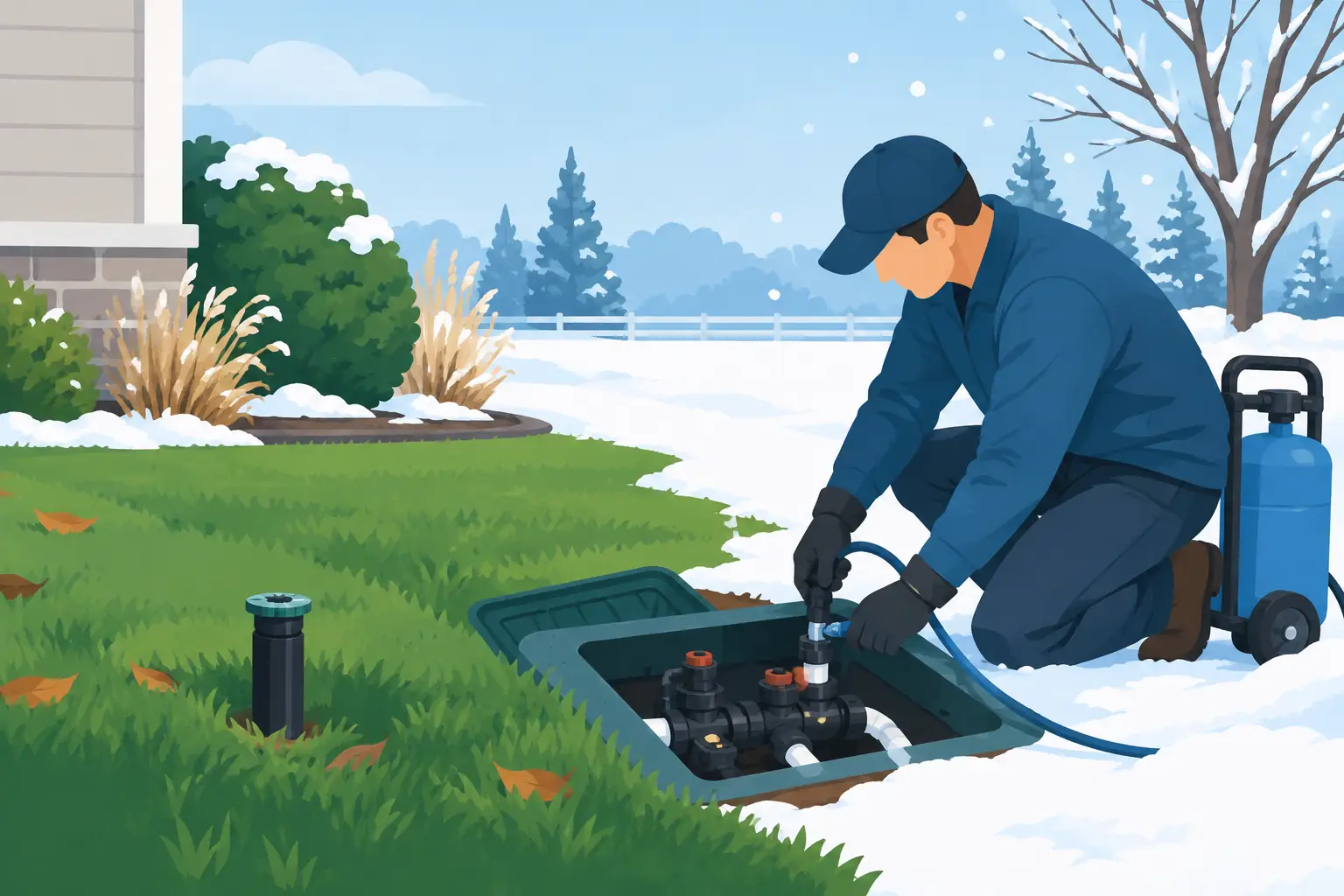
A sprinkler system can look perfectly fine after its last fall watering cycle, yet still be vulnerable to expensive freeze damage. An irrigation system winterization service removes water from the components that cannot safely hold it through cold weather, helping Newport News homeowners protect the system that keeps their lawn, planting beds, and landscape looking their best all season long.
For a system with underground pipes, valves, backflow prevention equipment, and multiple watering zones, winterization is not simply a matter of turning off the controller. It is preventive maintenance that helps preserve the investment beneath your lawn before winter temperatures arrive.
Table of Contents
ToggleWhy sprinkler systems need winter protection
Water expands as it freezes. When water remains in an irrigation line, valve, sprinkler head, or above-ground backflow device during a hard freeze, that expansion can crack plastic fittings, split pipes, damage seals, or harm the backflow assembly. Some damage is obvious right away. Other problems do not reveal themselves until spring, when a zone will not hold pressure or water begins surfacing in an unexpected part of the yard.
Virginia Peninsula winters can be unpredictable. A mild stretch in late fall can lead homeowners to assume their irrigation system is safe for another few weeks, followed by a sudden cold snap that puts exposed components at risk. The goal is not to guess whether every winter night will be freezing. It is to prepare the system before freezing conditions become a concern.
A properly winterized system also starts the spring in better shape. Instead of beginning the watering season with a broken fitting, a leaking valve, or a backflow repair, you have a clearer path to an efficient startup and a healthy lawn.
What an irrigation system winterization service includes
The right winterization process depends on how your system was installed, the type of backflow prevention device in place, and whether the irrigation lines can drain by gravity. A professional technician begins by shutting down the water supply to the irrigation system and turning off or adjusting the controller for the inactive season.
The key step is clearing water from the irrigation lines. Many in-ground systems require a carefully controlled compressed-air blowout to push remaining water through each zone and out of the sprinkler heads. This must be done with the appropriate equipment and pressure for the system. Too little air pressure may leave water behind. Too much pressure can damage fittings, valves, or sprinkler components.
The technician should also address the backflow preventer and other exposed parts that need protection. Since these assemblies are particularly vulnerable during a freeze, their winter care deserves close attention. A thorough visit may include a visual review of irrigation heads, valve boxes, and other accessible components so problems can be identified before spring arrives.
At Year Round Lawn Maintenance Inc., this work is approached as part of keeping the entire outdoor property in good condition through every season. Your irrigation system supports your turf, beds, and landscape investment, so protecting it in winter is just as practical as providing the right watering in summer.
When should you schedule sprinkler winterization?
For most homeowners in Newport News and the surrounding Virginia Peninsula, it is wise to schedule winterization in the fall, before sustained freezing temperatures are expected. The precise date changes from year to year, which is why waiting for the first hard freeze can create unnecessary risk.
Your lawn may still need occasional water during an unusually dry fall, especially if new sod, trees, shrubs, or planting beds were installed recently. In that case, speak with your irrigation professional about timing. A newly planted landscape has different moisture needs than an established lawn, but it still needs protection from freezing weather. The answer may be to monitor rainfall and water by hand as needed after the irrigation system is shut down.
Homeowners who leave town for the holidays or spend part of the winter away should plan even earlier. It is difficult to respond to an overnight freeze when no one is home to check the system.
Why turning off the controller is not enough
Turning off the irrigation controller stops scheduled watering, but it does not remove water trapped in underground lines and system components. In fact, a controller can be off while the irrigation system remains fully pressurized and vulnerable.
Similarly, shutting off the water supply alone may not protect every section of the system. Water can remain in low points of piping, sprinkler heads, valves, and backflow devices. The layout of the property matters. A system serving a flat front lawn may drain differently than one running through sloped beds, around a patio, or across several areas of the yard.
This is why professional winterization is especially valuable for systems with multiple zones, older components, or a history of leaks and pressure issues. A technician can follow a method suited to the system rather than relying on a one-size-fits-all shutdown.
Is DIY winterization a good idea?
Some homeowners are comfortable managing simple irrigation tasks, such as adjusting a controller or checking sprinkler heads. Winterizing a full in-ground system is different. It requires knowing the location of shutoff valves, understanding the backflow device, and using compressed air safely and at the correct pressure.
A DIY approach can make sense only when you have the right equipment, clear knowledge of the system, and confidence in the manufacturer’s requirements. Renting or buying an air compressor is not automatically the economical choice if it is not powerful enough to clear the zones or cannot be controlled accurately. A mistake can create the very repairs winterization is meant to avoid.
Professional service offers another practical benefit: familiarity with your system’s condition. If a technician notices a damaged sprinkler head, a valve concern, poor drainage, or signs of a leak, you can plan a repair before spring demand increases. That gives you more control over your property maintenance budget and fewer surprises when your lawn begins growing again.
Common signs of winter damage
Not every frozen irrigation component fails in the same way. A cracked backflow preventer may leak immediately when the water supply is restored. A split underground pipe may appear as a wet patch, poor water pressure, or a zone that does not perform as expected. Damaged valves can cause a zone to stay on, fail to turn on, or seep water even when the system is off.
Watch for these issues when irrigation season returns, but do not assume winter damage is unavoidable. Scheduling service at the right time is far easier and typically far less disruptive than locating and repairing a broken line beneath established turf, mulch, or hardscaping.
Plan ahead for a smoother spring startup
Winterization and spring activation work best as a pair. In the fall, the system is shut down and protected. In the spring, water is restored gradually, components are checked, and each zone is reviewed for coverage and performance. This is also an ideal time to adjust watering schedules for new plantings, turf conditions, and seasonal rainfall.
If your lawn has struggled with dry areas, runoff, or uneven growth, spring startup is a good opportunity to discuss whether the issue is related to irrigation coverage, soil conditions, turf health, or landscaping changes. A dependable irrigation system should support the rest of your outdoor space, not create more work for you.
A little planning before winter helps protect the landscape you have worked hard to build. Schedule your irrigation winterization before freezing weather becomes a last-minute concern, then enjoy the confidence of knowing your system is ready to serve your home again when spring returns.