
A lawn can be neatly mowed and still look thin, pale, or tired by midsummer. On the Virginia Peninsula, heat, humidity, compacted soil, shade, and inconsistent watering all affect how turf responds to fertilizer. This guide to lawn fertilization will help Newport News homeowners feed their lawns with better timing and purpose, rather than simply applying a bag of product when the grass looks stressed.
Fertilizer is one part of a healthy turf plan, not a quick fix for every lawn problem. When it is matched to your grass type, soil condition, mowing habits, and irrigation, it can encourage thicker growth, richer color, and stronger roots. Applied at the wrong time or in excessive amounts, it can create weak, fast top growth, increase disease pressure, and waste both product and water.
Table of Contents
ToggleA Guide to Lawn Fertilization in Newport News
The first question is not which fertilizer brand to buy. It is what kind of grass is growing in your yard. Many Peninsula lawns are tall fescue, a cool-season grass that performs best when most of its nutrition is supplied in fall. Bermuda grass and zoysia are warm-season options that should be fertilized primarily during active growth from late spring through summer.
This distinction matters because grass uses nutrients differently throughout the year. Tall fescue often struggles through our hottest weather, even with good care. Pushing it with a heavy summer feeding can produce tender growth that is more vulnerable to heat stress and fungal disease. Bermuda, on the other hand, needs available nutrition when it is green and actively spreading, but should not be heavily fertilized as it heads toward winter dormancy.
Before setting a schedule, consider a professional soil test. A test identifies soil pH and the existing levels of nutrients such as phosphorus and potassium. Virginia soils can vary widely from one neighborhood to the next, and a lawn that receives fertilizer every year may still be missing the nutrients it needs most. Adding phosphorus when the soil already has enough is not helpful. Correcting an overly acidic soil with lime, however, may make the fertilizer you use much more effective.
Read the fertilizer analysis
Every fertilizer bag shows three numbers, such as 24-0-10. They represent the percentage by weight of nitrogen, phosphorus, and potassium, in that order. Nitrogen supports green growth and color. Phosphorus supports root development, especially for newly seeded or newly installed turf. Potassium contributes to overall plant health and stress tolerance.
For an established lawn, nitrogen usually drives the fertilization decision. A fertilizer with slow-release nitrogen feeds the lawn more gradually, which supports steadier growth and reduces the chance of a sudden surge that demands extra mowing. Quick-release products can provide a fast response, but they require more precision and are easier to overapply.
A soil test should guide your phosphorus and potassium choices. If you are establishing a new lawn from seed, repairing bare areas, or installing sod, the nutrient needs may be different from those of an established yard. That is one reason a single, year-round fertilizer product is rarely the best answer for every property.
Build Your Lawn Fertilization Plan by Season
For tall fescue, fall is the most valuable fertilization season. The grass is recovering from summer, soil temperatures remain favorable for root growth, and cooler air reduces stress. A well-timed fall program helps a fescue lawn enter winter with deeper roots and return more densely in spring.
A typical tall fescue plan may include a light feeding in early fall after temperatures begin to ease, followed by another application later in fall. Some lawns also benefit from a measured late-fall application, depending on soil-test results, turf density, and the total nitrogen applied over the year. Avoid treating every lawn the same. A shaded lawn, a heavily used lawn, and a newly seeded lawn each have different needs.
Spring feeding for fescue should be modest. The goal is to support healthy color and recovery without encouraging excessive blade growth before summer arrives. Heavy spring fertilizer often creates a lawn that looks impressive briefly but is less prepared for heat. If your fescue is thin in spring, identify the cause before adding more fertilizer. Compaction, shade, poor drainage, insects, disease, or weak fall root development may be the real issue.
Summer is generally a maintenance period for tall fescue. Proper mowing height, adequate moisture, and careful observation matter more than aggressive feeding. Keep fescue on the taller side, usually around 3.5 to 4 inches, and avoid removing more than one-third of the grass blade in a single mowing. Taller turf shades the soil, helping it retain moisture and discouraging some weed growth.
Warm-season lawns follow a different rhythm. Bermuda and zoysia should be fertilized after they have fully greened up in late spring, then fed as needed during active summer growth. Stop heavy nitrogen applications early enough in fall to allow the grass to slow down naturally before colder weather. Fertilizing a warm-season lawn too late can leave it less prepared for winter conditions.
Apply Fertilizer Evenly and Water It In
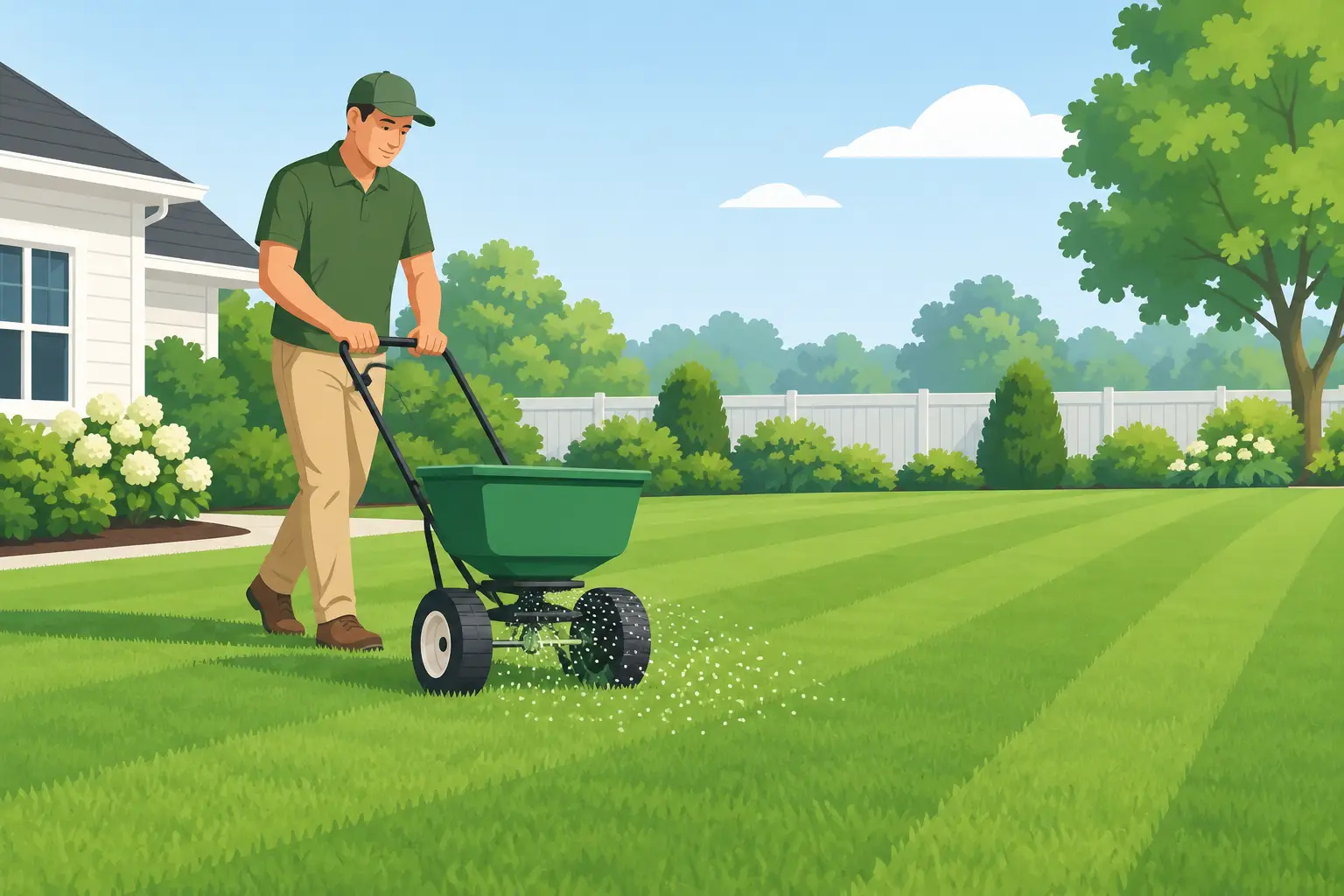
Even the right fertilizer can disappoint if it is applied unevenly. Use a calibrated broadcast or rotary spreader for open lawn areas, and make two lighter passes in different directions if that helps prevent striping. Keep fertilizer off driveways, sidewalks, and patios. Sweep any granules back into the lawn rather than washing them into storm drains.
Apply fertilizer to dry grass when rain is not expected immediately, unless the product label gives different instructions. Most granular products need watering after application to move nutrients into the soil and away from the grass blades. A dependable in-ground irrigation system makes this step easier, especially during dry stretches, but watering should be adjusted for rainfall and the needs of the turf. More water is not always better.
Aim for deep, infrequent watering rather than light daily sprinkling. Frequent shallow watering can encourage shallow roots and create conditions that favor disease. In many situations, lawns need roughly an inch of water per week from rainfall and irrigation combined, though soil type, slope, shade, and summer heat all change that number.
Do not fertilize a stressed lawn
If grass is wilted, drought-stressed, diseased, or dormant, resolve that problem before feeding it. Fertilizer is not medicine for a lawn that lacks water or has a drainage issue. The same is true for turf damaged by moles or other pests. Repairing the underlying problem and restoring soil contact in damaged areas will produce better results than adding more nutrients.
Be cautious with combination weed-and-feed products as well. They may be convenient, but the timing for weed control does not always match the ideal time for fertilization. Applying a herbicide when it is not needed can limit your options for overseeding, while applying fertilizer merely because weeds are present may not address the reason those weeds gained ground.
Support Fertilizer With the Right Lawn Care
Fertilizer works best when the lawn can use it. Annual core aeration relieves compaction and allows air, water, and nutrients to move into the root zone. For many tall fescue lawns, aeration and overseeding in early fall are among the most productive improvements a homeowner can make. Fresh seed has time to establish before summer heat returns, and fall fertilizer supports root development.
Mowing, irrigation, and fertilization should also work together. Dull mower blades tear grass instead of cutting it cleanly, creating a faded appearance and more stress. Overwatering can dilute the benefits of a carefully planned turf program, while under-watering prevents nutrients from moving into the root zone. A properly designed Rain Bird irrigation system can provide consistent coverage, but seasonal inspections and controller adjustments remain essential.
For established tall fescue, many lawns perform well with a total of about 2 to 4 pounds of nitrogen per 1,000 square feet each year, applied mostly in fall. Actively growing Bermuda may need more, often around 3 to 5 pounds annually. These are planning ranges, not one-size-fits-all instructions. Soil tests, grass variety, weather, shade, maintenance level, and local guidance should shape the final program.
A greener lawn is appealing, but the real goal is turf that stays thick, rooted, and resilient through changing weather. When fertilization is timed around the way your lawn actually grows, every mowing, watering cycle, and fall overseeding effort has a better chance to make your house feel more like home.