
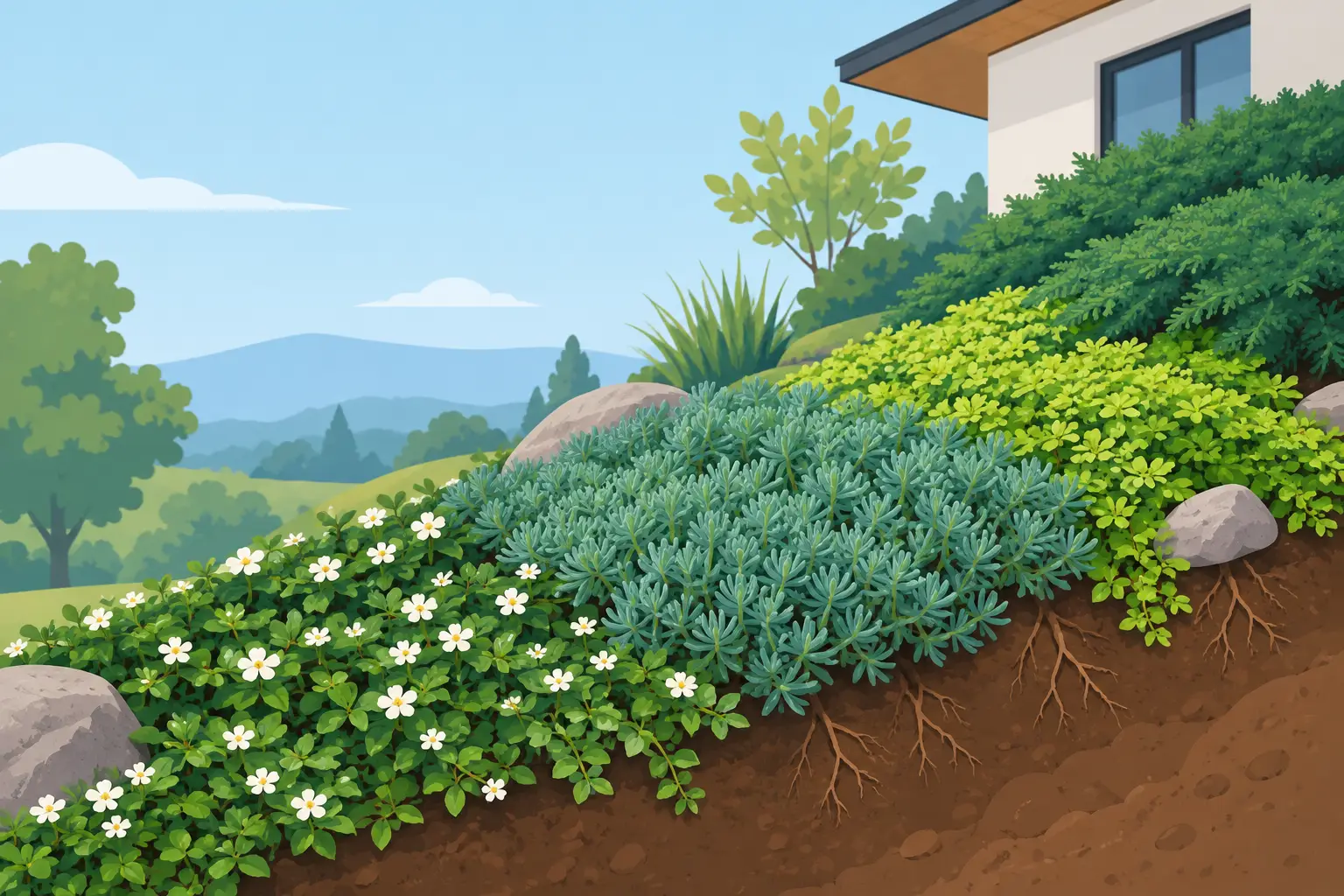
A bare slope can look harmless after a dry week, then lose soil, mulch, and young plants during one hard Virginia rain. The best groundcovers for erosion control do more than cover an empty bed. They hold soil in place with spreading roots, soften difficult slopes, and give your landscape a finished appearance without asking you to mow where mowing is unsafe or impractical.
For homeowners in Newport News and across the Virginia Peninsula, the right choice depends on more than how a plant looks in a nursery pot. Sun exposure, soil moisture, slope angle, drainage patterns, deer pressure, and the amount of maintenance you want all matter. A groundcover can be a smart, attractive part of an erosion-control plan, but it works best when the underlying water issue is addressed first.
Table of Contents
ToggleWhy Groundcovers Help Stop Soil Loss
Rainfall gains speed as it travels down a slope. When water runs over unprotected soil, it can carry fine particles, mulch, fertilizer, and seed with it. Over time, that runoff creates shallow channels, exposes roots, and leaves planting beds looking thin and uneven.
Established groundcovers slow the water before it reaches the bottom of the grade. Their foliage breaks up the impact of rain, while their root systems bind the upper layer of soil together. As the plants fill in, they also reduce bare spaces where weeds can take hold.
That does not mean every erosion problem can be planted away. A steep bank, an area with a failing downspout, or a slope that stays saturated may need drainage improvements, grading, stonework, or a retaining solution before planting begins. Groundcovers are highly effective for surface erosion, but they are not a substitute for correcting water that is being directed where it does not belong.
Best Groundcovers for Erosion Control in Coastal Virginia
The most successful plantings match the plant to the site instead of forcing one favorite groundcover into every bed. These options perform well in many Hampton Roads landscapes when they are planted and maintained correctly.
Creeping Juniper for Sunny, Dry Slopes
Creeping juniper is one of the strongest choices for a sunny bank with well-drained soil. Its low, spreading branches root and knit together across the surface, creating reliable year-round cover. The blue-green to gray-green foliage also gives a slope more visual interest during winter, when many beds look sparse.
Juniper is not the answer for every location. It needs sun and does not tolerate wet feet, so it is a poor fit at the bottom of a slope where water collects. Give individual plants enough room to spread, and avoid piling mulch heavily around the crowns.
Creeping Phlox for Spring Color
Creeping phlox is a cheerful choice for sunny slopes, retaining-wall edges, and rock gardens. In spring, it produces a dense blanket of pink, purple, blue, or white flowers, followed by low evergreen or semi-evergreen foliage that helps protect the soil through the rest of the year.
Its root system is not as substantial as a woody shrub, so creeping phlox is best on gentle to moderate slopes rather than unstable banks. It pairs especially well with stone edging or boulders, where the hardscape helps interrupt runoff and the plants soften the finished look.
Liriope for Part Sun and Shade
Liriope, often called monkey grass, is a familiar sight in Virginia landscapes for good reason. It handles heat, humidity, and a range of light conditions, while its dense clumps help stabilize soil along shaded edges and moderate slopes. Purple flower spikes in late summer add a simple seasonal detail.
Choose the right type for the job. Clumping liriope creates neat, defined masses and is easier to contain. Spreading liriope covers larger areas more quickly, but it can move beyond its intended bed if left unmanaged. For erosion control near woods or property lines, a planned installation with a clear edge makes a noticeable difference.
Pachysandra for Deep Shade
Where grass struggles beneath mature trees or along the shaded side of a home, pachysandra can create a clean, evergreen carpet. Its low foliage protects exposed soil and reduces the need to disturb shallow tree roots with repeated mowing or cultivation.
Pachysandra prefers consistently moist, well-drained soil and filtered to deep shade. It will not perform well in hot, open sun. Because airflow can be limited in dense shade, keep leaves and heavy debris from building up over the planting so moisture does not linger against the foliage.
Mondo Grass for Narrow Beds and Edges
Mondo grass offers a refined, grass-like texture for smaller banks, border areas, and spaces between larger shrubs. It establishes slowly compared with more aggressive spreading groundcovers, but its compact form makes it useful where you want erosion protection without a plant that will overtake nearby perennials.
It handles shade well and can tolerate some sun with adequate moisture. For a more natural-looking slope, mass several plants together rather than installing a single narrow row. The fuller planting will protect the soil sooner and look more intentional from the street.
Native Ferns and Sedges for Moist Shade
For shady areas that remain moist, native ferns and sedges can provide a more natural woodland appearance while helping keep soil covered. These plants are particularly useful near drainage swales, under established tree canopies, and beside wooded property edges where traditional turf is difficult to maintain.
They do require thoughtful selection. Some ferns prefer consistently damp ground, while others tolerate drier shade. Sedges also vary by species. A site evaluation helps ensure the plants are suited to the actual moisture level instead of the conditions you hope the area will have.
Planting Groundcover So It Actually Controls Erosion
A strong planting plan matters as much as the plant selection. A few widely spaced plants in loose soil will not prevent runoff during their first season. The goal is to establish a connected root zone and plant canopy as efficiently as possible without overcrowding the bed.
Start by watching where water enters and leaves the area. Downspouts should discharge away from the slope or into a properly designed drainage system. If runoff is cutting channels through the bed, correct that flow before installation. On a moderate slope, biodegradable erosion-control matting can protect the soil while plants root in.
Prepare the bed with minimal disturbance, especially around mature trees. Remove weeds, loosen compacted soil where appropriate, and add organic matter only if the existing soil needs improvement. Do not create a rich pocket of amended soil on a steep slope that can wash away from the surrounding grade.
For best results, follow these installation practices:
- Plant on the recommended spacing for the species and your desired fill-in time.
- Stagger plants in a triangular pattern instead of straight rows to create faster, more even coverage.
- Apply a light layer of mulch, keeping it back from stems and crowns.
- Water deeply and consistently through establishment, especially during the first summer.
- Check after heavy storms for exposed roots, displaced mulch, or new runoff channels.
Irrigation can be valuable during establishment, but it needs to be managed carefully. Overspray and short, frequent watering can contribute to shallow roots and runoff. A properly designed system delivers water where plants need it, then allows the soil to absorb it. This is one reason an integrated landscape approach can protect both plant health and the property around it.
Combine Plants With Smart Site Design
The best erosion-control landscapes rarely rely on one element alone. On a sloped front bed, low groundcovers may work alongside boulders, stone edging, ornamental shrubs, and a well-placed drainage solution. On a backyard grade near a patio, a retaining wall or terraced planting area may be the more dependable long-term answer.
Hardscape should not feel separate from planting. Stone can slow runoff and define changes in elevation, while groundcovers reduce the stark appearance of walls and help tie the landscape into the rest of the yard. The result is a space that looks deliberate rather than patched together after a drainage problem.
Year Round Lawn Maintenance Inc. helps homeowners evaluate these connected details, from plant selection and irrigation to grading, stonework, and ongoing landscape care. That coordination is especially useful when a slope affects curb appeal, drainage, and the health of nearby turf at the same time.
A well-planted slope should look calm after a storm, not freshly disturbed. Choose plants that fit the light and moisture on your property, give them the support to establish, and address runoff at its source. With that foundation in place, erosion control becomes one more way to make your home feel more finished and enjoyable in every season.