
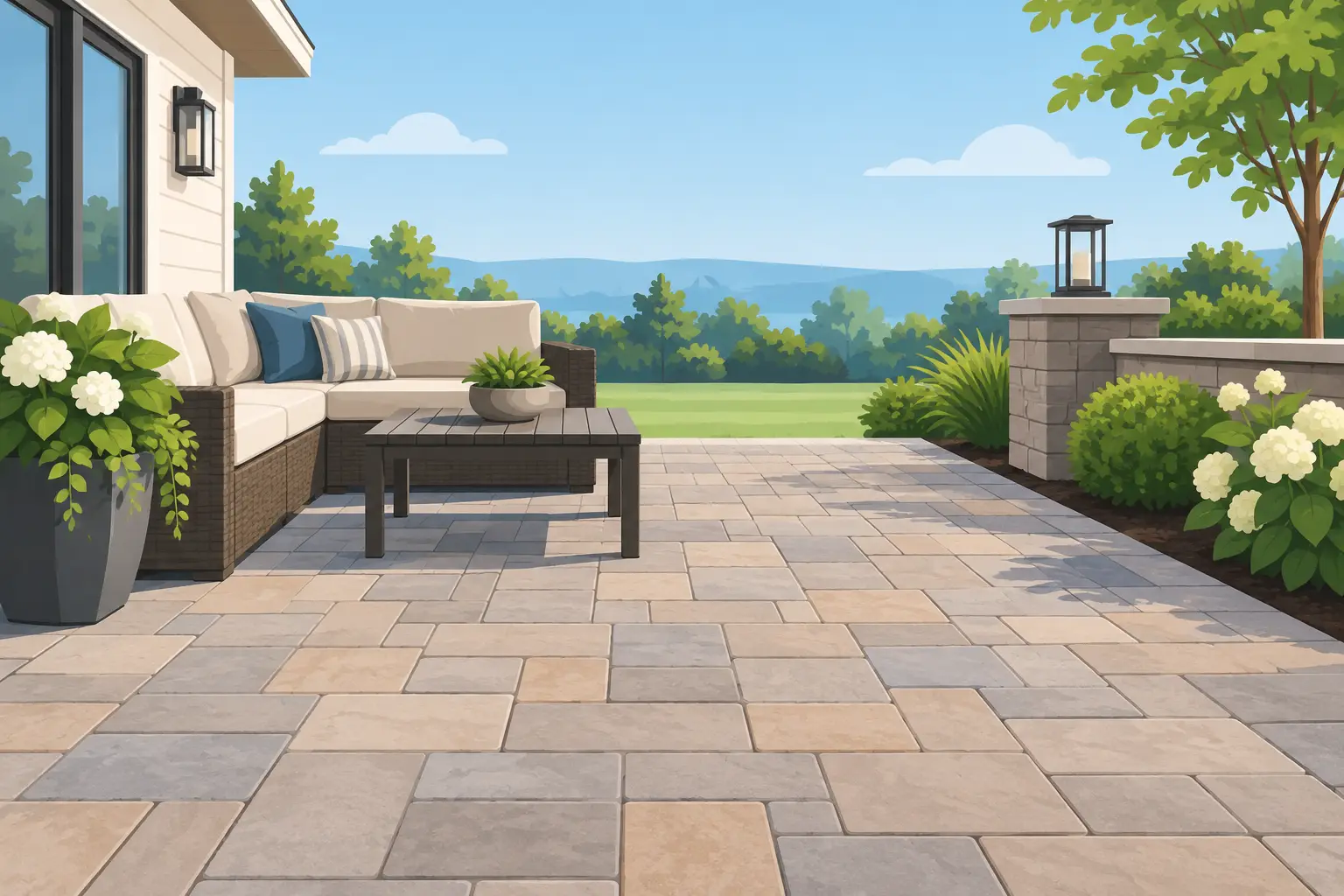
A paver patio should feel like a lasting part of your home, not a project that needs attention again after a few summers. A well-built paver patio lifespan commonly reaches 25 to 50 years or more, but that range depends far more on installation quality and site conditions than on the pavers alone.
For homeowners in Newport News and across the Virginia Peninsula, drainage deserves special attention. Our area can see heavy rain, humid summers, occasional winter freezes, and soil conditions that vary from one property to the next. When a patio is designed around those realities, it can provide decades of comfortable outdoor living, entertaining, and curb appeal.
Table of Contents
ToggleHow Long Does a Paver Patio Last?
Concrete pavers themselves are exceptionally durable. Many retain their structure and color for 30 years or longer, even with regular foot traffic, patio furniture, grills, and changing weather. Unlike a poured concrete slab, a paver surface is made of individual units with joints between them. That flexibility is a major advantage when the ground naturally expands, contracts, or settles over time.
Still, a patio’s useful life is not measured only by whether the pavers are intact. A patio should remain level, drain correctly, feel secure underfoot, and complement the rest of the landscape. If one section settles or a few pavers become stained or damaged, those individual pavers can often be lifted and replaced without tearing out the entire patio. That repairability can extend the practical life of the installation considerably.
A properly installed patio may serve a home for several decades. A patio installed over a weak base, however, can show uneven areas, loose edges, standing water, or joint loss much sooner. The difference is largely below the surface.
What Has the Biggest Effect on Paver Patio Lifespan?
The base beneath the pavers
The compacted aggregate base is the foundation of the entire project. It needs sufficient depth for the patio’s intended use, the site’s soil conditions, and the local climate. It also needs to be compacted in controlled layers rather than placed loosely and covered with sand.
When the base is prepared correctly, it spreads weight across the ground and helps prevent the pavers from shifting. Skipping careful excavation or compaction may lower the upfront price, but it can lead to costly corrections later. A patio can look excellent on installation day and still develop problems once rain, seasonal movement, and regular use begin to test it.
Drainage and proper slope
Water is one of the biggest threats to any hardscape. A patio should slope gently away from the house so rainwater moves away from the foundation instead of collecting near exterior walls. The surrounding grade, downspouts, planting beds, and nearby lawn areas all affect where that water goes next.
Water that drains through the paver joints is normal. Water trapped beneath the surface is not. Saturated base material can shift, soften nearby soil, and contribute to settling. On properties with challenging grades or frequent wet spots, drainage planning should happen before the first paver is installed, not after puddles appear.
Edge restraints
Pavers work together as an interlocking surface, but they need secure edge restraints to hold their shape. Without them, the outer pavers can gradually creep outward, opening joints and allowing the field of pavers to spread.
Strong edging is a small detail with a long-term payoff. It helps the patio remain crisp and stable at curves, steps, borders, and transitions to lawn or planting beds.
Material selection and patio use
Not all pavers are equally suited to every application. A patio designed for chairs, dining, and family gatherings has different demands than a driveway or an area where heavy equipment may cross. Thickness, pattern, color, texture, and installation method should suit the purpose of the space.
Lighter colors can make a sunny patio more comfortable during a Virginia summer, while textured pavers may offer better traction around a pool or outdoor kitchen. These choices do not just shape the appearance of the project. They influence how well the space performs for your household over time.
Weather, Soil, and the Virginia Peninsula
Newport News homeowners do not face the prolonged deep freezes common farther north, but winter temperature changes can still affect patios. Moisture entering an unstable base can freeze, expand, and contribute to movement. Summer downpours and long humid stretches can also expose drainage issues quickly.
Local soils add another layer of consideration. Some yards have areas that hold water, while others include fill soil or grade changes from previous construction. Tree roots, nearby retaining features, and irrigation lines may also affect how a patio should be laid out and built. A site visit is valuable because a durable design starts with what is actually happening in your yard.
Professional installation also helps coordinate a new patio with the larger property. Existing irrigation zones may need adjustment, and landscape lighting can be planned before hardscape work is complete. Addressing these features as part of one outdoor plan prevents unnecessary disruption later.
Maintenance That Extends a Paver Patio’s Life
Paver patios are relatively low maintenance, but low maintenance does not mean no maintenance. A few simple habits can protect the surface and keep it looking cared for.
Sweep away leaves, pine needles, soil, and mulch before they break down in the joints. Organic debris can encourage weed growth and hold moisture against the surface. If a spill from food, grease, or a planter occurs, clean it promptly with a paver-appropriate cleaner and avoid harsh products that can discolor the material.
Inspect the patio after periods of heavy rain and at least once each spring. Look for standing water, open joints, wobbly pavers, or areas that have begun to settle. Early repairs are generally straightforward. Waiting can allow water to reach deeper into the base and turn a small correction into a larger restoration project.
Joint sand also deserves periodic attention. Depending on the patio’s age, exposure, and how it is cleaned, sand can wash out or be displaced over time. Replenishing it helps lock the pavers together and limits weed growth. Polymeric sand can be a good option when it is selected and installed correctly, though it is not a substitute for proper drainage or a stable base.
Sealing is optional for many patios. It can enhance color and help with stain resistance, but it should be chosen carefully. Some sealers can change the appearance or create an unwanted sheen, and improper application can trap moisture or leave a hazy finish. A patio in good condition does not need sealer simply because it is old.
When a Patio Needs Repair Instead of Routine Care
A few weeds or faded joint sand do not mean a patio has reached the end of its life. Pavers are one of the more repair-friendly hardscape materials available. Individual damaged units can often be replaced, and small uneven areas may be lifted, corrected, and reset.
More significant work may be needed when there is widespread settling, recurring puddling, edges pulling apart, or water moving toward the home. Those signs point to a concern beneath the pavers, such as failed base material, inadequate slope, or drainage problems around the patio. Replacing only the visible surface without correcting the cause is unlikely to provide a lasting result.
If a patio was installed many years ago, a restoration can also be an opportunity to improve the way the space works. Homeowners may choose to enlarge a cramped seating area, add a pathway, integrate lighting, refresh planting beds, or create a more useful transition from the house to the yard.
Building for Decades of Outdoor Enjoyment
The best way to protect a paver patio lifespan is to begin with a plan that respects the property. Quality pavers matter, but excavation, base preparation, grading, drainage, edge restraint, and finish work matter just as much. A clean installation should look inviting from the start and continue to perform when the weather turns wet and the patio becomes part of everyday life.
At Year Round Lawn Maintenance, thoughtful hardscape work is approached as part of the whole outdoor environment, including the lawn, planting beds, irrigation, and lighting around it. When those elements work together, a patio does more than add square footage. It gives your family a dependable place to enjoy the home you have worked hard to create.
Before committing to a new patio or a major repair, walk the space after a hard rain and consider how you want to use it five, ten, and twenty years from now. Those practical observations often lead to the details that make a beautiful patio last.