
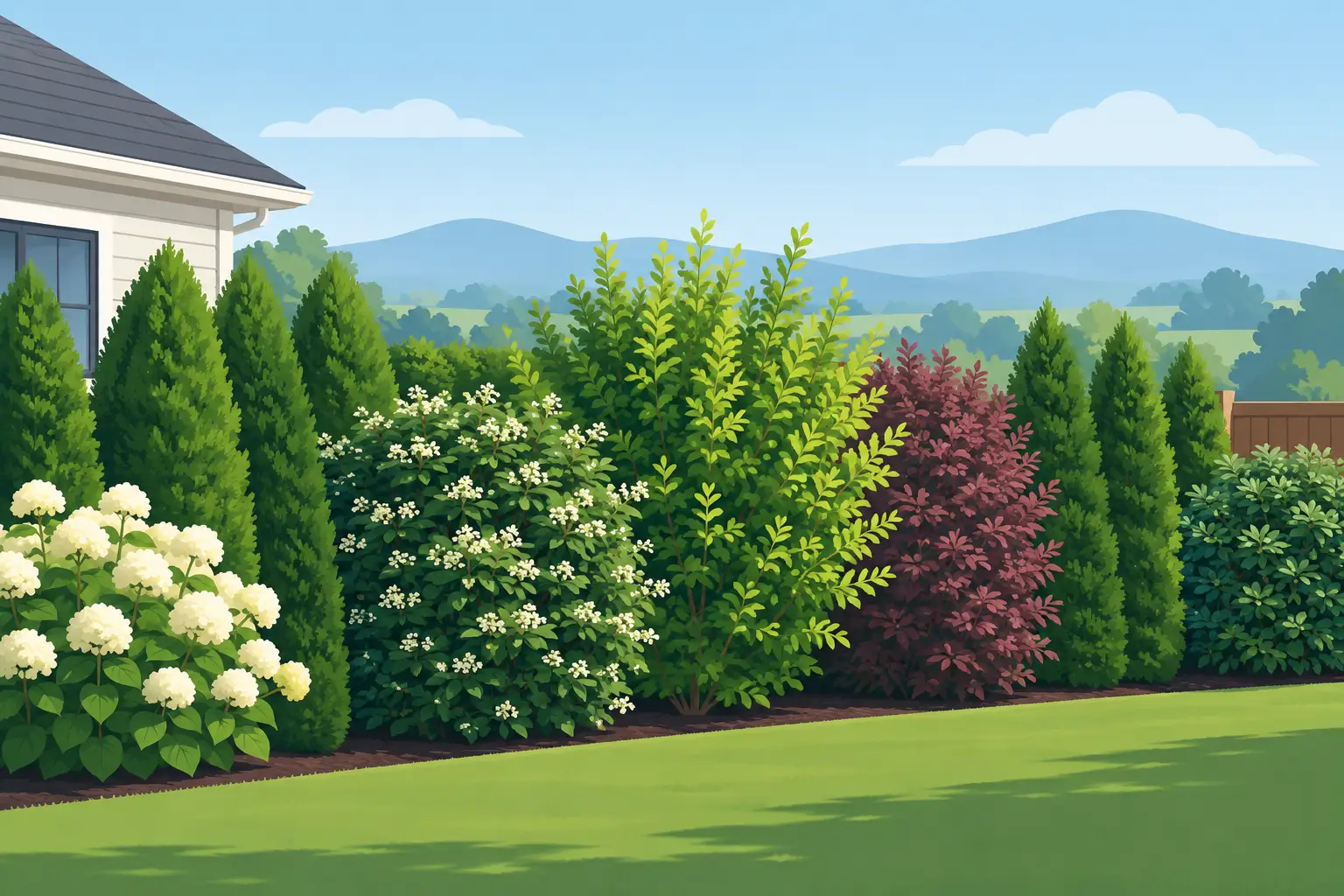
A neighbor’s second-story window, traffic along a busy street, or an open property line can make an otherwise beautiful yard feel exposed. The best shrubs for privacy create a living screen that feels natural, adds color and texture, and can make your house feel more like home – without putting a solid wall around the property.
For homeowners in Newport News and across the Virginia Peninsula, the right choice depends on more than a plant tag that says “fast growing.” Our humid summers, occasional coastal winds, clay-heavy soils, and changing light conditions all affect how a privacy planting performs over time. A screen should look good from the street, protect the outdoor spaces where your family spends time, and remain manageable for years to come.
Table of Contents
ToggleWhat Makes a Good Privacy Shrub?
A useful privacy shrub needs enough mature height and width to block the view you want to block. That sounds simple, but many planting problems begin when shrubs are selected for their size at the nursery rather than their size five or 10 years later.
Evergreen shrubs provide the most consistent screening because they hold foliage through winter. Deciduous shrubs can still be valuable where summer privacy is the goal, especially around pools, patios, and rear-yard seating areas. Their flowers, fall color, and looser appearance may suit a more natural landscape design.
Spacing matters just as much as plant selection. Crowding shrubs in an effort to get instant privacy often leads to weak growth, poor air circulation, and constant pruning. A professionally planned bed allows each plant enough room to fill in naturally while leaving space for mulch, irrigation coverage, and long-term maintenance.
Best Shrubs for Privacy Around Newport News Homes
Emerald Green Arborvitae
Emerald Green arborvitae is a familiar choice for narrow spaces. Its upright, dense evergreen form works well along side yards, property lines, and areas where a wider hedge would take up too much lawn. Most mature plants reach roughly 10 to 15 feet tall and stay relatively compact.
Arborvitae needs reliable moisture while establishing, particularly during hot Virginia summers. It also performs best in full sun to partial sun. It is a good option for a formal, clean-lined screen, but it is less forgiving when planted in soggy soil or left without water during dry stretches.
Green Giant Arborvitae
For a larger property line or a broad rear-yard screen, Green Giant arborvitae offers more speed and scale. It can reach 30 feet or more at maturity, so it is not a shrub for tight foundation beds. When given room, it develops into a tall, handsome evergreen barrier with fewer pruning demands than a tightly sheared hedge.
The trade-off is its mature footprint. Green Giants need thoughtful placement away from the house, utility lines, and smaller ornamental trees. They are ideal when the goal is to soften a view beyond the yard rather than create a narrow green wall.
Wax Myrtle
Wax myrtle is one of the most practical native-friendly choices for local landscapes. Its olive-green foliage has a relaxed texture, and it grows quickly into a useful screen in sun or partial shade. It can be left more natural or lightly pruned into a hedge, depending on the style of the property.
This shrub tolerates heat, humidity, and many soil conditions well. It is not as dense in winter as a formal evergreen hedge, but its adaptability and graceful look make it especially useful for informal borders and larger planting beds.
Cherry Laurel
Cherry laurel gives homeowners broad, glossy evergreen leaves and substantial screening. It works well for privacy near patios, driveways, and backyard gathering areas where a fuller, more traditional hedge is desired. Mature height varies by variety and pruning approach, but it can become a large plant.
Good air circulation is important, especially in humid coastal Virginia conditions. Avoid packing cherry laurels too closely together. Their larger leaves create a rich look, though they may require occasional cleanup after storms or seasonal leaf drop.
Nellie R. Stevens Holly
Nellie R. Stevens holly is a dependable choice for a tall evergreen screen with a more formal character. The dark green foliage stays attractive throughout the year, and female plants can produce bright red berries that add winter interest. Its naturally pyramidal form works well as a planted row or as individual accents within a layered border.
Because the leaves have spines, it is not the best choice directly beside walkways, play areas, or places where people regularly brush against the planting. Along a property edge, however, that same feature can create a strong visual and physical boundary.
American Holly
American holly brings a distinctly Virginia look to a privacy planting. It has durable evergreen foliage, an upright habit, and excellent wildlife value. It is slower growing than some screening plants, but its long-term presence and classic shape can be worth the patience.
For berry production, male and female plants are needed nearby. American holly is particularly effective when used as part of a mixed screen with wax myrtle, evergreen magnolia, or other shrubs rather than as a single straight hedge.
Skip Laurel
Skip laurel is often chosen for lower to medium-height privacy, typically around six to 10 feet when maintained as a hedge. Its dense, shiny leaves offer a polished appearance near patios, pool areas, and front-yard boundaries. It can handle partial shade better than many conifers.
It is a strong choice where homeowners want year-round coverage but do not need a 20-foot wall of green. Like other laurels, it benefits from well-drained soil and enough spacing to reduce disease pressure.
Camellia
Camellias provide privacy with an extra layer of beauty. Their evergreen leaves and winter or early-spring flowers make them especially appealing near entryways, patios, and outdoor living spaces. Sasanqua camellias are often more sun-tolerant, while japonica types generally prefer more protection from strong afternoon sun.
Camellias are not the fastest route to complete screening, and they prefer acidic, well-drained soil. They work best in a layered design where their flowers can be appreciated rather than hidden in a crowded hedge.
Osmanthus
Osmanthus, sometimes called tea olive, is an excellent choice for a refined evergreen screen. Its small, fragrant flowers can perfume a patio or walkway in fall, while its dense foliage provides a quiet backdrop throughout the year. Some varieties are smooth-leaved, while others have holly-like foliage.
Growth is moderate, so osmanthus is best for homeowners willing to invest in a screen that develops steadily rather than instantly. It is especially attractive near seating areas where its fragrance can be enjoyed.
Red-Twig Dogwood
Red-twig dogwood is a useful deciduous option for wet or difficult spots. In summer, it provides leafy screening; in winter, its red stems add welcome color to the landscape. It is not a complete year-round visual barrier, but it can solve privacy needs around drainage areas or low portions of the yard where many evergreens struggle.
Use it as part of a mixed planting rather than expecting it to act like an evergreen hedge. Periodic renewal pruning helps keep the youngest, brightest stems coming.
Viburnum
Several viburnum varieties can create an attractive, natural privacy screen. Their flowers, berries, and foliage make them valuable for homeowners who prefer a layered garden feel over a clipped hedge. Evergreen and semi-evergreen options may work in protected local locations, while deciduous varieties offer seasonal interest.
The right variety matters. Some viburnums grow wide, others tall, and some need more sun than others. Selecting for the available space prevents the common problem of having to cut back a beautiful shrub every year just to keep it off the driveway.
Yaupon Holly
Yaupon holly is heat-tolerant, adaptable, and well suited to a more relaxed privacy planting. Upright forms can create vertical screening, while weeping varieties add a softer accent. Its smaller leaves produce a finer texture than many broadleaf evergreens, which can help a screen feel less heavy.
Female plants bear red berries when a male pollinator is nearby. Yaupon holly is a smart option for sunny locations and landscapes that need plants capable of handling Virginia heat with less fuss.
Designing Privacy Plantings That Do Not Feel Like a Wall
The most appealing privacy screens usually mix heights, textures, and plant types. A row of one shrub can work, but a layered design often looks more established and gives the yard more resilience if one plant develops a problem. Taller evergreens can block the main view, while flowering shrubs and ornamental grasses soften the lower edge.
Consider where privacy is actually needed. Screening a bedroom window may require height, while separating a patio from a neighbor’s view may only require six to eight feet. A well-placed planting bed can protect the view without consuming the entire yard.
Watering is especially important during the first one to two growing seasons. A properly designed irrigation system can deliver consistent water to the root zone without overwatering established plants. Mulch helps conserve moisture, moderate soil temperatures, and give the bed a finished appearance, but it should be kept away from shrub trunks.
Give Your Privacy Screen Time to Become Part of the Landscape
Fast growth is helpful, but healthy growth is better. Starting with the right plants, proper spacing, prepared soil, and a watering plan gives a privacy planting the best chance to fill in evenly and remain attractive through every season. With a design that fits your property instead of a one-size-fits-all row of shrubs, the screen can become one of the features that makes your outdoor space feel calm, private, and truly yours.