
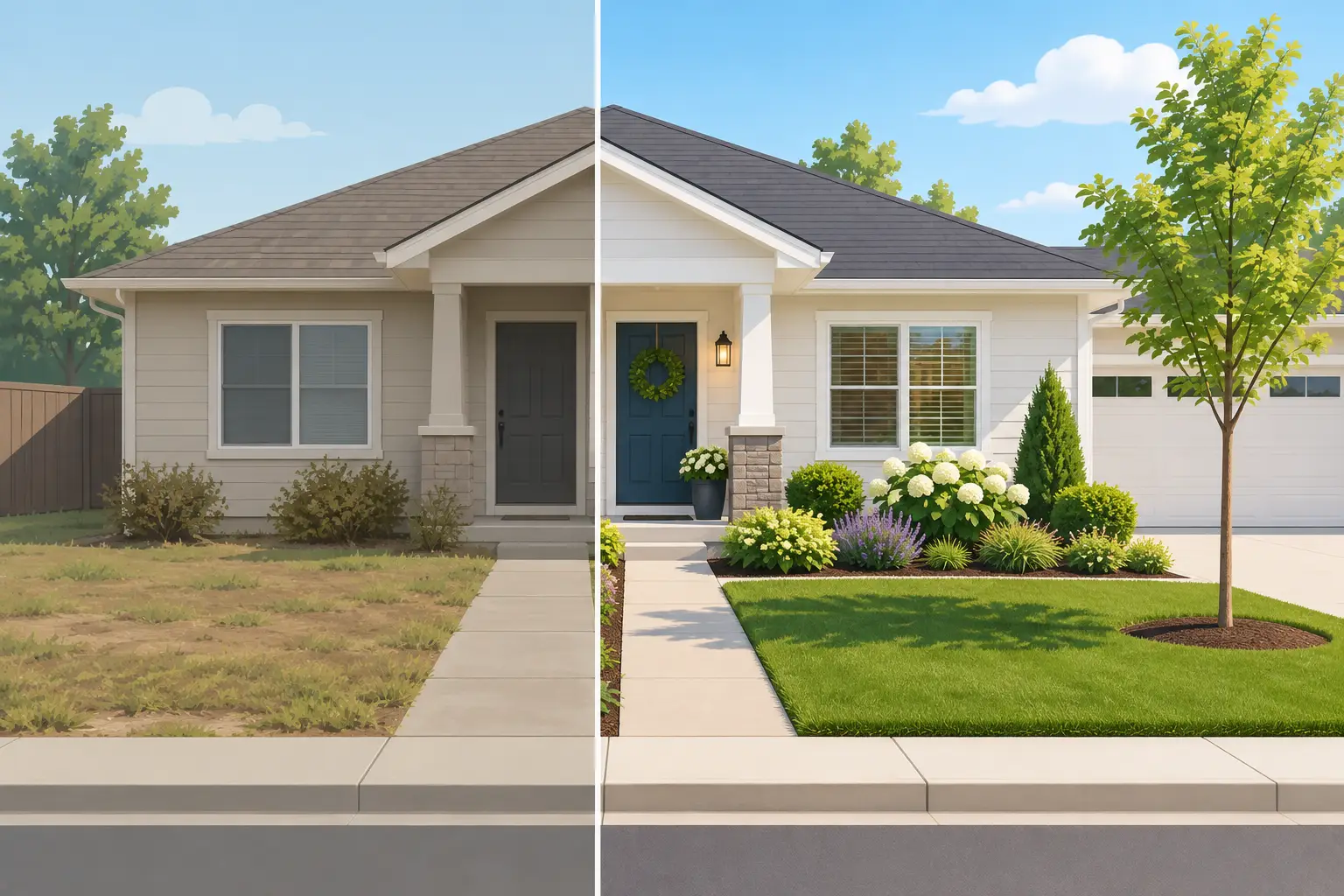
A front yard can look tired long before a home needs major work. Thin grass near the curb, shrubs that have outgrown the windows, a faded walkway, and dark entry steps can make an otherwise well-kept property feel overlooked. A thoughtful front yard curb appeal transformation corrects those details as one coordinated plan, helping your home feel more welcoming from the moment you pull into the driveway.
For homeowners in Newport News and across the Virginia Peninsula, the best results balance appearance with the realities of our climate, soil, rainfall, and long growing season. The goal is not to fill every open space with plants or add features that are difficult to maintain. It is to create a front landscape that looks polished, functions well, and stays attractive through every season.
Table of Contents
ToggleStart With the View From the Street
The most useful place to begin is not at the front door. Stand near the street and take in the property as a visitor would. Notice where your eye lands first, whether the entry is easy to see, and which areas look bare, crowded, uneven, or disconnected.
Your home should remain the focal point. Landscaping, lighting, and hardscape features should frame the architecture rather than compete with it. For example, a ranch home often benefits from broader planting beds with low, sweeping layers of color and texture. A taller two-story home may need carefully placed small trees or upright evergreens to give the foundation more visual balance.
This first look also reveals practical issues that can affect the project. Water may collect beside the driveway. A narrow walk may make the entrance feel cramped. Mature shrubs might block windows or cover exterior materials that should be visible. Addressing these concerns early prevents a beautiful new landscape from inheriting old problems.
Build a Front Yard Curb Appeal Transformation in Layers
A finished front yard rarely depends on one dramatic feature. Its visual strength comes from layers that work together: healthy turf, defined beds, properly scaled plants, durable pathways, and lighting that makes the property feel finished after sunset.
Restore the lawn before treating it as a backdrop
A green, consistent lawn makes planting beds and hardscape colors stand out. Yet lawns on the Peninsula can struggle with compacted soil, shade, summer heat, pests, disease, weeds, and damage from moles. Repeatedly adding seed or fertilizer without identifying the cause may create short-lived improvement rather than lasting results.
A turf assessment helps determine whether the lawn needs aeration, overseeding, weed control, soil treatment, irrigation adjustments, or a more customized seasonal care plan. In some yards, selective renovation makes sense. In others, correcting watering coverage and improving ongoing maintenance can produce a noticeable change over time.
There is a trade-off here. A perfectly manicured lawn requires regular attention, while a lower-maintenance approach may accept some seasonal variation. The right choice depends on how you use the yard, how much sun it receives, and what level of maintenance fits your household.
Give planting beds a clear purpose
Foundation beds should do more than hide the base of the house. Well-designed beds soften hard lines, guide guests toward the entrance, and add color and structure in every season. They also create a natural transition between lawn, walkways, and the home.
Start with the bed shape. Smooth curves can soften a wide lawn or curved driveway, while clean, straighter lines often suit more formal architecture. Edging gives the design definition and helps keep mulch where it belongs, reducing the ragged look that develops when lawn grass creeps into the bed.
Plant selection should be based on mature size, sun exposure, drainage, and maintenance needs. A common mistake is planting every shrub at the same height or placing fast-growing plants too close to the home. The landscape may look full on installation day, then become crowded within a few years.
A more balanced design combines evergreen structure with flowering shrubs, perennials, ornamental grasses, and seasonal color. Evergreens provide dependable form in winter. Flowering plants bring interest at key times of year. Perennials and grasses add texture without requiring an entirely new planting plan each season. Mulch completes the bed, retaining moisture, limiting weeds, and giving the planting area a clean, cared-for appearance.
Make the route to the front door feel intentional
Your walkway is one of the strongest curb appeal features on the property because it directs every visitor to the entrance. If it is cracked, too narrow, poorly lit, or visually separated from the landscape, it can make the entire front yard feel less inviting.
Paver walkways, stone accents, and refreshed borders can give the approach more presence while improving function. Material selection matters. A paver style that complements the home’s brick, siding, or trim will feel established rather than added on later. Proper base preparation and drainage are just as important as the visible surface, especially for hardscaping expected to hold up through changing weather.
Not every yard needs a larger walkway. Sometimes a modest border, a landing near the entry, or a connection between the driveway and front door is enough to improve flow. The best hardscape choice is the one that solves a real access or appearance issue without overpowering the landscape.
Use Water Wisely for Reliable Color and Turf
Consistent watering is one of the quietest but most influential parts of a successful front-yard improvement. New plants need dependable moisture while their roots establish, and turf needs the right amount of water to remain healthy without encouraging shallow roots or disease.
A professionally designed in-ground irrigation system can divide the yard into zones based on plant needs, exposure, and sprinkler coverage. Lawn areas, foundation beds, and sunny sections of the property should not necessarily receive the same schedule. Smart adjustments through the season help avoid waste while protecting the investment in new landscaping.
Rain Bird irrigation equipment is a trusted option for homeowners who want precise, durable watering coverage. However, equipment is only part of the equation. Proper layout, head placement, drainage awareness, and seasonal service determine whether an irrigation system supports healthy growth or creates recurring trouble spots.
Add Lighting That Works After Dark
A front yard transformation should not disappear at sunset. Low-voltage landscape lighting adds a layer of comfort and polish by illuminating the path to the door, defining steps, and highlighting architectural details or specimen plantings.
The most effective lighting feels natural rather than overly bright. Path lights should help guests see where they are walking. Gentle uplighting can bring texture to a mature tree, brick facade, or entry feature. A few well-placed fixtures often have more impact than too many lights competing for attention.
Safety should lead the plan. Steps, grade changes, and darker walkway sections deserve priority. From there, lighting can create a warm evening view that makes the house feel occupied and cared for, even from the street.
Plan for Every Season, Not Just Installation Day
A front yard can look excellent immediately after installation and still lose its appeal if there is no plan for care. Turf changes through the year. Mulch settles. Shrubs need pruning at the appropriate time. Irrigation systems require seasonal attention, and annual color needs refreshing if it is part of the design.
This is why integrated service matters. When the team maintaining the lawn understands the landscape design, irrigation layout, and hardscape features, small issues can be identified before they become expensive repairs. A yellowing section of turf may point to sprinkler coverage. Declining plants may reveal drainage or soil concerns. Bed edges that need refreshing can be handled before the property starts to look unkempt.
Year Round Lawn Maintenance Inc. helps homeowners bring those connected pieces together, from landscape design and installation to turf programs, irrigation, hardscaping, and low-voltage lighting. With more than 40 years of outdoor-property experience, the focus is on workmanship that looks good now and continues to support the way you care for your home.
Choose Improvements That Fit Your Home and Budget
A full renovation is not the only way to improve curb appeal. If the lawn and plant beds are healthy but the front entry feels plain, lighting and a walkway update may offer the biggest return. If the hardscape is sound but the house looks hidden behind overgrown shrubs, pruning, bed reshaping, and new planting layers may be the priority.
For larger projects, phasing can be practical. Start with drainage, irrigation, or hardscape work that would be disruptive later. Follow with planting beds and turf improvements, then add seasonal color or lighting as the plan takes shape. A cohesive design created at the start keeps phased work from feeling pieced together.
The most successful front yard is not the one with the most features. It is the one that feels cared for, suits the home, and gives you a better feeling every time you arrive. A clear plan, quality installation, and consistent seasonal maintenance can turn that first view from the curb into a lasting source of pride.