
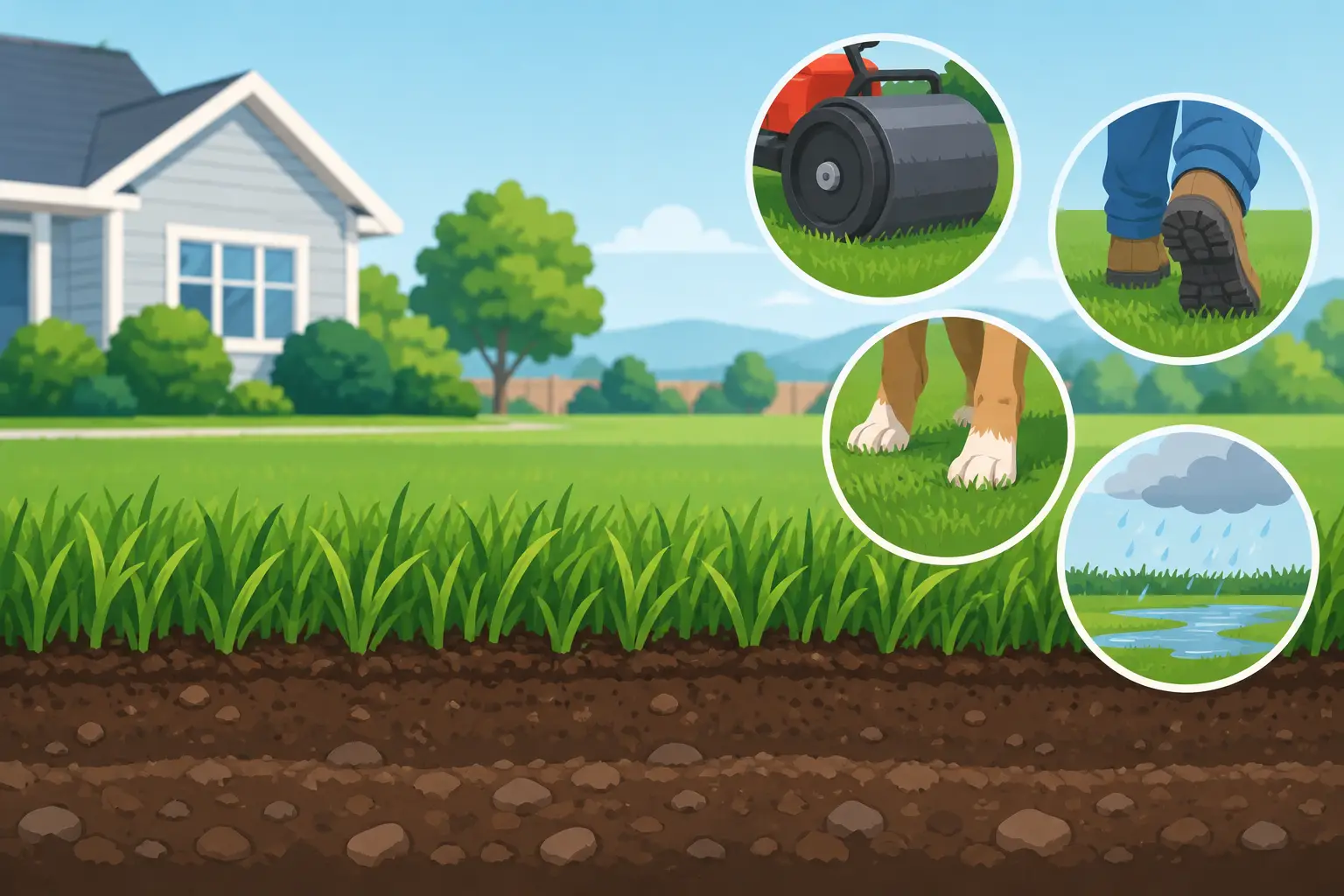
A lawn can look thin, hold puddles after a shower, and resist watering even when it receives regular care. Often, the problem is beneath the grass. Lawn compaction causes can be easy to overlook, but compacted soil limits the roots, water, and oxygen your turf needs to stay full and green.
For homeowners across Newport News and the Virginia Peninsula, compaction is especially common in lawns with heavy clay soils, active families, pets, mature trees, or regular landscape work. The good news is that compaction can be addressed once you understand what created it and choose the right correction for your property.
Table of Contents
ToggleWhat Lawn Compaction Actually Means
Healthy soil contains a balance of mineral particles, organic matter, water, and small air spaces called pores. Those pores allow rain and irrigation water to move down through the root zone. They also give turf roots room to grow and make oxygen available to the beneficial organisms working below the surface.
Compaction occurs when soil particles are pressed tightly together. The pore spaces shrink, so water may sit on top of the lawn or run off before it can soak in. Roots remain shallow because they cannot push through dense soil. A lawn may then struggle during heat, dry spells, and periods of heavy rain, even if it is being mowed and watered correctly.
Compacted ground is not always rock-hard across the entire yard. It may appear in narrow paths, around gates, beneath a swing set, near a driveway, or in the lawn’s low spots. Identifying the pattern helps reveal the cause.
The Most Common Lawn Compaction Causes
Foot Traffic and Play Areas
Repeated foot traffic is one of the most familiar causes of lawn compaction. A route from the driveway to the front door, a path to a backyard shed, and the area where children or dogs play can all receive more pressure than the rest of the lawn. One afternoon outside will not hurt established turf. The concern is repeated use of the same spot over many weeks and seasons.
Grass in these areas often wears thin first. Once the turf canopy thins, the soil receives even more direct impact from shoes, paws, and outdoor furniture. A stepping-stone path, a small patio extension, or a change in how an area is used may be a better long-term answer than asking grass to withstand constant traffic.
Heavy Equipment and Construction Activity
Vehicles and equipment apply far more pressure than people. Lawn tractors, delivery trucks, construction machinery, trailers, and repeated wheelbarrow traffic can compact soil quickly, particularly when the ground is damp. Landscape installation, hardscaping projects, tree work, and home renovations sometimes leave behind a lawn that looks acceptable at first but begins declining the following season.
Some work near the lawn cannot be avoided. The key is planning access routes, protecting surrounding turf where practical, and restoring the affected soil after the project. A new paver patio or drainage improvement should enhance a property, not leave the adjacent lawn struggling with dense, damaged soil.
Virginia Clay Soil and Wet Conditions
Many Peninsula properties have soils with a meaningful clay content. Clay particles are naturally small and can pack tightly, especially when exposed to pressure while wet. After persistent rain or excessive irrigation, walking or driving over saturated ground can press the soil into a dense layer that takes time to recover.
This is why timing matters. Mowing, aerating, applying soil amendments, or beginning landscape work when soil is soggy can cause more harm than good. The soil should be moist enough to work, but not sticky, muddy, or leaving deep footprints with every step.
Improper Watering and Poor Drainage
Water does not cause compaction by itself, but poor water management can make compacted soil worse. Frequent, shallow irrigation encourages shallow roots. If the soil is already dense, water may puddle, move sideways, or run toward a low area rather than reaching the deeper root zone.
An irrigation system should be adjusted for seasonal conditions, sun exposure, soil type, and the needs of each lawn area. A shaded side yard may need a very different schedule than a sunny front lawn. Poor coverage, misdirected heads, or run times that exceed the soil’s absorption rate can make drainage concerns more visible.
A properly designed and maintained Rain Bird irrigation system supports healthier turf, but it is not a substitute for correcting severe compaction. Watering a compacted lawn more often usually creates runoff and stress, not stronger roots.
Thatch and Surface Layer Problems
Thatch is the layer of undecomposed stems, roots, and organic material between grass blades and soil. A thin layer is normal. When it becomes excessive, however, it can prevent water, fertilizer, and air from reaching the soil efficiently.
Thatch is not the same thing as soil compaction, although the two issues can produce similar symptoms. A lawn with excessive thatch may feel spongy underfoot, while compacted soil often feels firm and resistant to a screwdriver or soil probe. Some lawns have both conditions, which is why a professional assessment is useful before selecting aeration, dethatching, or another treatment.
Signs Your Lawn May Be Compacted
Compaction rarely announces itself with one unmistakable symptom. Instead, homeowners often see a combination of issues: water pools after rain, grass turns brown during dry weather, bare areas reappear in high-traffic spots, and newly seeded grass fails to establish well.
You may also notice that a garden hose seems to run across the surface instead of soaking in. If a screwdriver is difficult to push several inches into moist soil, compaction may be contributing. This quick test is not a complete diagnosis, but it can help distinguish a soil issue from a simple mowing or fertilization concern.
Keep in mind that shade, insect damage, disease, poor grading, mole activity, and irrigation problems can also weaken turf. Treating compaction without addressing the full picture can lead to disappointing results.
How to Relieve Compacted Lawn Soil
Core aeration is one of the most effective treatments for true soil compaction. A core aerator removes small plugs of soil from the lawn, creating openings for air, moisture, and nutrients. The plugs are usually left on the surface, where they break down and return soil and organic material to the lawn.
For cool-season lawns common in Virginia, fall is often the best time for core aeration. Turf is actively growing, summer heat has eased, and there is an opportunity to overseed afterward if thin areas need improvement. Spring aeration can also be appropriate in certain situations, but it may invite more weed pressure and does not offer the same recovery window before summer stress.
Aeration works best when paired with sound lawn-care practices. Mow at the appropriate height, avoid mowing saturated turf, water deeply rather than frequently, and keep heavy traffic off vulnerable areas whenever possible. If the soil is low in organic matter, a thin, properly applied topdressing may improve soil structure over time. It should be selected and applied carefully, especially on established turf.
For severe compaction after construction or major grading, routine aeration may not be enough. The site may need more extensive soil preparation, drainage correction, or targeted renovation before reseeding or installing sod. This is also the time to look at the larger property plan. Redirecting traffic with a walkway or creating a usable hardscape area can protect both the lawn and the way your family enjoys the yard.
Preventing Compaction Before It Returns
The most durable solution is usually a combination of soil care and smarter use of the property. Rotate play equipment when possible, avoid driving across the lawn, and wait for wet areas to dry before using equipment. If pets create a predictable running path along a fence or patio, consider reinforcing that route with a landscape solution designed for traffic.
Annual lawn evaluations also help catch concerns early. A turf-care program can monitor density, watering performance, seasonal stress, and developing thin areas before compacted soil becomes a larger renovation project. At Year Round Lawn Maintenance, we look at how irrigation, lawn care, drainage, landscape features, and everyday yard use affect each other, because a healthier lawn depends on more than one service.
A lawn should make your home feel more inviting, not become another weekend problem to manage. If water is pooling, grass is thinning, or the ground feels hard underfoot, a timely soil and turf evaluation can help you choose the correction that protects your lawn and keeps your outdoor space enjoyable through every season.