
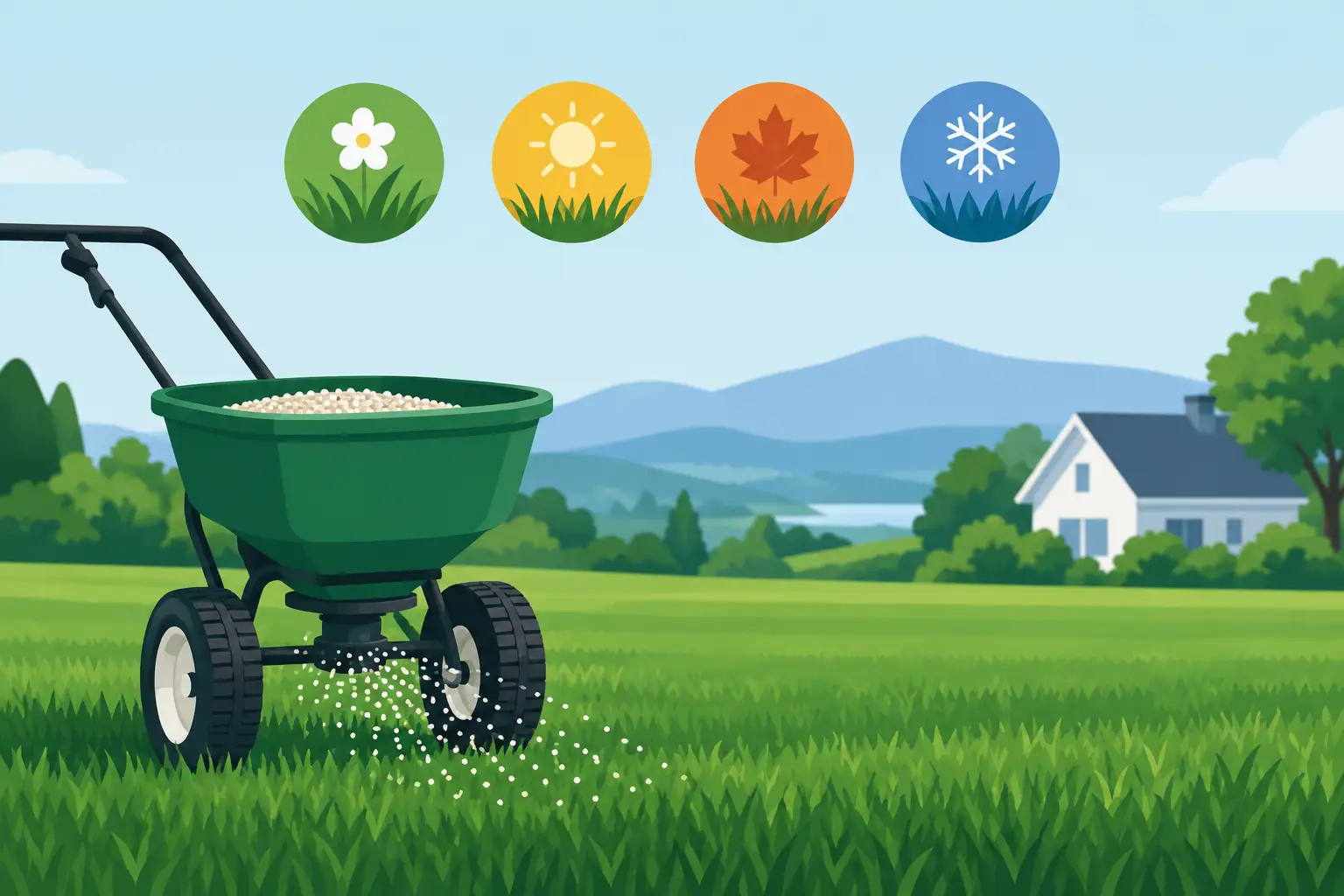
A lawn can look thin, pale, or slow to recover after mowing for one simple reason: it is being fed at the wrong time. When should lawns be fertilized? For Newport News homeowners, the answer depends first on the type of grass growing in the yard. Our Virginia Peninsula climate sits in a transition zone, where cool-season fescue and warm-season Bermuda or zoysia lawns need very different seasonal care.
Fertilizer is not a quick cosmetic fix. Applied at the right time and at the right rate, it supports deeper roots, better color, thicker turf, and stronger recovery from foot traffic, heat, and mowing. Applied at the wrong time, it can encourage weak growth, increase stress during hot weather, and leave you with more weeds and less of the lawn you want to enjoy.
Table of Contents
ToggleWhen Should Lawns Be Fertilized? Start With Grass Type
Before choosing a month on the calendar, identify the grass. Tall fescue is common throughout Hampton Roads because it stays green through much of the year and performs well in the region’s cooler seasons. Bermuda and zoysia are also found in sunny yards, particularly where homeowners want a dense, heat-tolerant summer lawn.
The basic rule is straightforward: fertilize when your grass is actively growing, not when it is preparing for dormancy or struggling through stressful conditions. That is why a single fertilizer schedule does not work for every property.
Tall fescue lawns: Feed most heavily in fall
For a tall fescue lawn, fall is the main feeding season. As summer heat eases and soil temperatures remain warm, fescue begins growing roots and recovering from the season. A fall application helps turf fill in, develop density, and enter winter in better condition.
Many fescue lawns benefit from fertilizer in early fall, usually around September, followed by another application later in the fall, often in November. Exact timing shifts with the weather. The goal is to fertilize while the grass is actively growing, not simply because a particular date has arrived.
A light spring feeding may be appropriate for a fescue lawn, especially if it needs help recovering from winter. However, spring fertilizer should be measured carefully. Too much nitrogen in spring can produce tender top growth at the expense of roots, leaving fescue less prepared for Virginia’s heat and humidity.
Avoid heavy fertilizer applications to fescue in summer. If the lawn is heat-stressed, dry, or partially dormant, pushing growth with fertilizer can do more harm than good. Focus instead on proper mowing height, sensible watering, and diagnosing underlying concerns such as compacted soil, insects, disease, or irrigation coverage.
Bermuda and zoysia lawns: Feed after full green-up
Warm-season grasses need a different rhythm. Bermuda and zoysia turn green in late spring as temperatures rise, then grow most vigorously through summer. Fertilize only after the lawn has fully greened up and is actively growing, which is often late April or May in Newport News, depending on the spring.
A warm-season lawn may receive additional feedings through summer, spaced according to the product label, grass condition, and maintenance goals. Stop fertilizing early enough in late summer that the lawn can gradually slow down before cooler weather arrives. Fertilizing too late can encourage tender growth when the turf should be hardening off for dormancy.
Sun exposure matters here. Bermuda needs substantial sunlight to stay dense. Fertilizer cannot correct a lawn that is thinning because trees, structures, or landscape beds have changed the amount of available light. In those areas, plant selection or a landscape adjustment may offer a better long-term result than another bag of fertilizer.
Let Weather and Lawn Conditions Guide the Calendar
A good fertilization schedule is seasonal, but it should never be automatic. Rainfall, temperature, irrigation performance, mowing habits, and recent lawn work all affect the right decision.
Do not fertilize a lawn that is severely dry unless you can water it in properly and the grass is not under significant heat stress. Fertilizer salts can stress dry turf, and nutrients need moisture to move into the root zone. On the other hand, avoid spreading fertilizer immediately before a heavy rainstorm, when runoff can carry nutrients away from the lawn and into nearby drains.
For homes with in-ground irrigation, consistent coverage makes a meaningful difference. A healthy lawn needs water distributed evenly, not simply more water in one area and too little in another. Dry corners, overspray onto pavement, and poorly adjusted heads can create uneven color that homeowners sometimes mistake for a fertilizer problem. A well-maintained sprinkler system supports the value of every turf-care application.
Mow before fertilizing if the lawn is due for service, but do not scalp it. Tall fescue generally performs better when kept taller, especially as summer approaches. Removing too much leaf blade at once weakens the lawn and exposes soil to more sunlight, which can invite weeds.
Choose Fertilizer Based on What Your Soil Needs
The three numbers on a fertilizer bag represent nitrogen, phosphorus, and potassium. Nitrogen supports green growth, phosphorus contributes to root development, and potassium can support overall turf resilience. The right blend is not always the one with the biggest numbers.
A soil test is the most reliable way to understand what your lawn actually needs. It can reveal nutrient shortages, soil pH concerns, and whether phosphorus is warranted. Many established lawns do not need routine phosphorus applications, and using only what the soil calls for is better for the lawn and the surrounding environment.
For most established home lawns, a slow-release nitrogen fertilizer is a sensible option because it feeds turf more gradually and reduces the risk of a sudden growth surge. Fast-release products can green a lawn quickly, but they require more precision and can lead to excessive mowing, uneven results, or burn if misapplied.
Apply fertilizer evenly with a properly calibrated spreader. Overlapping too heavily can create dark stripes or burned areas, while missed strips leave a patchy appearance. Sweep granules off driveways, sidewalks, and patios and back onto the turf rather than washing them into the street.
Fertilizer Will Not Solve Every Lawn Problem
A lawn that will not green up after feeding may be dealing with something other than nutrition. Mole activity, grubs, brown patch disease, compacted soil, shade, poor drainage, and irrigation gaps can all affect turf appearance. Fertilizer added to a lawn with an unresolved problem may only mask the issue briefly.
This is especially true for thin fescue lawns after a hot Virginia summer. Fall aeration and overseeding are often more valuable than another spring fertilizer application because they improve the turf stand itself. Seed needs contact with soil, steady moisture, and time to establish. Fertilizer can support that process, but it cannot replace it.
For established homeowners, the best approach is often a coordinated turf plan rather than occasional applications based on color alone. Year Round Lawn Maintenance Inc. evaluates the full property picture – grass type, soil condition, watering, mowing, seasonal stress, and visible problem areas – so care decisions support lasting curb appeal rather than a short-lived burst of green.
A Better Way to Plan Your Lawn Care Season
Think of fertilization as one part of maintaining an outdoor space that makes your house feel more like home. Feed fescue primarily in fall. Feed Bermuda or zoysia once it is actively growing in late spring and summer. Use weather, soil information, and the condition of the turf to fine-tune the schedule rather than following a one-size-fits-all routine.
If your lawn repeatedly struggles in the same areas, look beyond the fertilizer bag. A small irrigation adjustment, a change in mowing practices, better drainage, or a targeted turf treatment may be the step that finally helps the yard look healthy, even, and ready to enjoy throughout the season.