
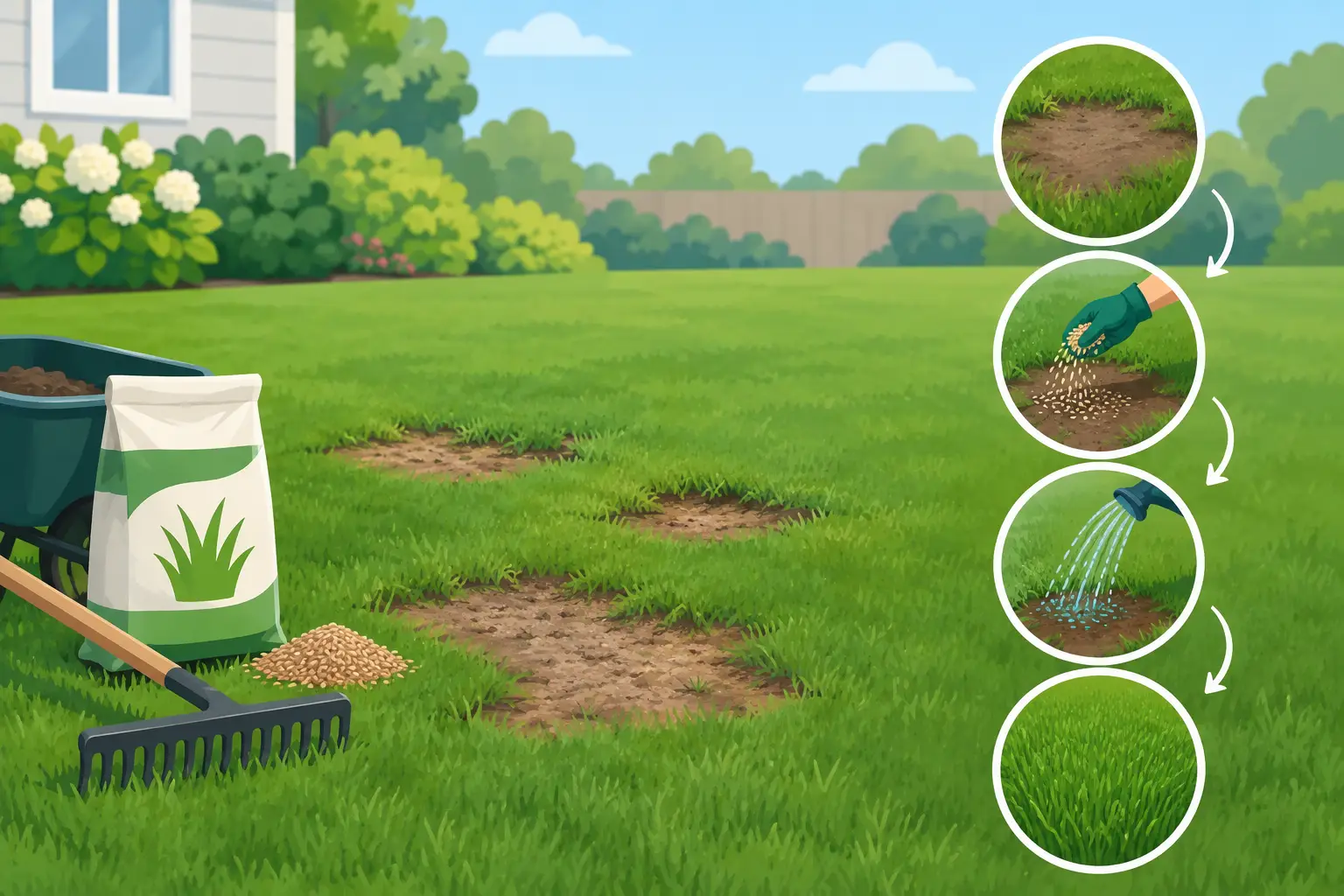
A bare patch in an otherwise green lawn is rarely just a cosmetic problem. If you repair bare lawn spots without addressing what caused the grass to thin, the same area can fail again after a few weeks of heat, foot traffic, or heavy rain. On the Virginia Peninsula, the right solution often comes down to a close look at sun exposure, soil condition, watering coverage, pests, and how the area is used.
A healthy lawn should make your home feel cared for from the curb to the backyard. Restoring thin turf is very achievable, but timing and preparation matter more than simply spreading seed over exposed soil.
Table of Contents
ToggleFind Out Why the Grass Is Missing
Before adding seed or sod, inspect the bare area and the lawn around it. A single small spot may point to a pet, a mower scalping the turf, or concentrated traffic. Repeated patches along the edge of a driveway or walkway usually indicate heat, compaction, or foot traffic. Larger irregular areas can be related to irrigation problems, insects, disease, drainage, or shade.
Start by checking whether the soil is hard and packed down. If water puddles on the surface or runs away rather than soaking in, roots will struggle to establish. Bare spots beneath mature trees have a different challenge: grass competes with tree roots for moisture and receives less direct sunlight. In those locations, overseeding may help, but a shade-tolerant turf selection or a redesigned planting bed may be the better long-term answer.
Watering is another common issue. A lawn can look generally green while one sprinkler zone leaves a dry strip or misses a corner entirely. Run the system and watch each head through a full cycle. Look for blocked nozzles, broken heads, poor coverage, overspray, or a head that is spraying a fence instead of the turf. An irrigation repair can often prevent a recurring bare spot more effectively than repeated reseeding.
Also look closely for insect activity. Grubs feed beneath the soil surface and can loosen turf so easily that it pulls up like a piece of carpet. Moles may tunnel through a lawn in search of grubs, leaving raised ridges and damaged roots behind. A professional assessment helps separate pest damage from drought stress or disease, since treatments are not interchangeable.
The Best Time to Repair Bare Lawn Spots
For most Newport News lawns with cool-season tall fescue, early fall is the preferred time to repair bare lawn spots. Soil is still warm enough for seed germination, while cooler air temperatures reduce stress on new grass. Fall also gives roots time to develop before the following summer.
Spring is the next-best window, especially when a bare area needs attention after winter damage. The trade-off is that young spring grass has less time to mature before heat, humidity, weeds, and summer drought arrive. Spring repairs can succeed, but they need more attentive watering and weed management.
Avoid seeding during the hottest part of summer unless the spot is very small and you can provide consistent moisture. If the area is severely damaged and curb appeal is immediately important, sod may provide a faster visual result. Sod is more expensive than seed, but it can be practical for highly visible entry areas, steep slopes, and spaces that need a finished appearance sooner.
Prepare the Area Before You Seed
Good preparation gives grass seed contact with soil, which is essential for germination. Begin by removing dead grass, weeds, loose debris, and any thatch that is covering the exposed ground. A hand rake is often enough for a small spot; larger areas may benefit from core aeration or more extensive soil preparation.
Loosen the top 2 to 3 inches of soil without creating a deep, fluffy layer that will settle unevenly later. If the existing soil is compacted, core aeration is especially useful because it relieves pressure below the surface and opens channels for water, oxygen, and roots. Level the area so it blends naturally with the surrounding lawn. Low spots can collect water, while raised patches can dry out quickly and get scalped by the mower.
If the soil is poor, a light layer of quality topsoil or compost can improve the seedbed. Keep it modest. Burying seed under several inches of material can delay emergence and create a noticeable mismatch in lawn height. A soil test is worthwhile when bare spots are widespread or persistent, since pH and nutrient imbalances can limit turf health even when a lawn is watered regularly.
Choose Seed That Matches Your Lawn
Matching the grass type matters. Many lawns in this area are primarily tall fescue, valued for its color, texture, and ability to handle Virginia’s changing seasons. Use a high-quality tall fescue blend that is suited to the conditions in your yard, particularly if the area receives partial shade or has a history of disease.
Do not assume a bargain seed mix will blend with your established turf. Some mixes contain grass types that grow at a different rate, texture, or color, leaving a repaired patch that looks noticeably different. The goal is not merely to fill the soil with green growth. It is to rebuild a lawn that looks consistent and holds up over time.
Seed, Cover, and Water With a Plan
Spread seed evenly over the prepared area, then gently rake it into the top layer of soil. The seed should be covered lightly, not buried. Press it into place with the back of a rake, a lawn roller, or careful foot pressure so it has firm contact with the soil.
A thin covering of clean straw can help retain moisture and reduce erosion, particularly on slopes. Use only enough to lightly shade the soil. A thick mat can block sunlight and make it harder for seedlings to grow through.
For the first two to three weeks, keep the surface consistently moist with light, frequent watering. The exact schedule depends on rain, sun, wind, and soil type, but newly seeded areas often need brief watering once or twice daily until germination begins. The goal is damp soil, not standing water. Once seedlings are established, water less often but more deeply to encourage roots to grow down rather than remain near the surface.
A repaired area can fail when watering stops too soon. New grass may look established above ground while its root system is still shallow. Continue monitoring moisture through the first several mowings, especially during a dry spell.
Protect New Turf From the Habits That Caused Damage
Keep people, pets, and equipment off the repaired spot whenever possible. If a path through the yard is unavoidable, consider whether a paver walkway, stepping stones, or a change in traffic flow would protect the lawn better than another round of seed. Turf can recover from occasional use, but repeated concentrated traffic compacts soil and wears seedlings down before they mature.
Wait until the new grass is about 3 to 4 inches tall before mowing. Use a sharp mower blade and remove no more than one-third of the blade height. Cutting too low weakens grass, exposes soil to more heat, and makes it easier for weeds to move in. For tall fescue, maintaining a taller mowing height through warm weather helps shade the soil and support stronger roots.
Fertilizer can support establishment, but more is not always better. A starter fertilizer may be appropriate based on your soil and the season, while excess fertilizer can burn young turf or encourage weak, fast top growth. If weed control is needed, be careful with herbicides around newly seeded grass. Many products require waiting until the new lawn has been mowed several times.
When a Bare Spot Needs More Than Seed
If an area has been reseeded repeatedly without lasting improvement, the problem may be below the surface or beyond the lawn itself. Drainage corrections, irrigation adjustments, insect treatment, aeration, sod installation, or a landscape redesign may be more cost-effective than continuing to patch the same location.
This is where an integrated approach makes a visible difference. A bare spot near a downspout may need drainage work. A dry band near a planting bed may need sprinkler coverage adjusted. A shaded area under a tree may look more polished as a mulched bed with plants chosen for the conditions. Year Round Lawn Maintenance can evaluate how turf, irrigation, drainage, and surrounding landscape features are working together, rather than treating each symptom separately.
The best lawn repairs do more than cover exposed dirt. They correct the conditions that weakened the turf in the first place, giving your yard a fuller, cleaner appearance that lasts through the seasons.