
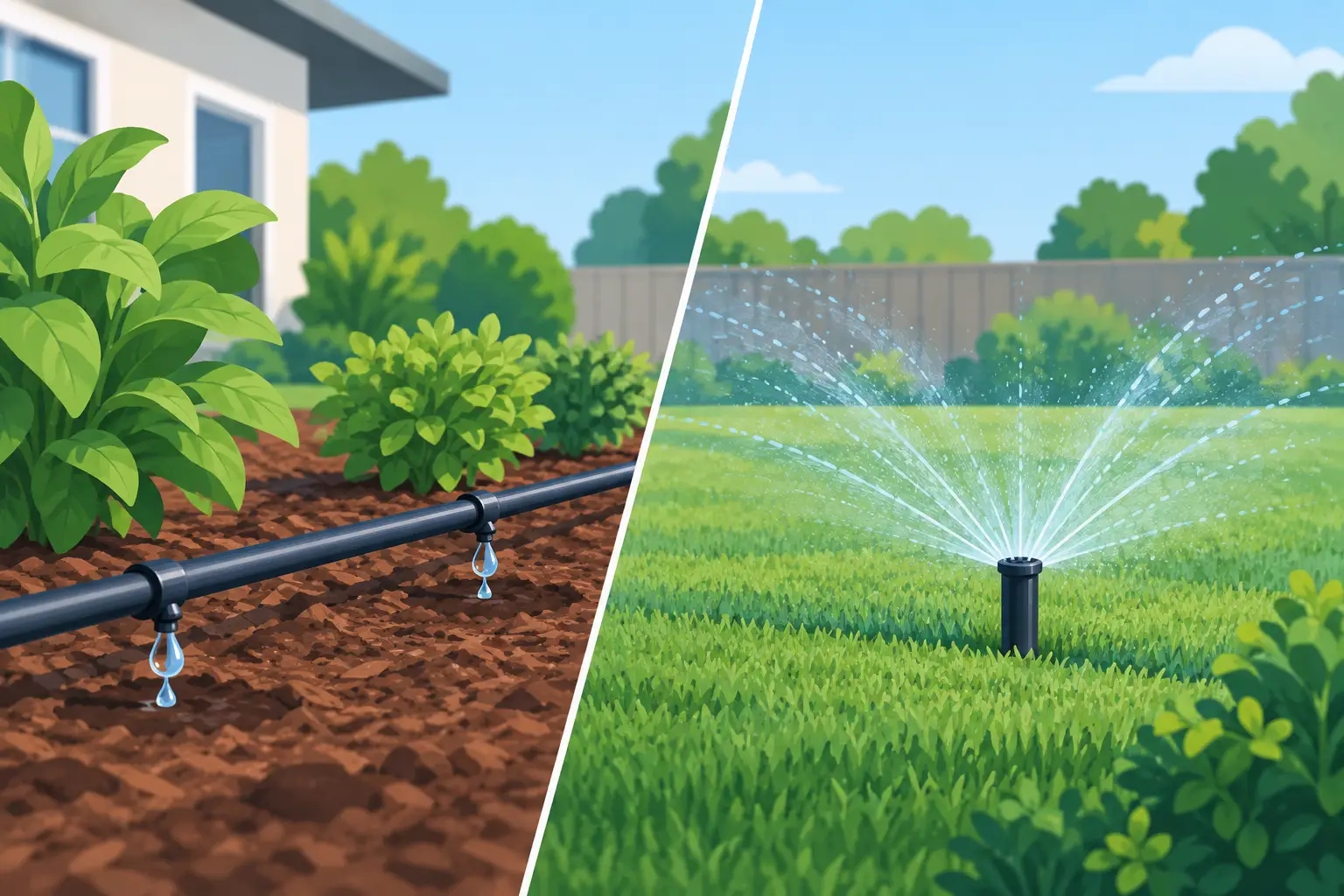
A lawn can look thirsty even when the sprinkler system runs faithfully, while a planting bed can struggle because water is landing on leaves instead of reaching the roots. That is why the choice between drip irrigation versus sprinklers is not simply about how water comes out of the ground. It affects the health of your turf, the performance of your landscape beds, water use, and how much time you spend adjusting hoses and timers.
For many Newport News homeowners, the right answer is not one system or the other. A well-designed property often uses sprinklers where broad turf coverage is needed and drip irrigation where plants benefit from slower, targeted watering. The best system follows the needs of the landscape rather than forcing every area of the yard to be watered the same way.
Table of Contents
ToggleDrip Irrigation Versus Sprinklers: The Main Difference
Sprinkler systems apply water across a larger area through spray heads or rotating nozzles. They are built for coverage, which makes them a natural fit for lawns, open turf areas, and certain broad planting zones. A professionally designed in-ground sprinkler system can distribute water evenly across a lawn without the inconvenience of moving a hose and portable sprinkler from place to place.
Drip irrigation delivers water slowly near the soil surface, usually through tubing, emitters, or dripline. Instead of wetting an entire area, it focuses water near the root zone of individual plants. It is especially useful for foundation beds, shrub borders, vegetable gardens, trees, and containers.
The difference matters because turf and ornamental plants do not use water in the same way. Grass needs even coverage across a continuous surface. Shrubs, perennials, and trees are spaced apart, often have different moisture needs, and generally do better when their leaves stay dry.
When Sprinklers Are the Better Choice
A sprinkler system is typically the strongest choice for established lawns. Turf needs water distributed consistently over the entire root zone, and properly selected sprinkler heads can deliver that coverage far more effectively than dripline laid across a lawn.
For a Newport News property, sprinkler design should account for lawn shape, slopes, sun exposure, soil conditions, and the location of driveways, walkways, patios, and planting beds. A small shaded side yard should not receive the same schedule as a wide, sunny front lawn. Dividing the system into zones allows each area to receive a more appropriate amount of water.
Sprinklers can also work well for large annual flower displays or groundcover beds where plants are closely spaced. In those situations, drip components may become complicated or difficult to access as plants fill in. The trade-off is that overhead water can encourage certain leaf diseases if it runs too late in the day or too frequently.
A quality Rain Bird sprinkler system offers the control homeowners need to make seasonal adjustments. Rain sensors, smart controllers, pressure-regulating components, and correctly matched nozzles can help prevent the waste that gives irrigation a bad reputation. The goal is not to run water more often. It is to apply the right amount, in the right place, at the right time.
Where Drip Irrigation Shines
Drip irrigation is a smart addition to landscape beds because it waters the roots while minimizing overspray onto siding, windows, hardscapes, and foliage. That makes it particularly useful along foundations, around paver patios, beside walkways, and in beds with a mix of shrubs and flowering plants.
It can also reduce water lost to wind. During a warm Virginia summer, spray from a sprinkler can drift away from the intended bed or evaporate before it reaches the soil. Dripline applies water slowly, giving it time to soak into the ground where plant roots can use it.
For newly installed trees and shrubs, drip irrigation supports steady establishment. New plants need consistent moisture, but they should not sit in saturated soil. With properly placed emitters and a thoughtful schedule, water can reach the root ball without soaking the entire bed every day.
Drip systems are not maintenance-free, however. Emitters can clog, tubing can be damaged by edging or digging, and mulch can make components harder to locate. They also need regular inspection, especially after landscape renovations or seasonal bed maintenance. A system works best when it is installed with access, durability, and future plant growth in mind.
Water Efficiency Depends on Design, Not Just the Method
Drip irrigation is often described as the water-saving option, and it can be. But efficiency depends on design and management. A drip zone that runs too long can waste water below the root zone just as easily as an improperly adjusted sprinkler can waste water on pavement.
Likewise, a well-designed sprinkler zone can be highly efficient when it has matched precipitation rates, correct spacing, appropriate pressure, and a schedule that responds to rainfall and seasonal conditions. The problem is usually not the presence of sprinkler heads. It is poor coverage, broken components, overspray, or a timer that has never been updated.
Soil type matters as well. Compact clay soils common in parts of the Virginia Peninsula may not absorb water quickly during a long sprinkler cycle. In those areas, cycle-and-soak watering can help. The controller runs a shorter cycle, pauses to let water absorb, then runs again. This reduces runoff and gives turf a better chance to use the moisture.
The Best Approach for a Complete Yard
For most residential properties, a combined system offers the best balance of appearance, plant health, and water control. Sprinklers handle the lawn. Drip irrigation serves shrubs, trees, ornamental beds, and gardens. Each zone operates independently because each part of the landscape has different needs.
This approach also makes future improvements easier. If you add a paver patio, expand a planting bed, install low-voltage lighting, or replace struggling plants, irrigation can be adjusted to support the new layout. Treating irrigation as part of the full landscape plan helps avoid common problems, such as sprinkler heads spraying onto a patio or a new bed receiving too much water intended for turf.
A professional design also separates plants by their needs whenever practical. Sun-loving perennials, moisture-sensitive shrubs, and turf should not automatically share one watering zone. That level of planning protects your investment in landscaping and helps the property look cared for in every season.
Cost, Maintenance, and Long-Term Value
Initial cost varies with the size and layout of the yard, water source, number of zones, existing landscaping, and whether the project includes a new lawn or planting-bed installation. Sprinkler systems may require more heads, piping, and zoning for large turf areas. Drip irrigation can require specialized filters, pressure regulation, tubing, and individual emitters.
Maintenance should be part of the decision, not an afterthought. Sprinklers need seasonal inspections for damaged heads, leaks, coverage changes, and controller programming. Drip systems need filters checked, lines inspected, and emitters monitored for clogs or damage. Both systems should be winterized correctly to reduce the risk of freeze damage.
The long-term value comes from protecting what you have already invested in. Healthy turf improves curb appeal. Well-watered shrubs and perennials establish more successfully. A properly managed system can help preserve the clean, finished look of patios, walkways, borders, and outdoor living areas.
How to Decide for Your Property
Start by looking at what you are watering. If the main concern is a broad lawn with uneven color, dry spots, or the inconvenience of hose watering, sprinklers are usually the right foundation. If your biggest concern is keeping landscape beds, foundation plantings, trees, or a garden healthy without wetting everything around them, drip irrigation deserves serious consideration.
Then consider how the property will change. A homeowner planning a new patio, expanded beds, or a larger outdoor living space should make irrigation part of that conversation early. It is easier to design water coverage around improvements than to correct overspray and inadequate watering after construction is complete.
Year Round Lawn Maintenance approaches irrigation as one part of a complete outdoor environment. The right system should support a greener lawn, stronger plantings, and a yard that feels more enjoyable to come home to – not create another item on your weekend checklist.
A thoughtful irrigation evaluation can reveal whether your yard needs sprinklers, drip irrigation, or a combination tailored to the way you use and enjoy your property.