
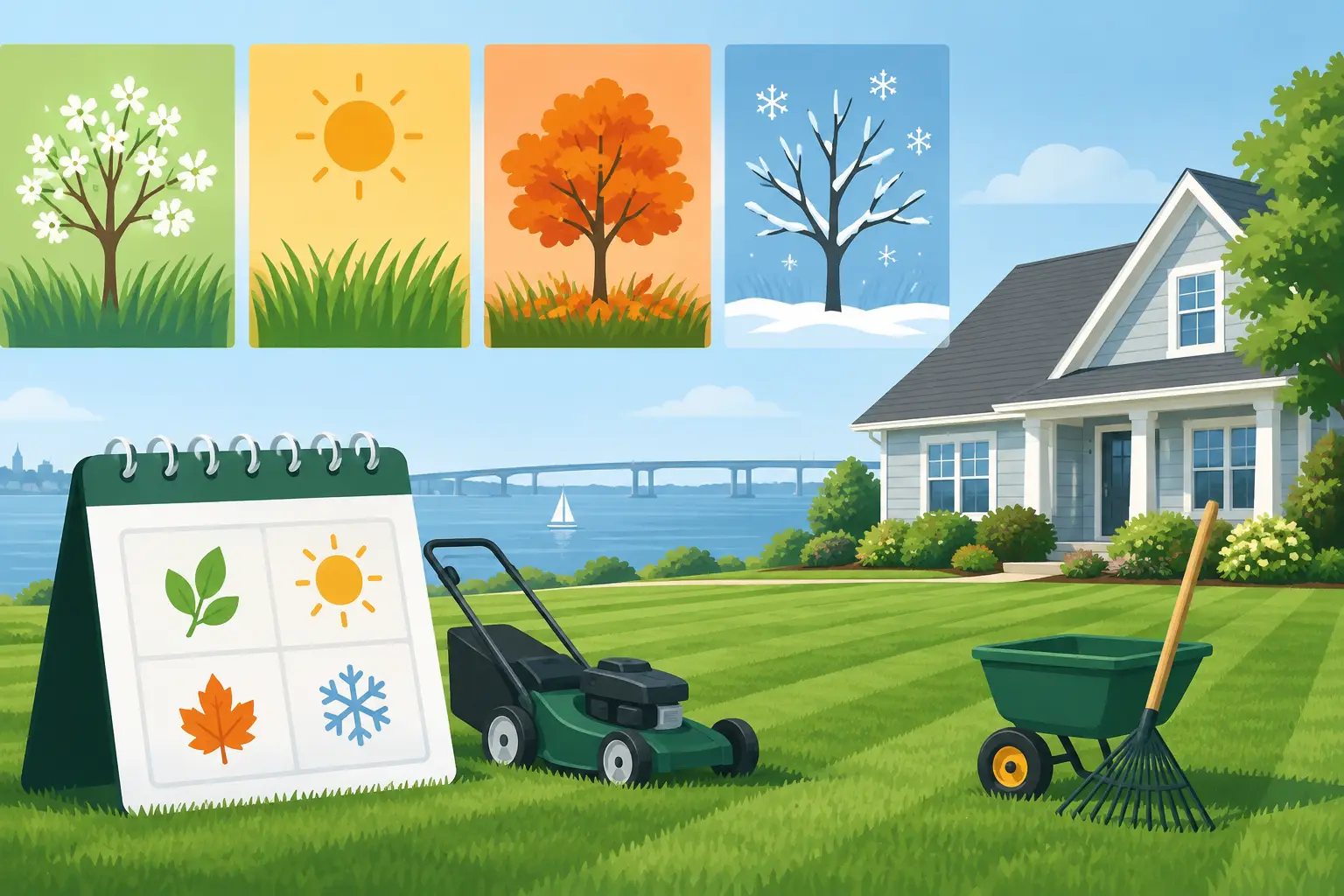
A healthy lawn on the Virginia Peninsula is rarely the result of one perfect Saturday afternoon. It comes from doing the right work at the right time. This seasonal lawn calendar helps Newport News homeowners plan for the changing needs of turf, planting beds, irrigation, and outdoor living areas so the yard continues to make the house feel more like home.
Our coastal Virginia weather can be unpredictable. A mild February, humid July, heavy summer rain, or an early fall dry spell can all change the work your lawn needs. Use this calendar as a practical framework, then adjust for your grass type, soil conditions, drainage, sun exposure, and recent weather.
Table of Contents
ToggleWhy Timing Matters for Lawn Care
The same treatment can help or harm depending on when it is applied. Fertilizer applied to warm-season grass too early can encourage tender growth before the lawn is ready. Heavy mowing during summer stress can thin turf and leave room for weeds. Watering too often may keep roots shallow, while watering too little can weaken a lawn during long, hot stretches.
Timing matters just as much beyond the turf. Shrubs need pruning at the appropriate point in their growth cycle, mulch should be refreshed without being piled against plants, and irrigation systems need inspection before peak watering season. A well-planned property receives steady attention rather than rushed catch-up work.
Seasonal Lawn Calendar: Late Winter and Early Spring
Late winter is the time to look closely at what the previous year left behind. Walk the property and look for bare spots, drainage issues, compacted soil, mole activity, damaged bed edges, and branches that need attention. This is also a good time to clear leaves and debris that can block sunlight and hold moisture against turf.
For many Newport News lawns, early spring care depends on the grass type. Tall fescue is a cool-season grass and may begin growing sooner than Bermuda or zoysia. Warm-season lawns often remain dormant well into spring, even when daytime temperatures feel pleasant. Avoid treating a dormant warm-season lawn as though it is actively growing.
Pre-emergent weed control is often most useful before summer annual weeds establish themselves. The proper timing depends on soil temperatures and the specific product, so it should be planned carefully, especially if you intend to seed. A pre-emergent application and new grass seed can work against each other.
Early spring is also the right period to inspect irrigation. Check each zone for broken heads, clogged nozzles, coverage gaps, leaks, and overspray onto patios, driveways, or the street. A Rain Bird in-ground sprinkler system should put water where your landscape needs it, not waste it on hard surfaces. Addressing small repairs now can prevent larger water-use and turf-health problems later.
Spring: Build a Clean, Healthy Foundation
As spring growth becomes consistent, mowing returns to the weekly routine. Keep mower blades sharp and avoid removing more than one-third of the grass blade in a single cut. Scalping weakens turf, exposes soil, and can make a lawn look patchy for weeks.
Spring is a productive time to redefine bed lines, refresh mulch, and replace plants that did not make it through winter. Mulch improves the finished appearance of a landscape bed, moderates soil temperature, and helps retain moisture. Keep it a few inches away from tree trunks and plant stems to avoid trapping excess moisture against the bark.
This season is also a smart time to evaluate whether the landscape is working for the way you live. An overgrown bed may hide windows. A muddy passage from the driveway to the backyard may call for a paver walkway. A patio that feels unfinished in the evening may benefit from low-voltage landscape lighting. Lawn health and outdoor enjoyment are connected, but they are not exactly the same project.
Summer: Protect Turf Through Heat and Humidity
Summer lawn care in Newport News is about protecting what spring established. Bermuda and zoysia lawns are actively growing during this period, while fescue can struggle in heat and humidity. The goal is not to force perfect growth during stress. It is to support a healthy root system and prevent avoidable damage.
Water deeply and less frequently rather than applying a light sprinkle every day. Most established lawns generally benefit from about one inch of water per week, including rainfall, but soil type, slope, shade, and grass variety matter. Sandy soil may require shorter, more frequent irrigation cycles than compacted clay. After a soaking rain, turn the system off until the lawn actually needs water again.
Morning is usually the best time to irrigate because it limits water loss and allows grass blades to dry before evening. Watering late at night can increase the chance of disease in humid conditions. If one part of the yard stays wet while another turns brown, the issue may be irrigation coverage, drainage, tree shade, or soil compaction rather than a simple lack of water.
Raise the mower height slightly during extended heat and never mow drought-stressed grass just to keep a schedule. Continue to watch for weeds, insects, and mole damage, but avoid applying products without identifying the actual problem. A lawn that is thinning from shade needs a different solution than one damaged by grubs or poor irrigation coverage.
Fall: The Best Season for Repair and Renewal
Fall is one of the most valuable seasons for building a better lawn, particularly for tall fescue properties. Cooler temperatures and more dependable moisture create favorable conditions for aeration, overseeding, and establishing stronger roots. For a fescue lawn with bare areas or thinning turf, fall renovation is usually more effective than spring seeding.
Warm-season lawns have different needs. Bermuda and zoysia should be prepared for dormancy, not heavily pushed with late nitrogen. They may begin losing color as nights cool, but that does not necessarily mean the lawn is unhealthy. A professional evaluation can help distinguish normal dormancy from a turf issue that needs correction.
Fall is also ideal for planting many trees, shrubs, and perennials because roots can establish before the following summer. It is a practical time to improve bed design, install edging, correct drainage, or plan a hardscape project that will be ready to enjoy next spring. Outdoor lighting can be especially appreciated as daylight hours shorten, improving both curb appeal and safe movement around walks, patios, and entries.
Keep leaves from collecting in thick layers across the lawn. A light scattering may be mulched with a mower, but dense, wet piles can smother turf and create disease concerns. Continue mowing as needed until growth slows.
Winter: Inspect, Plan, and Protect
Winter does not mean the property is forgotten. Dormant lawns still benefit from occasional attention. Remove storm debris, avoid repeated foot traffic on frozen or saturated turf, and keep an eye on standing water after rain. If water regularly collects near the foundation, across a walkway, or in a low lawn area, winter is often when the problem becomes easiest to see.
This is a good season to plan improvements without competing with peak mowing and watering demands. Homeowners can consider updated planting beds, a paver patio, irrigation upgrades, drainage corrections, or lighting that makes the home more welcoming after dark. Careful design decisions in winter make spring installation more organized and less rushed.
Make the Calendar Fit Your Yard
A seasonal lawn calendar should guide decisions, not replace observation. A sunny Bermuda lawn, a shaded fescue lawn, and a mixed landscape with mature trees can all sit on the same street and need very different care. Soil conditions, irrigation performance, pet traffic, and previous lawn treatments also shape the right plan.
For homeowners who prefer one experienced team to coordinate turf care, mowing, irrigation, landscape beds, and outdoor improvements, Year Round Lawn Maintenance brings more than 40 years of hands-on local experience to the full property. That broader view helps prevent one service from creating problems for another, such as irrigation that oversaturates a new bed or mowing practices that work against a turf-repair plan.
The most useful next step is simple: take a walk through your yard after the next rainfall, note what looks healthy and what does not, and use the season in front of you to address it before a small concern becomes next year’s larger project.