
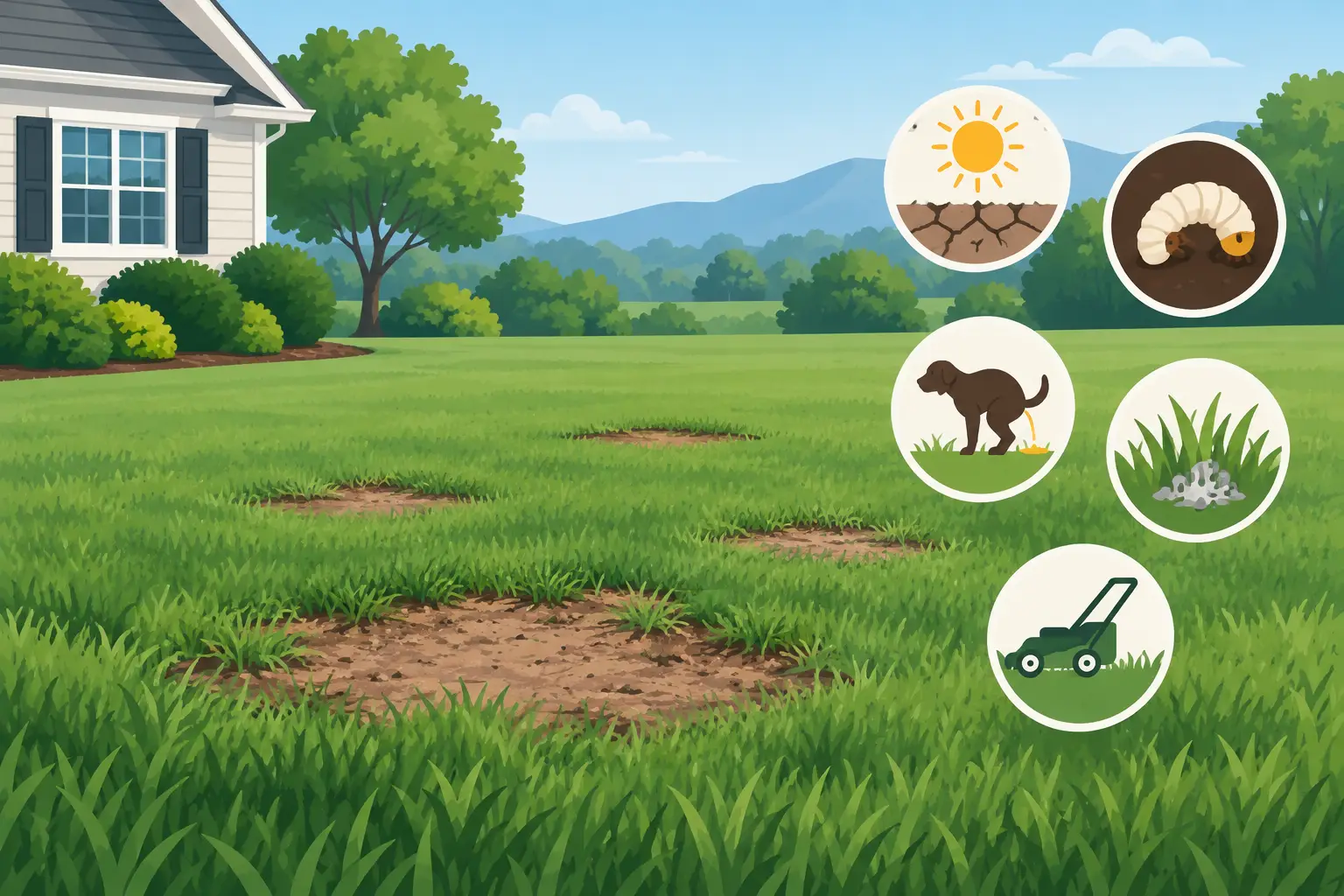
A bare spot can make an otherwise well-kept yard look unfinished, especially when it spreads across a front lawn or appears in the middle of a favorite gathering space. Homeowners often ask what causes bare lawn patches, but the honest answer is rarely just one thing. In Newport News and across the Virginia Peninsula, warm, humid summers, heavy clay soils, changing rainfall, shade, and lawn pests can all affect how well turf holds up.
The good news is that a patchy lawn is usually giving you useful information. Its location, shape, timing, and condition can point to the underlying issue. Finding that cause before spreading seed or laying sod is the difference between a lasting repair and a bare spot that returns next season.
Table of Contents
ToggleWhat Causes Bare Lawn Patches? Start With the Clues
Look closely at the patch before treating it. A clean-edged area near a walkway may be wear from foot traffic. Irregular sections that lift easily may indicate grub damage. Thin grass beneath mature trees may be responding to shade and root competition, while a dry patch near the house can signal uneven sprinkler coverage.
Also consider when the problem appeared. Damage that develops quickly in late summer may be related to drought stress, insects, or disease. A lawn that thins gradually over several years often has a soil, mowing, drainage, or shade issue underneath it. Turf needs the right combination of sunlight, moisture, oxygen, nutrients, and healthy soil to recover.
Common Reasons Lawns Develop Bare Spots
Compacted soil and poor drainage
Much of the Peninsula has dense or clay-heavy soil that can compact over time. When soil particles are pressed tightly together, water may puddle on the surface or run off rather than soak in. Grass roots struggle to reach oxygen, moisture, and nutrients, leaving turf thin and vulnerable.
Compaction is especially common along driveways, near gates, in play areas, and wherever lawn equipment repeatedly travels. Aeration can help relieve compaction, but it works best when paired with the right seeding, watering, and soil-care plan. If an area stays wet for days after rain, grading or drainage improvements may be needed before new grass can establish.
Watering problems, including uneven irrigation
Both too little and too much water can create bare patches. During Virginia heat, turf in a dry zone may fade from green to gray-green, then turn brown and thin out. Shallow, frequent watering encourages shallow roots, which makes grass less resilient when temperatures rise.
Overwatering creates a different problem. Constantly damp soil limits root oxygen and can encourage turf disease. With an in-ground irrigation system, a single clogged nozzle, misaligned spray head, broken pipe, or poorly timed zone can leave one part of the lawn struggling while the rest looks healthy.
A quick test is to place a few straight-sided containers around the affected zone during a watering cycle. Notice whether each location receives similar coverage. Irrigation adjustments should account for sun exposure, soil type, slope, and the grass itself, not simply run every zone for the same amount of time.
Insects, grubs, and animal activity
White grubs feed on grass roots below the surface. As root systems weaken, turf can wilt even when the soil is moist and may peel back like loose carpet. Moles sometimes follow the grubs, leaving raised tunnels and adding more visible damage. Other insects can affect lawns as well, particularly during warm weather.
Not every brown patch is a pest problem, so treatment should follow a proper inspection. Applying insect control when insects are not the cause adds cost without correcting the lawn. A professional can check the root zone and determine whether pest activity has reached a level that warrants treatment.
Fungal disease and summer stress
Hot, humid weather can be tough on cool-season lawns. Disease often appears as spots, rings, or irregular patches, sometimes with a darker edge or discolored grass blades. Watering late in the evening, overapplying fertilizer, poor airflow, and prolonged leaf moisture can make conditions more favorable for fungal issues.
The right response depends on the disease and the condition of the turf. Improving watering practices, mowing correctly, reducing excess thatch, and selecting an appropriate treatment may all be part of the solution. Simply adding more water to a struggling patch can make certain disease problems worse.
Too much shade and tree-root competition
A lawn beneath established trees has to compete for sunlight, water, and nutrients. Even high-quality seed will have trouble producing dense turf where direct sun is limited for much of the day. In these locations, grass may grow thin in spring, then disappear after summer heat or leaf cover.
Selective pruning may improve light and airflow, but there are limits to what turf can do in deep shade. In some areas, the better long-term choice is to replace failing grass with a well-designed planting bed, shade-tolerant groundcover, mulch, or a hardscape feature that makes the space more attractive and usable.
Mowing too low or using dull blades
Scalping a lawn removes too much green growth at once and exposes the soil to heat. It is a common cause of weak, patchy turf during the growing season, particularly on uneven ground. Dull mower blades tear grass instead of cutting it cleanly, leaving ragged tips that lose moisture and are more susceptible to stress.
Keep mowing height appropriate for the grass type and avoid removing more than one-third of the blade length in a single mowing. If the lawn gets ahead after rain or a busy week, raise the mower deck and reduce the height gradually over more than one visit.
Foot traffic, pets, and outdoor use
Some bare areas are simply worn out. Repeated foot traffic from children, pets, delivery access, or backyard gatherings compacts soil and crushes turf before it has time to regrow. Pet urine can also create small brown or bare circles, often surrounded by darker green grass due to concentrated nitrogen.
These areas may need more than seed. A stepping-stone path, paver walkway, designated pet area, or adjusted landscape layout can protect the lawn while making the yard easier to enjoy. Good landscape design should support the way a family actually uses its outdoor space.
Repair the Cause Before You Repair the Grass
Raking seed into a bare patch without correcting the underlying condition often produces short-lived results. Start by removing dead material and loosening the top layer of soil. Address pests, drainage, compaction, irrigation coverage, or shade before choosing a repair method.
For small patches, overseeding can work well when temperatures and moisture are favorable. Early fall is often an excellent time to establish cool-season turf in this region because the soil is still warm while air temperatures are easing. Seed needs consistent moisture during germination, followed by a gradual shift to deeper, less frequent watering as roots develop.
Sod offers a faster visual improvement, but it requires good soil contact and attentive watering to root successfully. It is not a shortcut around poor drainage, heavy shade, or damaged irrigation. Larger or repeatedly failing areas may benefit from a turf evaluation that considers soil conditions, grass selection, mowing practices, and watering schedules together.
When a Lawn Professional Can Help
A professional assessment is particularly useful when bare spots return in the same place, spread quickly, or affect several parts of the property. The issue may involve more than the turf itself. Drainage patterns, sprinkler performance, soil compaction, pest pressure, and nearby landscape features can all work together to weaken a lawn.
For homeowners who want one coordinated plan, Year Round Lawn Maintenance can evaluate lawn health alongside irrigation, landscape, and outdoor-use needs. That broader view helps avoid treating symptoms while the real cause remains below the surface.
A healthy lawn does not need to be perfect to make your home feel more like home. With the right diagnosis and timely care, those frustrating bare areas can become a stronger, greener part of the outdoor space you enjoy every season.