
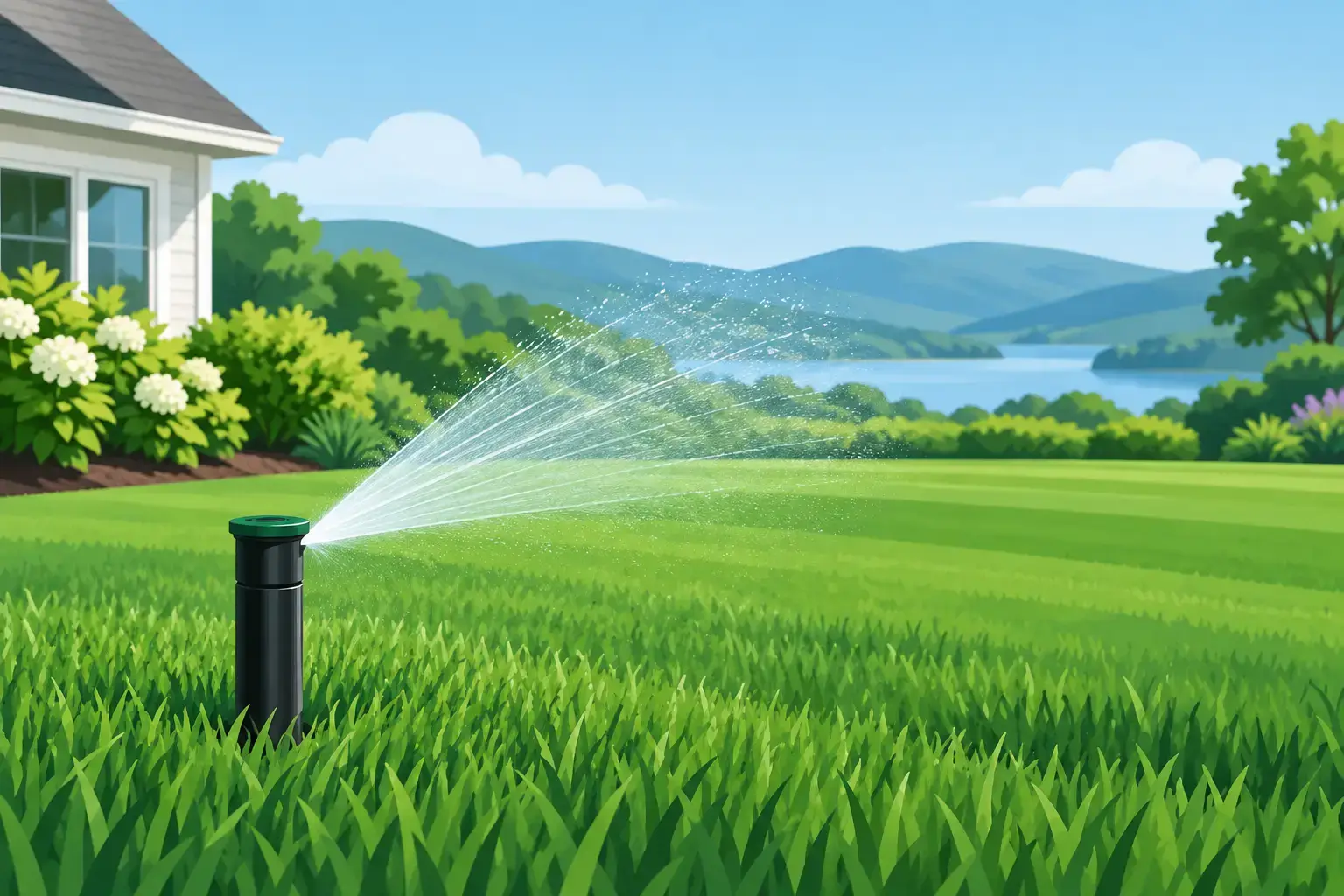
A Newport News lawn can go from saturated after a summer storm to dry and stressed within days of July heat. That is why a sprinkler system should do more than turn on at a set time. This Rain Bird sprinkler review looks at how a professionally designed system performs for Virginia Peninsula homeowners, where changing weather, soil conditions, plant beds, and turf types all affect how water should be applied.
Rain Bird is a well-established irrigation brand with components used on residential properties across the country. Its reputation is built on practical sprinkler heads, valves, controllers, sensors, and drip-irrigation products that can be combined into a system tailored to the property. For homeowners, the real question is not whether Rain Bird makes good equipment. It is whether the system is designed, installed, and maintained well enough to make the yard healthier without wasting water.
Table of Contents
ToggleRain Bird sprinkler review: what stands out
The strongest feature of a Rain Bird irrigation system is flexibility. A properly planned system can separate the front lawn from the backyard, keep flower beds on their own schedule, and deliver lower-volume water to shrubs through drip irrigation. That matters because a fescue lawn, a sunny foundation bed, and a row of established evergreens do not have the same watering needs.
Rain Bird heads are also designed to provide controlled coverage rather than simply throwing water as far as possible. When the correct nozzles, spacing, and water pressure are matched, the system can distribute water more evenly across the lawn. More even watering helps reduce the dry strips and overly wet patches that can make turf look thin, invite disease, or leave a homeowner constantly moving a hose.
The brand offers both fixed spray heads and rotor-style sprinklers. Fixed sprays are typically useful for smaller lawn areas and tighter spaces, while rotors suit larger turf zones. Drip components are particularly valuable around planting beds, where overhead watering can wet foliage unnecessarily and encourage weeds between plants. The ability to use the right delivery method in each part of the yard is a major advantage over a one-size-fits-all setup.
Performance depends on the design, not the label alone
A Rain Bird system can be an excellent investment, but the equipment is only one part of the result. A poorly designed system can waste water regardless of the brand on the sprinkler head. Heads that are too far apart, mismatched nozzles, incorrect pressure, or a controller programmed for daily watering can leave a lawn struggling rather than thriving.
This is especially relevant in coastal Virginia. Many local properties have a mix of sunny open turf, shaded areas beneath mature trees, compacted soil, and beds close to the house. Some yards drain quickly, while others hold water after heavy rain. A professional irrigation layout accounts for those conditions by creating separate zones, selecting appropriate heads, and adjusting runtimes based on the needs of each area.
Head-to-head coverage is an important design principle. In simple terms, sprinkler patterns should overlap enough that each section of turf receives consistent water. A homeowner may see water reaching every corner during a test run and assume the coverage is adequate. However, the outer edge of a sprinkler pattern often receives less water than the center. Proper overlap helps correct that issue.
Water pressure is another detail that deserves attention. Low pressure may prevent heads from reaching their intended distance, while excessive pressure can create misting. Misting sends water into the air where wind can carry it away from the lawn. A knowledgeable installer evaluates the available water supply and uses components that work within the property’s real conditions.
Controllers and sensors improve day-to-day efficiency
Modern irrigation is not about setting a timer in spring and forgetting about it until fall. Rain Bird controllers can provide flexible programming for multiple zones, seasonal adjustments, and different watering days. Depending on the controller selected, homeowners may also have access to smart features that help adjust watering around local weather conditions.
A rain sensor is one of the most practical additions to a residential system. It pauses scheduled watering when sufficient rain has fallen, helping avoid the frustrating sight of sprinklers running during or immediately after a storm. For a region that can receive sudden summer downpours, this is a sensible safeguard rather than a luxury.
That said, smart technology is not a substitute for good judgment. A controller cannot compensate for a leaking valve, a buried head blocked by turf, or a newly planted bed that needs more attentive care while plants establish. Homeowners should still walk the property occasionally and watch each zone run. A few minutes spent checking coverage can reveal a tilted head, damaged nozzle, or landscape change before it affects the lawn.
Where Rain Bird systems have trade-offs
The main trade-off is that a full in-ground Rain Bird system is a long-term property improvement, not a low-cost weekend project. Installation requires trenching, piping, valves, electrical connections, controller programming, and careful restoration of the lawn and beds. The final cost depends on the lot size, number of zones, water source, landscape features, drainage, and whether drip irrigation or smart controls are included.
There is also an ongoing maintenance commitment. Virginia winters make professional winterization important, since water left in irrigation lines can freeze and cause damage. In spring, the system should be activated carefully, inspected for leaks, and tested zone by zone. Heads may need adjustment after mowing, edging, landscape work, or seasonal settling.
For small, simple yards, an extensive system may not always be necessary. A quality hose-end sprinkler and a consistent watering routine can be enough for a compact lawn with limited planting areas. But for homeowners managing larger turf spaces, multiple beds, uneven sun exposure, or a busy schedule, an in-ground system offers far greater convenience and control.
Installation quality protects your landscape investment
The best irrigation installation should feel almost invisible once the work is complete. Heads should sit at the correct grade, pipes should be protected below ground, valves should remain accessible for service, and the controller should be easy for the homeowner to understand. Just as importantly, the system should complement the landscape rather than fight it.
A good contractor considers future plans, too. If you expect to add a patio, expand planting beds, install landscape lighting, or replace a section of turf, those changes can affect irrigation zones and sprinkler placement. Planning the system as part of the overall outdoor space can prevent unnecessary revisions later.
At Year Round Lawn Maintenance, Rain Bird irrigation is approached as part of a healthier, more attractive property, not as an isolated piece of equipment. The goal is to help turf, shrubs, planting beds, and outdoor living areas receive the care they need while keeping the finished yard clean, functional, and enjoyable.
Is a Rain Bird sprinkler system right for your home?
Rain Bird is a strong choice for homeowners who want a proven residential irrigation platform with flexible options for lawns, beds, and changing seasonal needs. It is particularly well suited to properties where hand watering has become inconsistent, where landscape investment deserves better protection, or where dry areas and excess runoff have become recurring problems.
The most successful results come from matching the system to the property. A shaded lawn should not be watered like a full-sun lawn. Foundation beds should not be treated like turf. Freshly installed plants may need a different schedule than mature shrubs. Those details are where thoughtful design and regular service make the difference between merely having sprinklers and having a system that supports a yard you are proud to come home to.
Before choosing any irrigation system, ask how the zones will be designed, how runoff and rain will be managed, what maintenance is included, and who will be available when adjustments are needed. The right answers can help your landscape stay green, balanced, and welcoming through every season.