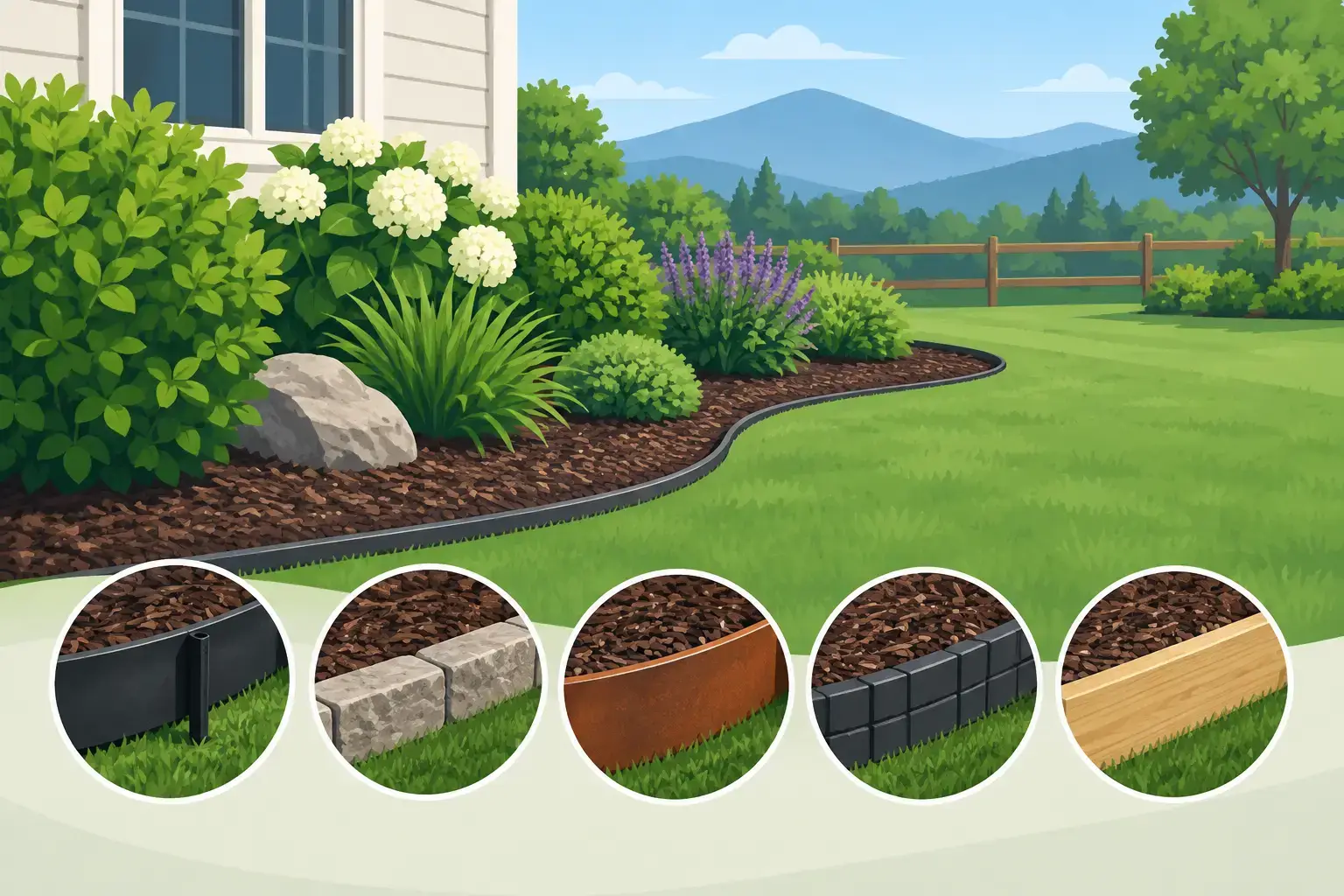
A clean landscape edge can make a planting bed look intentional instead of unfinished. It keeps mulch where it belongs, creates a crisp boundary along walkways and turf, and gives mowing crews a clear line to follow. Choosing the best landscape edging materials for your Newport News home comes down to more than appearance. Our coastal Virginia weather, soil conditions, irrigation needs, and how you use your yard all affect which option will look good and perform well over time.
For some homes, a simple metal edge is all that is needed to separate lawn from a curved mulch bed. For others, a paver or natural stone border becomes part of a larger patio, walkway, or outdoor living design. The right choice should fit the style of your home while making landscape maintenance easier in every season.
Table of Contents
ToggleWhat Good Landscape Edging Should Do
Edging has a practical job. It separates materials that naturally want to mix, such as grass and mulch, gravel and turf, or planting soil and a paver walkway. A well-installed edge also helps define bed shapes, protects plants from mower wheels, and reduces the time spent trimming along borders.
In the Virginia Peninsula, edging should also stand up to humid summers, heavy rain, winter freeze-thaw cycles, and the occasional soil shift. Materials matter, but installation matters just as much. Even high-quality stone can move if the base is not prepared correctly, while thin plastic edging can heave out of the ground if it is not secured and backfilled.
Before selecting a material, consider the line you want to create. Straight, formal edges work well with brick, pavers, and metal. Sweeping curves are often easier to achieve with flexible metal, composite, or certain plastic products. It is also wise to think ahead about irrigation heads, drainage, mowing access, and future changes to the landscape.
The Best Landscape Edging Materials for Lasting Results
Pavers and brick
Paver and brick edging offer one of the most finished, durable looks available. They are an excellent fit for Colonial, traditional, and coastal Virginia homes, particularly when the edging can coordinate with an existing patio, front walk, or driveway. A soldier course of pavers around a bed creates a substantial visual frame and can make a modest planting area feel much more polished.
This option is especially useful where turf meets hardscape. Properly installed pavers provide a stable mowing strip, so mower wheels can travel along the border without scalping grass or throwing mulch onto a walkway. They also work well for raised beds and curved garden borders when individual units are cut and set to the desired shape.
The trade-off is installation labor. Pavers need a compacted base, proper leveling, and edge restraint to prevent shifting. They cost more than basic edging, but homeowners often find that the long-term appearance and lower maintenance justify the investment.
Natural stone
Natural stone brings texture, character, and a sense of permanence to the landscape. Fieldstone, bluestone, granite, and irregular flagstone can all be used as edging, depending on the home’s architecture and the desired look. Stone pairs naturally with ornamental grasses, flowering perennials, evergreen shrubs, and landscape lighting around front entries or backyard gathering areas.
Large stones can create an informal garden edge that feels established and relaxed. Cut stone provides a more tailored result, especially beside patios and formal planting beds. Stone is highly durable, and its color variation helps it look at home in a landscape rather than overly manufactured.
Because natural stone is heavy and often irregular, professional installation is valuable. Each piece needs to sit securely, with enough of the stone below grade to resist movement. Stone can also make bed reshaping more difficult later, so it is best used when you are confident in the overall landscape plan.
Metal edging
Steel and aluminum edging are popular choices for homeowners who want a clean, nearly invisible border. Once installed, metal edging creates a sharp line without adding a bulky visual element. It is especially effective around modern landscape designs, curved mulch beds, and gravel areas where the plants and materials should remain the main focus.
Steel is strong and can handle long, smooth curves. Some products develop a natural weathered finish over time, while painted or powder-coated options maintain a darker, more defined appearance. Aluminum will not rust and is lighter to handle, though it may be less rigid in high-traffic areas.
Metal edging performs best when it is installed deep enough, properly staked, and set at a height that does not interfere with mowing. It can be a smart middle ground between inexpensive plastic and more costly masonry borders. The main limitation is that it does not create a true mowing strip, so regular trimming may still be needed along the lawn side.
Composite and recycled-plastic edging
Composite and recycled-plastic edging are practical options for simple bed lines, especially in lower-visibility areas of the yard. They are generally flexible, resistant to rot, and easier to install than stone or pavers. Quality varies widely, however, and that difference shows after a few seasons of sun exposure, lawn equipment contact, and changing soil conditions.
Heavier commercial-grade products can work well for gentle curves and mulch containment. Thin roll-style plastic edging often becomes brittle, rises above grade, or develops wavy lines that distract from an otherwise well-kept lawn. For a front-yard bed that is meant to improve curb appeal, choosing a stronger product and having it installed with adequate stakes is worth the extra cost.
Plastic or composite edging is best viewed as a functional solution rather than a decorative focal point. It can make sense for utility areas, larger backyard beds, or projects where budget is the primary concern. It is less suitable when you want the border itself to contribute to the home’s overall architectural character.
Concrete curbing
Poured concrete curbing creates a continuous, permanent edge with a smooth, uniform profile. It is often chosen for broad lawn borders, commercial-style landscapes, or homeowners who prefer a defined decorative edge without individual pavers or stones. Color and texture options can help concrete complement existing hardscaping.
Curbing can contain mulch effectively and handles mower contact well. Still, it should be installed by an experienced crew that understands grade, drainage, expansion, and soil preparation. A poorly placed concrete edge can direct water toward a foundation, crack as the ground moves, or become an obstacle when a bed needs to be redesigned.
This material is most appropriate for stable, long-term bed layouts. If you enjoy refreshing your planting beds or changing their shape every few years, pavers or metal edging may offer more flexibility.
Match the Edge to How You Maintain Your Yard
The best material is often the one that supports the way you want to care for your property. A homeowner who wants a crisp, low-maintenance lawn edge may prefer pavers set flush with the turf. Someone with naturalized beds and informal plantings may prefer fieldstone. A contemporary home with broad curves may look best with discreet metal edging.
Irrigation should be part of the decision, too. Bed edges sometimes need adjustment when sprinkler heads are added, moved, or repaired. Flexible edging is easier to modify, while masonry and concrete require more planning around spray coverage and head placement. Keeping mulch below the top of the edging also helps prevent it from blocking irrigation water or washing onto turf during heavy rain.
Consider bed depth before installation. Narrow beds can look like an afterthought, no matter how attractive the edging material is. A well-proportioned bed with room for healthy shrubs, seasonal color, and mulch will make the edge feel purposeful. At front entries, coordinating the border with walkway materials, plant selection, and low-voltage lighting creates a more welcoming approach after dark.
Installation Details That Protect Your Investment
A crisp edge begins with layout. Hoses, marking paint, or string lines help establish a shape that looks balanced from the street, from windows, and while walking through the yard. Curves should be broad and intentional rather than tight and uneven. Straight lines should align with nearby features whenever possible.
The soil beneath the edge must be prepared for the material being used. Pavers and stone need excavation, a compacted aggregate base, and careful leveling. Metal and composite edging require a clean trench, secure stakes, and backfill that holds the material in place. Drainage should never be an afterthought, particularly near foundations, patios, and low spots in the lawn.
Routine care is simple once the edge is installed correctly. Refresh mulch without burying the border, remove grass runners before they cross into beds, and check for movement after winter or periods of heavy rain. Small corrections early can keep an edge looking straight and well maintained for years.
A landscape border may seem like a small detail, but it sets the standard for the entire yard. When your beds, lawn, irrigation, hardscape, and lighting are planned as one outdoor space, the result is easier to maintain and more enjoyable to come home to. For homeowners who want that kind of finished, long-lasting result, Year Round Lawn Maintenance can help turn a simple edge into part of a landscape that makes your house feel more like home.