
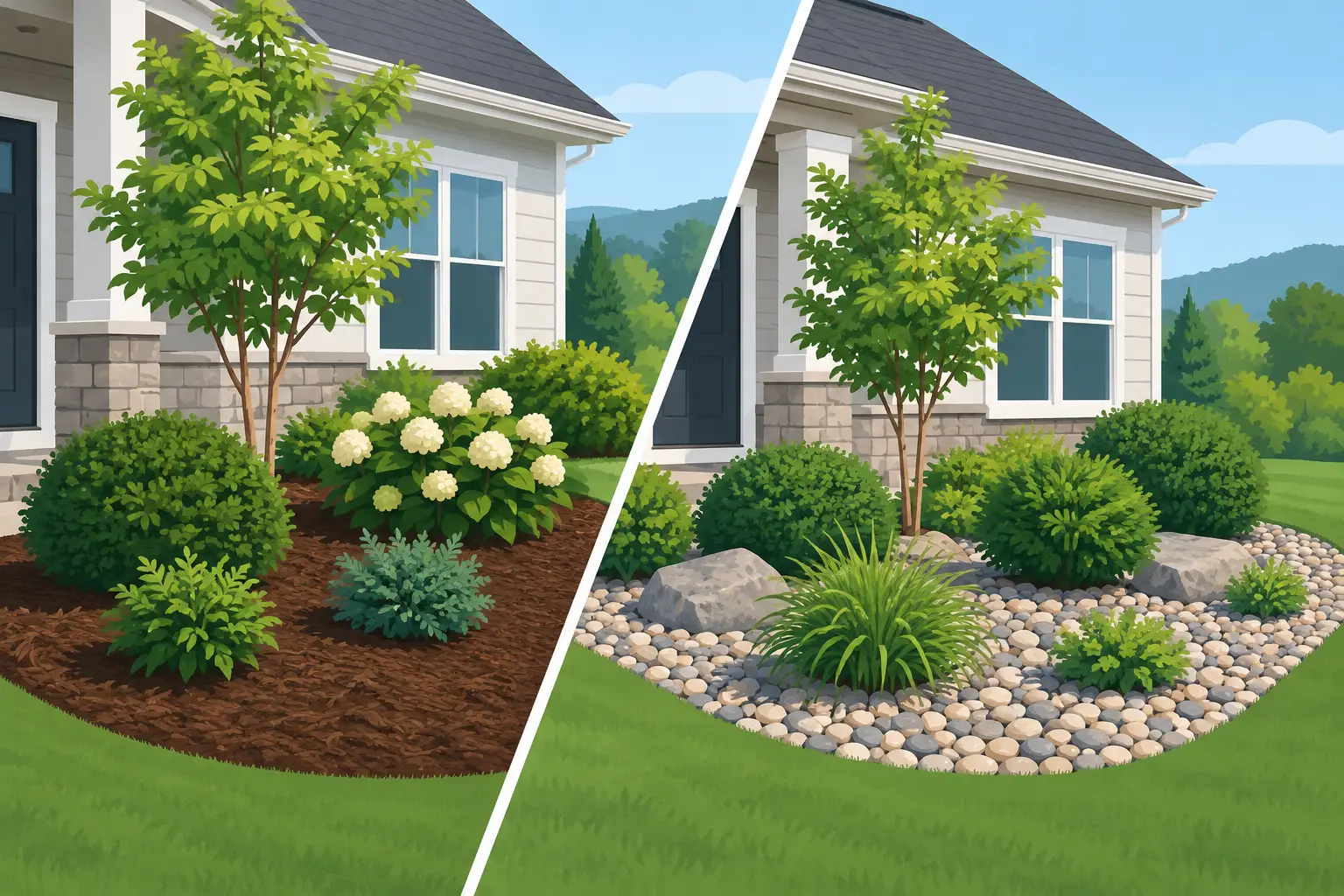
A fresh layer of mulch can make a planting bed look finished in an afternoon. Decorative stone offers a clean, lasting appearance that does not need to be replenished every spring. When homeowners consider mulch versus rock landscaping, the right choice is rarely just about appearance. It affects plant health, watering, drainage, maintenance, and how your property looks through every season.
For homes in Newport News and across the Virginia Peninsula, local conditions matter. Our humid summers, steady rainfall, clay-heavy soils, and changing seasonal temperatures can influence how each material performs. A landscape bed should complement your home while giving trees, shrubs, and perennials the conditions they need to thrive.
Table of Contents
ToggleMulch Versus Rock Landscaping: The Main Difference
Mulch is an organic or inorganic material spread over soil in planting beds. Shredded hardwood mulch is a common choice because it has a natural color and texture, helps retain soil moisture, and gradually breaks down over time. Pine bark, pine straw, and specialty mulches offer similar benefits with different appearances and rates of decomposition.
Landscape rock includes river rock, gravel, crushed stone, pea gravel, and decorative stone. It does not decompose, which makes it appealing for homeowners seeking a more permanent ground cover. Rock is often installed around foundations, in dry creek beds, along walkways, or in beds with carefully selected drought-tolerant plants.
The key distinction is that mulch actively changes the soil as it breaks down, while rock remains largely unchanged. That makes mulch the better partner for many traditional planting beds, while rock can be an excellent design and drainage material in the right location.
Why Mulch Works Well in Planting Beds
Mulch earns its place in a landscape for more than its polished look. A properly installed layer helps moderate soil temperature, keeping roots cooler in summer and providing some insulation during winter cold snaps. It also slows evaporation, so beds hold moisture longer between irrigation cycles and rainfall.
As organic mulch decomposes, it contributes to healthier soil structure. That is especially helpful in Virginia landscapes where compacted clay can make it difficult for water, air, and roots to move through the ground. Over time, mulch supports the soil ecosystem beneath your shrubs and perennials instead of simply covering it.
Mulch also gives homeowners flexibility. If you refresh a bed, add new plants, adjust edging, or change your home’s exterior color, mulch is easy to remove and replace. Its warm, natural finish works particularly well with foundation plantings, shade gardens, flowering borders, and beds designed to soften the lines of a home.
There are trade-offs. Mulch needs regular attention, typically a light refresh once a year. Heavy rains can wash it into turf or hardscape areas if a bed lacks proper edging. Mulch can also become a place for weeds to germinate if it is applied too thinly or allowed to break down completely. Installed at a depth of about 2 to 3 inches, it provides coverage without burying plant crowns or holding too much moisture against tree trunks.
When Rock Is the Better Landscape Material
Rock landscaping can create a crisp, tailored look that holds up for years. Because it does not break down, it can reduce the need for annual material replacement. It is especially useful where mulch tends to move, such as slopes, areas near downspouts, or spots exposed to runoff.
Stone is also a practical choice for decorative drainage features. A dry creek bed, rock swale, or gravel transition can direct water away from problem areas while adding texture and visual interest to the landscape. Around hardscape features such as paver patios, stone borders, or pathways, rock can provide a clean connection between built elements and nearby plantings.
For beds that contain few plants, rock may be a strong fit. Consider a small accent bed around a mailbox, a narrow strip beside a driveway, or a sunny area planted with ornamental grasses and heat-tolerant selections. The stone becomes part of the design rather than simply a cover over soil.
Still, rock is not maintenance-free. Leaves, pine needles, and soil can collect between stones, creating a place for weeds to grow. Removing debris without disturbing the rock takes time, and weeds can be harder to pull once roots establish beneath landscape fabric. If you later decide to change the bed, rock is far more labor-intensive to remove than mulch.
Think About Plant Health Before Choosing Stone
One of the biggest concerns with rock around plants is heat. Dark-colored stone absorbs sunlight and can raise soil temperatures around roots during a Virginia summer. Even lighter stone reflects heat toward nearby shrubs, flowers, siding, and windows. Plants that prefer cool, consistently moist soil may struggle in a rock bed, particularly along a sunny foundation.
Rock does not add organic matter to the soil or retain moisture in the same way mulch does. Your irrigation plan may need to change, especially for recently installed shrubs and perennials. Water can pass through the spaces between stones, but the soil below may still dry out quickly during hot stretches.
For this reason, mulch is often the better choice for established foundation beds with azaleas, hydrangeas, boxwoods, hostas, flowering perennials, or young trees. These landscapes benefit from the soil protection and moisture support that organic material provides.
Rock can work well around plants when the design accounts for the conditions it creates. Choose plants that tolerate sun, heat, and drier soil, provide adequate spacing, and keep stone away from stems and trunks. A professional landscape plan can balance those needs so a low-maintenance look does not come at the expense of long-term plant performance.
Cost and Maintenance Over Time
Mulch usually has a lower upfront cost, but it is a recurring investment. Most beds benefit from a seasonal refresh to restore color, maintain proper depth, and keep the landscape looking cared for. This ongoing service can be worthwhile because it also provides an opportunity to inspect plants, manage weeds, refine bed lines, and address small issues before they become larger ones.
Rock often costs more to install because of the material weight, delivery, preparation, edging, and labor involved. Landscape fabric is sometimes used beneath it, although fabric is not a permanent solution to weeds and can complicate future planting. Once installed properly, rock may not need replacement for many years, but it can still require weeding, debris removal, and occasional replenishment if stones shift or settle.
The best value depends on the purpose of the bed. For a large planted foundation bed, mulch is usually more cost-effective and better for the landscape. For a small decorative drainage area or a permanent accent beside a patio, rock may deliver more value over time.
A Balanced Approach Often Looks Best
You do not have to use one material across the entire property. Many of the most attractive residential landscapes use mulch and rock in different places for different jobs. Mulch can support planting beds around the home, while stone defines a drainage feature, frames a walkway, or adds contrast near a patio or outdoor living area.
Material selection should also work with your irrigation system. Mulch-covered beds typically make it easier to maintain even moisture around plants. Rock beds may require thoughtful sprinkler or drip-zone planning to prevent runoff, overspray, and water waste. Coordinating the landscape, irrigation, and hardscape design from the beginning creates a cleaner result and avoids costly adjustments later.
For homeowners who want a landscape that feels finished without becoming difficult to maintain, the question is not which material is universally better. It is which material belongs in each part of your yard. Year Round Lawn Maintenance helps homeowners make those decisions with the full picture in mind, from healthy planting beds and proper drainage to irrigation performance and curb appeal.
A well-chosen ground cover should make your house feel more like home, not give you another weekend project. Start with the plants, sun exposure, drainage, and maintenance level you want, then let those practical details guide the finish beneath your landscape.