
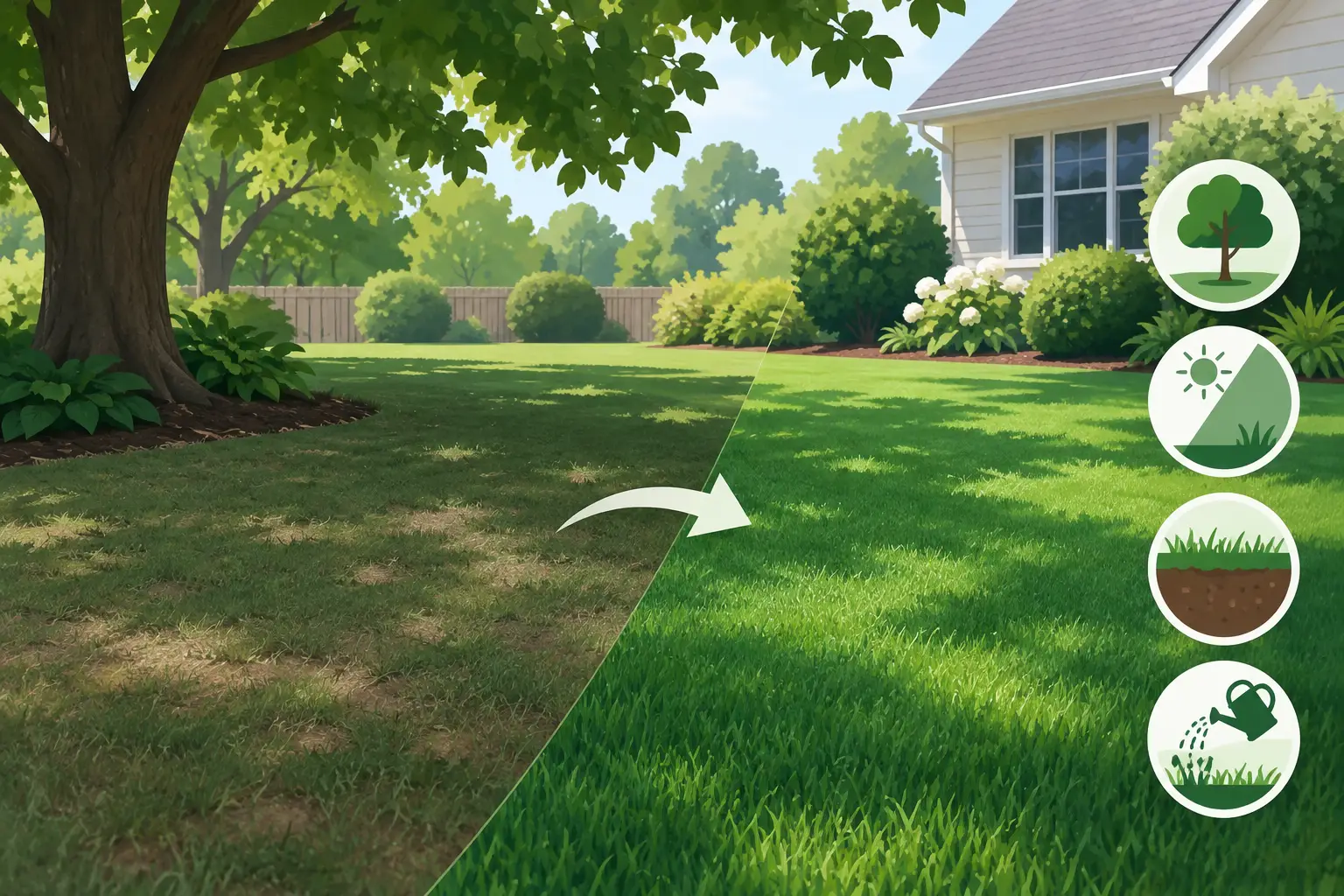
A thin lawn beneath mature trees is one of the most frustrating problems homeowners face. You can fertilize, water, and reseed, yet the grass still fades away by summer. To improve shaded turf, the answer is rarely one product or one weekend of work. It is a practical combination of managing light, reducing competition from tree roots, choosing the right grass, and adjusting lawn-care habits to suit the site.
For Newport News and Virginia Peninsula properties, shade can be especially challenging because our warm, humid summers place stress on cool-season lawns. A beautiful canopy may make a yard more comfortable, but it also changes how turf receives sunlight, moisture, and air movement. A healthy result starts with treating the shaded area differently from the sunny parts of the lawn.
Table of Contents
ToggleWhy Shaded Turf Struggles
Grass needs sunlight to produce the energy that supports roots, density, and recovery from foot traffic. Most turfgrass varieties need several hours of filtered or direct sunlight each day. When branches block that light, grass plants grow thinner and less resilient. They also lose the ability to compete with moss, weeds, and disease.
Shade is not the only issue. Mature trees compete directly with turf for water and nutrients. Their roots are usually concentrated in the same upper soil layer where grass roots need to grow. Leaves, needles, and fallen branches can trap moisture on the lawn surface, while limited air circulation makes fungal disease more likely during humid weather.
Not every shaded lawn has the same problem. A site with light afternoon shade from a single ornamental tree can often support a full lawn. Dense, all-day shade beneath large oaks, pines, or maples may not. Being honest about that difference prevents repeated reseeding efforts that produce only short-lived results.
Start With the Right Amount of Light
Before changing your turf program, pay attention to how much usable light reaches the area. Watch the lawn at several points during a clear day. The goal is not necessarily full sun, but enough filtered sunlight for grass to stay established.
Selective pruning is often the most effective first step. Raising lower branches, removing dead limbs, and thinning crowded interior growth can allow more morning or filtered light to reach the turf. It also improves air movement, which helps the lawn dry after rain and reduces disease pressure. Tree pruning should protect the health and natural form of the tree, so major work is best handled by a qualified tree professional.
Avoid severe canopy removal simply to save grass. A mature tree can be one of the most valuable features of a property, providing cooling shade, privacy, and curb appeal. The better approach is usually to create enough light for the lawn where possible, then use landscape beds or groundcover where grass is no longer the practical choice.
Know When Grass Is Not the Best Ground Cover
If an area receives very little light for most of the day, even the most carefully maintained fescue lawn may remain sparse. Continuing to seed it can lead to muddy spots, weeds, and unnecessary expense.
In those locations, a professionally designed planting bed can look intentional and improve the overall landscape. Shade-tolerant shrubs, perennials, mulch, decorative stone, or a carefully placed path can turn a difficult patch into an attractive part of the yard. This is especially useful around tree trunks, where mowing can damage surface roots and compact the soil.
Choose Grass Seed for Shade, Not Just Convenience
On the Virginia Peninsula, tall fescue is a dependable choice for many residential lawns, including areas with partial shade. It develops a deep root system when cared for properly and handles our seasonal conditions better than many alternatives. For shaded locations, however, the seed blend matters.
Look for a high-quality turf-type tall fescue blend that includes varieties rated for shade tolerance. Fine fescues can also contribute to a shade mix because they perform well with less sunlight, although they may not withstand heavy activity as well as tall fescue. A professional turf evaluation can help determine whether the lawn needs overseeding, spot repair, or a more complete renovation.
Fall is generally the best time to establish cool-season turf in our area. The soil remains warm enough for germination, while cooler air temperatures reduce stress on new seedlings. Spring seeding can work for small repairs, but young grass often has less time to mature before summer heat arrives.
Improve Shaded Turf With Better Mowing Habits
Mowing too short is especially damaging in shaded areas. Short grass has less leaf surface to capture limited sunlight, and its roots become weaker. For most tall fescue lawns, maintaining a higher mowing height gives turf a better chance to stay dense beneath partial shade.
Keep mower blades sharp so they make clean cuts rather than tearing grass blades. Torn tips lose moisture faster and can leave the lawn looking brown or gray shortly after mowing. During periods of active growth, follow the one-third rule: remove no more than one-third of the blade height at a time.
Grass clippings are usually beneficial when they are short and spread evenly. They return organic material to the soil without creating harmful thatch. The exception is when heavy clumps form on damp turf, as those clumps can block light and hold moisture against the lawn surface.
Water Deeply, but Do Not Overwater
Shaded grass uses less water than grass growing in full sun. That surprises many homeowners, particularly when large tree roots are nearby. The lawn may look dry because tree roots are pulling moisture from the soil, but frequent light watering can leave turf roots shallow and encourage disease.
Water based on soil conditions rather than a fixed schedule. Check the soil several inches below the surface before irrigating. If it is dry, provide a thorough watering early in the morning so grass blades can dry during the day. Morning irrigation is generally preferable to evening watering, which can leave foliage wet overnight.
A well-designed in-ground irrigation system gives homeowners more control over difficult areas, but shaded zones should not always run on the same schedule as sunny zones. Separate zones or adjusted run times may be needed to avoid overwatering. Rain Bird irrigation knowledge and regular system checks can make a noticeable difference when the lawn has varying sun exposure.
Feed the Lawn Carefully and Build Better Soil
Heavy fertilizer applications will not make up for insufficient sunlight. In fact, too much nitrogen can push fast, weak leaf growth that is more susceptible to disease. A soil test is the best way to understand whether the lawn actually needs lime, phosphorus, potassium, or other corrections.
For shaded turf, a balanced seasonal program is usually more effective than trying to force a quick green-up. Fall fertilization supports root development for cool-season grass, while spring applications should be measured carefully. Soil compaction may also limit root growth, especially beneath trees or along walkways where people and pets travel.
Core aeration can relieve compaction and create openings for air, water, and seed. Timing matters. Aerating and overseeding in early fall gives new plants their best opportunity to establish before winter. In a heavily rooted area, aeration should be approached with care to avoid unnecessary injury to significant tree roots.
Keep Leaves, Weeds, and Traffic From Taking Over
A shaded lawn has less margin for error. A thick layer of leaves can block the limited sunlight turf receives, so remove leaves regularly through fall. Mulching small amounts with the mower can be effective, but heavy leaf cover should be collected rather than left to smother the grass.
Weeds take advantage of thin turf. Address them early and use products only when they are appropriate for the grass type and season. New seedlings are particularly sensitive, so herbicide timing should be coordinated with overseeding plans.
Foot traffic can quickly wear out grass where sunlight is limited. If people naturally cut through the same shaded spot, a stepping-stone path, paver walkway, or mulch transition may serve the yard better than another round of seed. A thoughtful hardscape feature can protect the landscape while making the property easier to enjoy.
A shaded lawn does not have to become a permanent weak point in your yard. With realistic expectations and site-specific care, it can become a cleaner, greener transition between your home, trees, planting beds, and outdoor living spaces. When the right answer is a lawn renovation, better irrigation coverage, selective landscaping, or a path that solves a traffic problem, Year Round Lawn Maintenance can help create a result that looks natural and holds up through the seasons.